
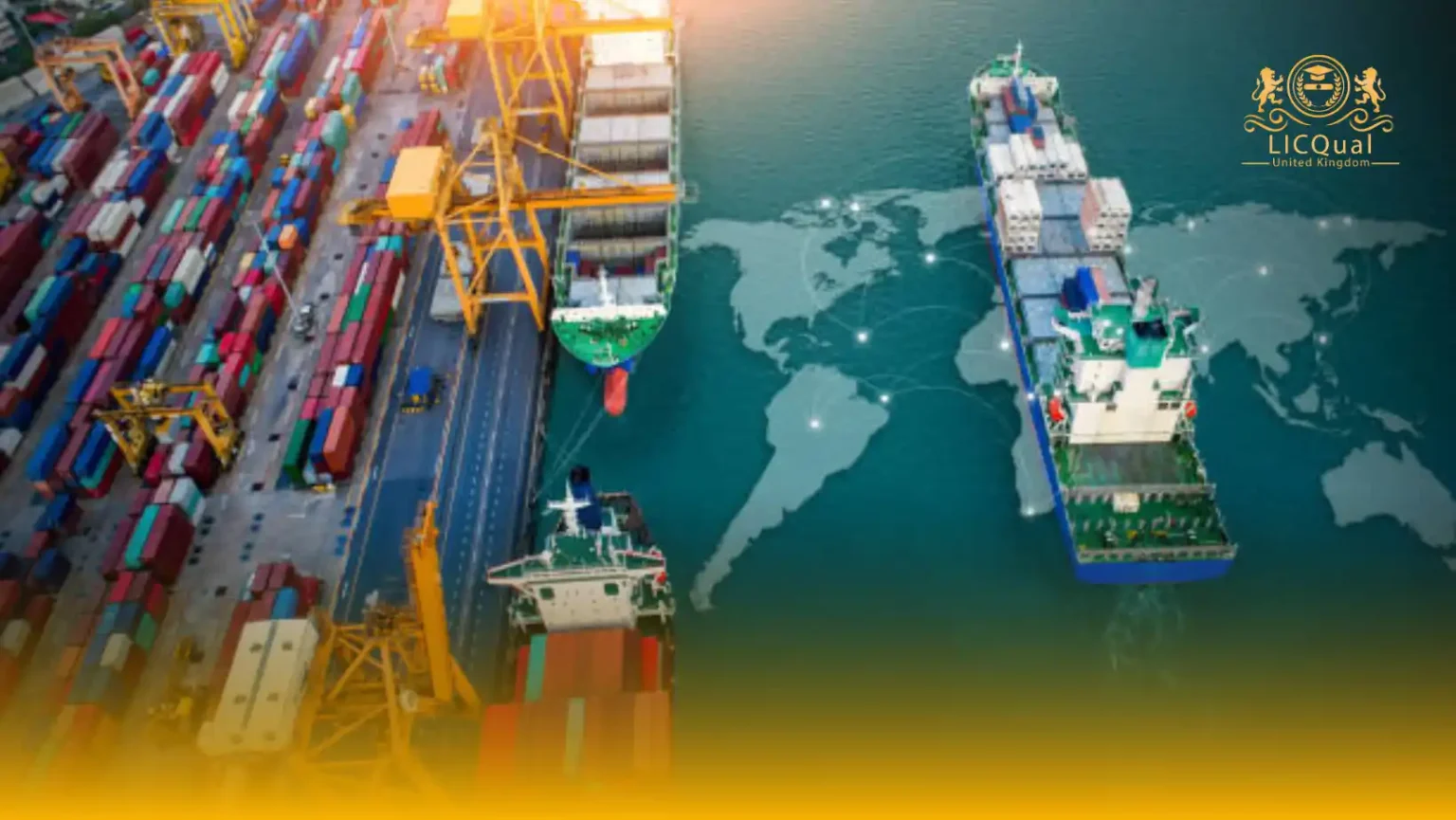
The LICQual UK Level 6 Diploma in International Trade – Shipping is a UK-accredited, advanced qualification designed for professionals, beginners, and career changers seeking to excel in global trade and maritime shipping. This diploma provides in-depth knowledge and practical skills needed to manage complex international shipping operations, trade finance, export-import procedures, and compliance with global trade regulations.
Through the LICQual UK Level 6 Diploma in International Trade – Shipping, learners gain a deep understanding of strategic planning, risk management, freight forwarding, and maritime logistics. The program also covers advanced topics such as international trade contracts, shipping documentation, and global trade finance frameworks, ensuring participants are well-prepared to tackle real-world challenges in the shipping and trade sector.
This Level 6 International Trade and Shipping Diploma emphasizes practical application alongside theoretical knowledge. Learners acquire hands-on skills to analyze international shipping operations, evaluate trade investments, and optimize supply chain processes. The course prepares participants to make informed decisions, manage complex projects, and lead teams effectively within shipping companies, logistics firms, or trade consultancies.
Designed to enhance career prospects, the LICQual UK Level 6 Diploma in International Trade – Shipping is ideal for those aiming for senior roles in maritime trade, global logistics, or international commerce. Graduates are equipped for positions such as International Trade Manager, Shipping Operations Director, Freight Forwarding Coordinator, or Maritime Logistics Executive. The diploma also provides a strong foundation for further advanced studies in international trade, shipping finance, or maritime management programs.
By completing this advanced qualification, learners earn a respected UK-accredited credential that enhances employability and professional credibility in the global maritime industry. The LICQual UK Level 6 Diploma in International Trade – Shipping ensures graduates have the knowledge, confidence, and practical skills to succeed in a competitive, dynamic sector. It is the ideal choice for anyone looking to combine professional expertise with practical insights into international trade and shipping operations, opening doors to leadership opportunities in the maritime world.
Course Overview
Qualification Title
LICQual UK Level 6 Diploma in International Trade – Shipping
Total Units
6
Total Credits
120
GLH
480
Qualification #
LICQ2201312
Qualification Specification
To enroll in the LICQual UK Level 6 Diploma in International Trade – Shipping, applicants must meet the following criteria:
|
Qualification# |
Unit Title |
Credits |
GLH |
|---|---|---|---|
|
LICQ2201312-1 |
Strategic International Trade and Shipping Management |
20 |
80 |
|
LICQ2201312-2 |
Global Shipping Economics and Trade Policy |
20 |
80 |
|
LICQ2201312-3 |
Advanced Shipping Logistics and Supply Chain Management |
20 |
80 |
|
LICQ2201312-4 |
Marine Insurance, Risk, and Legal Frameworks |
20 |
80 |
|
LICQ2201312-5 |
Innovation and Digital Transformation in Trade Shipping |
20 |
80 |
|
LICQ2201312-6 |
Research Project in International Trade – Shipping |
20 |
80 |
By the end of this course, learners will be able to:
Unit 1: Strategic International Trade and Shipping Management
By the end of this unit, learners will be able to:
- Critically evaluate strategic management models in international trade and shipping.
- Apply advanced decision‑making frameworks to global shipping operations.
- Analyze the impact of trade agreements and shipping policies on business strategy.
- Develop long‑term strategies for sustainable and competitive shipping management.
- Assess leadership approaches for managing multinational trade and shipping teams.
- Formulate solutions to complex challenges in international trade and maritime operations.
Unit 2: Global Shipping Economics and Trade Policy
By the end of this unit, learners will be able to:
- Analyze the relationship between global trade flows, shipping demand, and economic cycles.
- Evaluate the impact of international trade policies and agreements on shipping markets.
- Apply economic models to forecast freight rates and shipping trends.
- Assess the influence of global financial markets on shipping investment decisions.
- Interpret trade data to support evidence‑based policy and business strategies.
- Recommend strategies to enhance competitiveness in international trade and shipping.
Unit 3: Advanced Shipping Logistics and Supply Chain Management
By the end of this unit, learners will be able to:
- Evaluate advanced logistics models for global shipping and supply chain integration.
- Apply multimodal transport strategies to optimize international trade operations.
- Assess the role of ports, terminals, and hubs in global supply chain efficiency.
- Develop strategies to strengthen resilience in shipping and logistics networks.
- Critically analyze the impact of digitalization on supply chain performance.
- Recommend best practices for sustainable and cost‑effective shipping logistics.
Unit 4: Marine Insurance, Risk, and Legal Frameworks
By the end of this unit, learners will be able to:
- Critically assess marine insurance policies and their role in international trade.
- Apply advanced risk management techniques to shipping and cargo operations.
- Evaluate claims processes, liability frameworks, and dispute resolution mechanisms.
- Interpret international maritime conventions and legal frameworks governing trade.
- Develop compliance strategies to mitigate financial and operational risks.
- Recommend best practices for protecting assets in global shipping operations.
Unit 5: Innovation and Digital Transformation in Trade Shipping
By the end of this unit, learners will be able to:
- Evaluate the role of blockchain, FinTech, and AI in transforming trade and shipping.
- Analyze the benefits and challenges of digital platforms in maritime finance.
- Apply smart contracts and digital tools to enhance trade transparency.
- Assess the impact of digital transformation on global supply chain efficiency.
- Recommend innovation strategies for sustainable and competitive shipping operations.
- Lead digital transformation initiatives aligned with international best practices.
Unit 6: Research Project in International Trade – Shipping
By the end of this unit, learners will be able to:
- Design and conduct independent research on advanced international trade and shipping topics.
- Apply qualitative and quantitative research methods to analyze trade and shipping data.
- Critically evaluate academic literature and industry reports to support findings.
- Synthesize evidence into a structured, professional research report.
- Assess the implications of research outcomes for global trade and shipping practices.
- Demonstrate academic integrity, critical thinking, and professional presentation skills.
The LICQual UK Level 6 Diploma in International Trade – Shipping is designed for professionals aiming to advance into senior roles in global trade, shipping, and logistics. It is particularly valuable for managers, executives, and career changers who want to strengthen their expertise in shipping economics, trade policy, supply chain management, and digital transformation. This qualification provides practical, workplace‑ready skills that can be applied immediately in leadership and strategic positions across the international trade and maritime sectors.
Senior Shipping and Maritime Managers
- Strengthen advanced decision‑making in international trade and shipping.
- Apply strategic frameworks to manage global shipping operations.
- Lead financial planning and investment in shipping and logistics.
- Evaluate trade agreements and their impact on shipping strategies.
- Enhance leadership credibility with a UK accredited qualification.
Global Trade and Logistics Executives
- Gain expertise in international trade flows and shipping economics.
- Strengthen strategies for multimodal logistics and supply chain resilience.
- Apply advanced trade finance instruments to global operations.
- Improve coordination between shipping lines, ports, and financial institutions.
- Position yourself for senior roles in global logistics and trade management.
Marine Insurance and Risk Specialists
- Apply advanced marine insurance frameworks to complex shipping risks.
- Lead claims handling, liability management, and dispute resolution.
- Strengthen compliance with international maritime conventions.
- Develop strategies to mitigate financial and operational risks.
- Enhance professional standing in global insurance and risk management.
Corporate Governance and Compliance Leaders
- Oversee compliance in international trade and shipping organizations.
- Apply global governance frameworks to maritime finance and trade.
- Strengthen transparency, accountability, and ethical practices.
- Lead audits, regulatory reporting, and compliance reviews.
- Build resilience against governance failures in global shipping.
Innovation and Digital Transformation Professionals
- Drive digital transformation in international trade and shipping.
- Apply blockchain, FinTech, and AI to maritime finance and logistics.
- Strengthen efficiency and transparency in global trade operations.
- Lead innovation projects for sustainable and competitive shipping.
- Position your organization as a leader in digital maritime solutions.
Banking and Financial Services Executives
- Gain advanced knowledge of shipping finance and trade instruments.
- Strengthen expertise in structuring loans, leasing, and capital projects.
- Apply financial market analysis to shipping investment decisions.
- Improve collaboration with shipping companies and trade partners.
- Expand career opportunities in global banking and financial services.
Career Changers Transitioning into International Trade and Shipping
- Acquire advanced expertise for leadership roles in trade and shipping.
- Build confidence in handling strategic and operational challenges.
- Apply international standards to real‑world trade and shipping contexts.
- Strengthen employability in logistics, shipping, and trade finance.
- Gain recognition with a UK accredited Level 6 qualification.
Assessment and Verification
All units within this qualification are subject to internal assessment by the approved centre and external verification by LICQual. The qualification follows a criterion-referenced assessment approach, ensuring that learners meet all specified learning outcomes.
To achieve a ‘Pass’ in any unit, learners must provide valid, sufficient, and authentic evidence demonstrating their attainment of all learning outcomes and compliance with the prescribed assessment criteria. The Assessor is responsible for evaluating the evidence and determining whether the learner has successfully met the required standards.
Assessors must maintain a clear and comprehensive audit trail, documenting the basis for their assessment decisions to ensure transparency, consistency, and compliance with quality assurance requirements.