
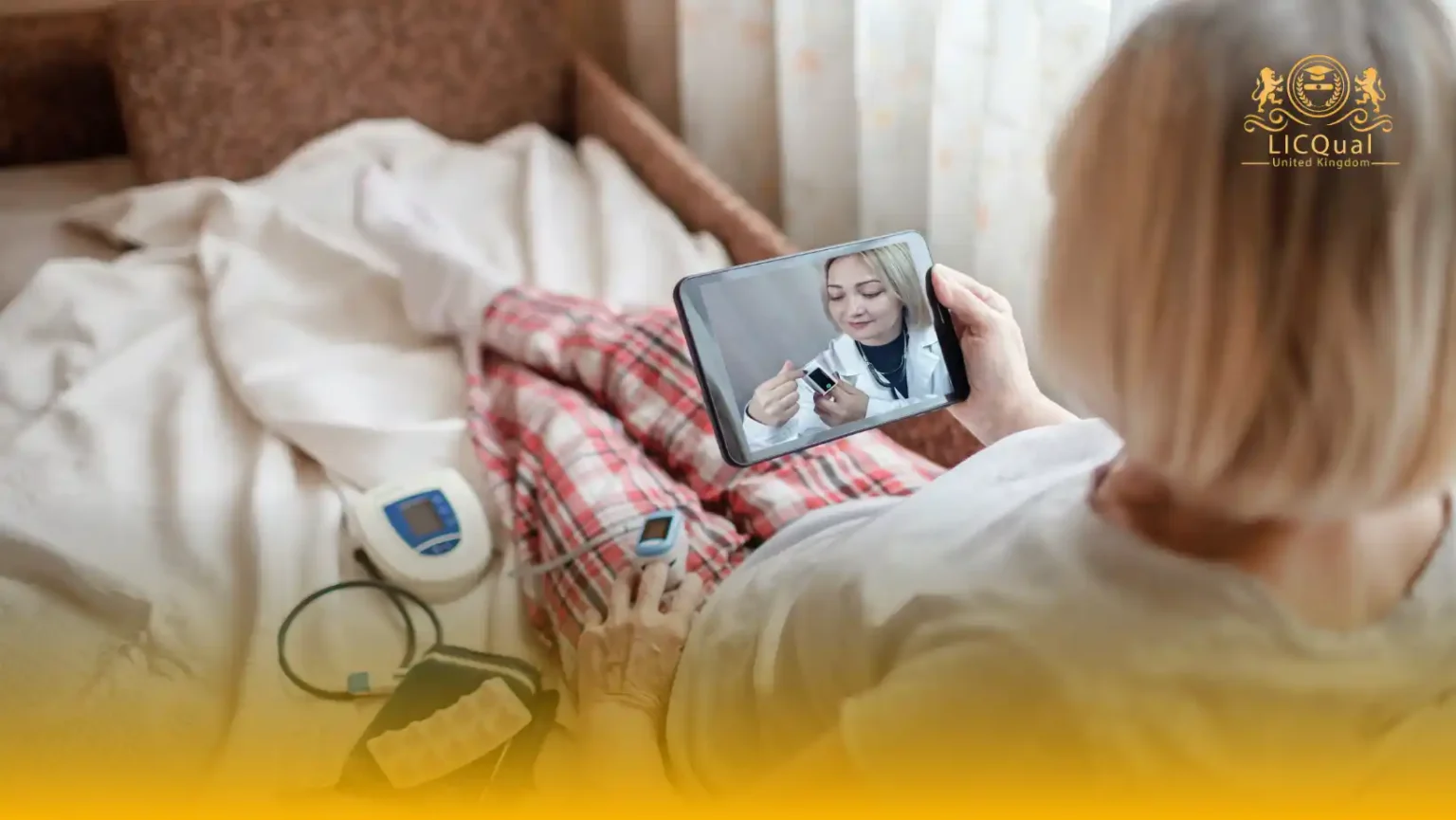
Telehealth and Remote Healthcare Management
The LICQual Level 7 Postgraduate Diploma in Telehealth and Remote Healthcare Management provides learners with advanced expertise in designing, implementing, and managing telehealth services. The course equips learners with the knowledge to optimize digital healthcare solutions, improve patient outcomes, and enhance remote care delivery in clinical and community settings.
Learners explore core principles of telehealth, including virtual consultations, remote patient monitoring, digital communication technologies, and secure healthcare data management. The program emphasizes strategic planning, operational efficiency, and compliance with legal, ethical, and regulatory standards. Learners gain practical insights through case studies and emerging technologies, focusing on patient engagement, technology integration, and data privacy.
The diploma also develops project management skills within telehealth initiatives, covering risk assessment, stakeholder coordination, quality assurance, and performance evaluation. Through applied learning and theoretical study, learners acquire the tools to lead telehealth programs, implement innovative solutions, and manage remote healthcare operations effectively in a digitally connected healthcare landscape.
Course Overview
Qualification Title
LICQual Level 7 Postgraduate Diploma in Telehealth and Remote Healthcare Management
Total Units
6
Total Credits
120
GLH
600
Qualification #
LICQ2200811
Qualification Specification
To enroll in the LICQual Level 7 Postgraduate Diploma in Telehealth and Remote Healthcare Management, applicants must meet the following criteria:
|
Qualification# |
Unit Title |
Credits |
GLH |
|---|---|---|---|
|
LICQ2200811-1 |
Strategic Leadership in Telehealth and Remote Healthcare |
20 |
100 |
|
LICQ2200811-2 |
Telehealth Technologies and Digital Healthcare Systems |
20 |
100 |
|
LICQ2200811-3 |
Project and Service Management in Telehealth |
20 |
100 |
|
LICQ2200811-4 |
Regulatory Compliance and Data Protection |
20 |
100 |
|
LICQ2200811-5 |
Quality Assurance and Performance Evaluation |
20 |
100 |
|
LICQ2200811-6 |
Strategic Planning and Innovation in Remote Healthcare |
20 |
100 |
By the end of this course, learners will be able to:
Unit 1: Strategic Leadership in Telehealth and Remote Healthcare
- Critically evaluate leadership models and their application in telehealth and remote healthcare management.
- Develop strategies for leading multidisciplinary teams in virtual healthcare environments.
- Implement ethical frameworks and governance models to support decision-making in telehealth projects.
Unit 2: Telehealth Technologies and Digital Healthcare Systems
- Critically assess emerging telehealth technologies and digital health platforms.
- Analyse the integration of digital systems for remote patient monitoring and healthcare delivery.
- Evaluate ethical, legal, and practical implications of technology use in remote healthcare.
Unit 3: Project and Service Management in Telehealth
- Develop project management strategies tailored to telehealth initiatives.
- Plan, execute, and monitor remote healthcare services effectively.
- Apply resource management and risk mitigation techniques to ensure service quality and efficiency.
Unit 4: Regulatory Compliance and Data Protection
- Examine healthcare regulations and standards relevant to telehealth and remote healthcare.
- Analyse data protection, patient privacy, and information governance requirements.
- Develop strategies to ensure regulatory compliance and ethical practice in virtual healthcare environments.
Unit 5: Quality Assurance and Performance Evaluation
- Design quality assurance frameworks for telehealth and remote healthcare services.
- Monitor, evaluate, and improve service delivery using performance metrics and evidence-based approaches.
- Apply continuous improvement strategies to enhance patient outcomes and organisational efficiency.
Unit 6: Strategic Planning and Innovation in Remote Healthcare
- Develop strategic plans to support innovation and sustainable growth in telehealth and remote healthcare services.
- Evaluate organisational performance and identify opportunities for digital healthcare innovation.
- Implement strategies for effective stakeholder engagement, service improvement, and long-term operational success.
This advanced qualification is designed for experienced healthcare professionals who wish to enhance their skills in telehealth, remote healthcare management, and digital healthcare delivery. Learners who should enrol include:
- Healthcare Managers and Administrators seeking to implement and lead telehealth initiatives within their organisations.
- Digital Health Professionals aiming to develop expertise in remote healthcare technologies and service delivery.
- Senior Healthcare Practitioners looking to acquire advanced skills in managing virtual healthcare projects and services.
- Policy Makers and Strategists involved in the planning, implementation, or evaluation of telehealth and remote healthcare programmes.
- Experienced Practitioners committed to Continuing Professional Development (CPD) and wishing to strengthen their professional credentials.
- Aspiring Healthcare Leaders seeking to take on executive or strategic roles in telehealth and digital healthcare innovation.
By enrolling in this programme, learners will gain the knowledge, practical skills, and professional credibility required to lead telehealth initiatives, optimize remote healthcare delivery, and contribute to improving patient outcomes and organizational efficiency.
Centres delivering the LICQual Level 7 Postgraduate Diploma in Telehealth and Remote Healthcare Management must adhere to high-quality standards to ensure learners receive exceptional education and support. To deliver this programme effectively, centres are required to:
- Qualified and Experienced Staff: Employ competent and qualified trainers with expertise in telehealth, remote healthcare management, and postgraduate-level teaching. Staff should provide guidance, mentorship, and practical support to learners.
- Comprehensive Learning Resources: Provide access to up-to-date textbooks, digital learning materials, case studies, and research resources that support advanced study and real-world application.
- Modern Facilities and Technology: Ensure learners have access to suitable classrooms, digital platforms, telehealth technologies, and online resources necessary for practical assignments, workshops, and assessments.
- Robust Assessment and Feedback Systems: Maintain effective assessment procedures, including formative and summative evaluations, to monitor learner progress and provide constructive feedback.
- Support for Continuing Professional Development (CPD): Encourage learners to engage in ongoing CPD activities and provide guidance on applying learning outcomes in professional practice.
- Professional and Safe Learning Environment: Create an inclusive, supportive, and professional environment that fosters collaboration, effective learning, and ethical practice in telehealth and remote healthcare contexts.
By meeting these requirements, centres ensure that learners achieve the programmer’s learning outcomes, develop advanced skills in telehealth and remote healthcare management, and gain a recognized postgraduate qualification that enhances their professional careers.
Assessment and Verification
All units within this qualification are subject to internal assessment by the approved centre and external verification by LICQual. The qualification follows a criterion-referenced assessment approach, ensuring that learners meet all specified learning outcomes.
To achieve a ‘Pass’ in any unit, learners must provide valid, sufficient, and authentic evidence demonstrating their attainment of all learning outcomes and compliance with the prescribed assessment criteria. The Assessor is responsible for evaluating the evidence and determining whether the learner has successfully met the required standards.
Assessors must maintain a clear and comprehensive audit trail, documenting the basis for their assessment decisions to ensure transparency, consistency, and compliance with quality assurance requirements.