
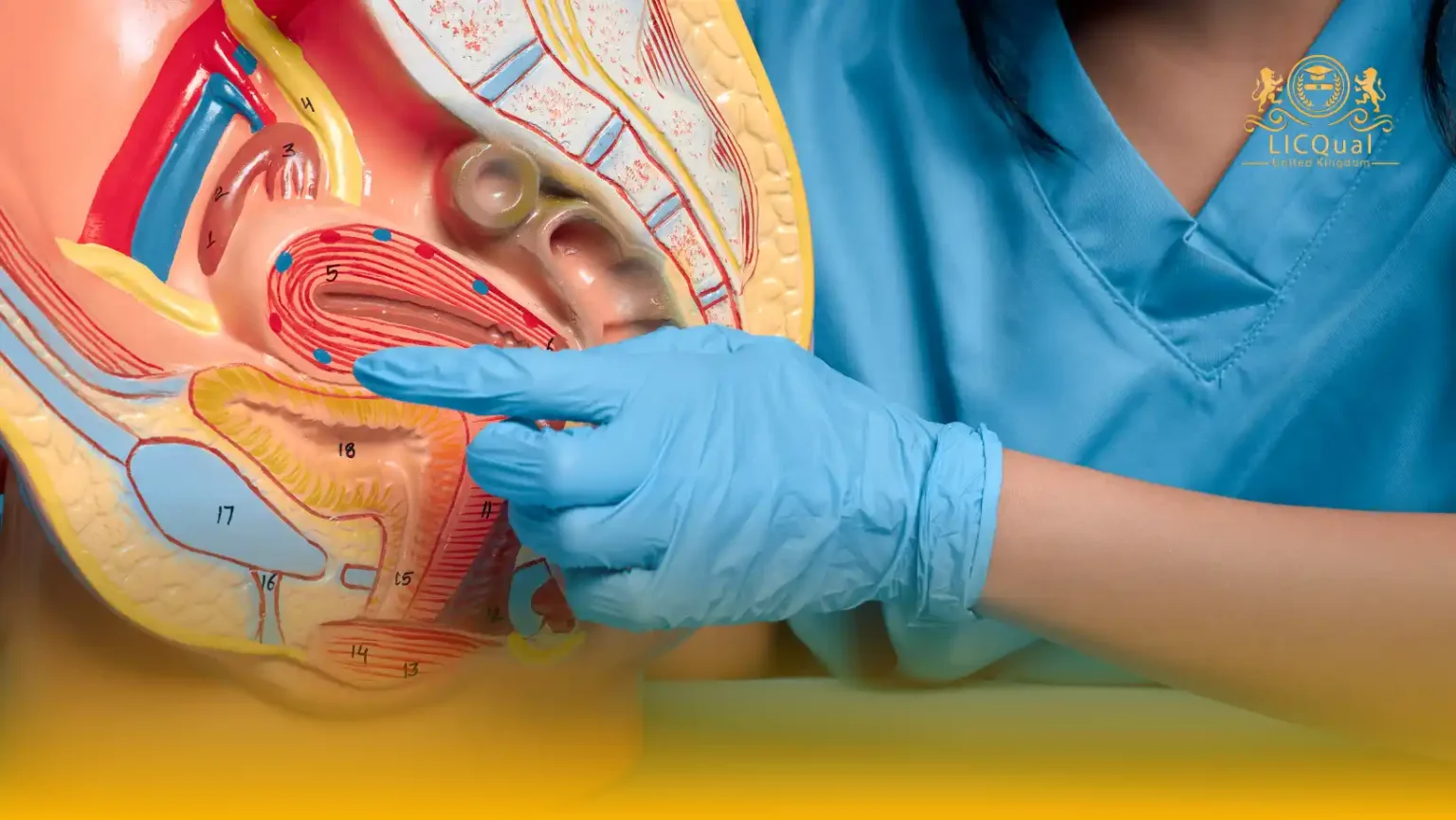
The LICQual Level 7 Postgraduate Diploma in Reproductive Medicine (PgDRM) is a globally recognized qualification designed for healthcare professionals who want to advance their expertise in fertility, reproductive health, and assisted medicine. Accredited and CPD-recognized, this program provides a comprehensive pathway for doctors, gynaecologists, and fertility specialists seeking to enhance their clinical knowledge and career prospects.
Unlike traditional postgraduate courses, the PgDRM diploma in reproductive medicine combines academic rigor with practical application. You’ll explore advanced topics such as reproductive endocrinology, infertility management, and modern fertility treatments, all structured to meet international healthcare standards. This Level 7 diploma in reproductive medicine is tailored for professionals who want to gain deeper insights into reproductive health while earning a qualification that carries global recognition.
What makes this program stand out is its accessibility and career-focused design. Whether you’re looking for an online reproductive medicine postgraduate diploma, or a flexible study option that fits your busy schedule, the PgDRM offers a practical solution. With its strong emphasis on evidence-based practice, the course ensures you stay aligned with the latest medical research, ethical standards, and patient-centered care.
By enrolling in the LICQual PgDRM diploma, you’re not just gaining a qualification—you’re investing in your future. This program opens doors to advanced roles in fertility clinics, hospitals, and academic institutions worldwide. It’s an ideal choice for healthcare professionals who want to upgrade their skills, meet accreditation requirements, and stand out in a competitive field.
Course Overview
Qualification Title
LICQual Level 7 Postgraduate Diploma in Reproductive Medicine (PgDRM)
Total Units
6
Total Credits
120
GLH
600
Qualification #
LICQ2200977
Qualification Specification
To enroll in the LICQual Level 7 Postgraduate Diploma in Forensic Medicine (PgDFM), applicants must meet the following criteria:
|
Qualification# |
Unit Title |
Credits |
GLH |
|---|---|---|---|
|
LICQ2200977-1 |
Advanced Reproductive Physiology |
20 |
100 |
|
LICQ2200977-2 |
Assisted Reproductive Technologies (ART) |
20 |
100 |
|
LICQ2200977-3 |
Fertility Assessment and Management |
20 |
100 |
|
LICQ2200977-4 |
Reproductive Genetics and Embryology |
20 |
100 |
|
LICQ2200977-5 |
Ethical, Legal, and Psychosocial Aspects of Reproduction |
20 |
100 |
|
LICQ2200977-6 |
Research Methods and Professional Practice in Reproductive Medicine |
20 |
100 |
By the end of this course, learners will be able to:
Unit 1: Advanced Reproductive Physiology
By the end of this unit, learners will be able to:
- Analyse the structure and function of male and female reproductive systems.
- Evaluate hormonal regulation, gametogenesis, fertilisation, and implantation processes.
- Assess reproductive ageing and fertility patterns in clinical contexts.
- Critically appraise scientific literature on reproductive physiology and apply evidence-based insights.
Unit 2: Assisted Reproductive Technologies (ART)
By the end of this unit, learners will be able to:
- Demonstrate comprehensive knowledge of IVF, IUI, and other ART techniques.
- Apply principles of embryo culture, cryopreservation, and transfer in clinical practice.
- Assess success rates, risks, and optimisation strategies in assisted reproduction.
- Critically evaluate emerging ART technologies and their application in fertility treatment.
Unit 3: Fertility Assessment and Management
By the end of this unit, learners will be able to:
- Conduct diagnostic evaluations of male and female infertility using current protocols.
- Interpret semen analysis, ovarian reserve tests, and hormonal profiling accurately.
- Develop and implement personalised treatment plans for subfertility and reproductive disorders.
- Integrate patient counselling and ethical considerations into fertility management.
Unit 4: Reproductive Genetics and Embryology
By the end of this unit, learners will be able to:
- Analyse genetic factors affecting fertility and embryonic development.
- Apply preimplantation genetic testing (PGT) and related diagnostic techniques.
- Evaluate scientific research on embryology, stem cells, and genetic interventions.
- Assess ethical and professional implications of reproductive genetics in clinical practice.
Unit 5: Ethical, Legal, and Psychosocial Aspects of Reproduction
By the end of this unit, learners will be able to:
- Apply ethical frameworks and legal requirements in reproductive medicine.
- Demonstrate understanding of patient rights, consent, and professional responsibility.
- Provide psychosocial support and counselling to patients undergoing fertility treatment.
- Evaluate cross-cultural and societal considerations in reproductive healthcare.
Unit 6: Research Methods and Professional Practice in Reproductive Medicine
By the end of this unit, learners will be able to:
- Design and conduct advanced research projects in reproductive medicine.
- Critically appraise scientific literature and apply evidence-based methodologies.
- Demonstrate professional, ethical, and reflective practice in reproductive healthcare.
- Develop strategies for Continuing Professional Development (CPD) and leadership in reproductive medicine.
The LICQual Level 7 Postgraduate Diploma in Reproductive Medicine (PgDRM) is designed for a diverse audience. It is suitable for beginners entering the healthcare field, experienced professionals seeking advanced specialization, and career changers who want to transition into reproductive medicine. This internationally recognized diploma provides the right balance of foundational knowledge and advanced expertise, making it accessible and valuable for learners at all stages of their career.
Medical Graduates and Beginners in Healthcare
- Provides a strong foundation in reproductive health and fertility studies
- Offers structured, beginner-friendly postgraduate learning
- Builds confidence for clinical practice and academic growth
- Accredited and CPD-recognized for international recognition
- Helps new graduates gain credibility in reproductive medicine
Practicing Doctors and Gynaecologists
- Enhances expertise in infertility management and assisted reproductive technologies
- Strengthens evidence-based clinical decision-making
- Meets accreditation requirements for advanced medical practice
- Expands career opportunities in fertility clinics and hospitals
- Provides global recognition through the PgDRM diploma
International Healthcare Professionals
- Offers a qualification recognized worldwide in reproductive medicine
- Flexible online study options to fit busy schedules
- Builds credibility with accredited postgraduate certification
- Aligns with international healthcare standards and practices
- Opens pathways to global career advancement
Academic Researchers and Educators
- Supports professionals engaged in teaching or research in reproductive medicine
- Provides advanced knowledge for curriculum development and training
- Strengthens academic credentials with a Level 7 postgraduate diploma
- Encourages publication and contribution to reproductive health research
- Enhances authority in medical education and fertility studies
Career Changers Entering Healthcare
- Designed for professionals transitioning into reproductive medicine
- Offers structured learning for those without prior specialization
- Builds transferable skills in patient care and fertility health
- Provides internationally recognized accreditation for career shifts
- Opens opportunities in clinics, hospitals, and healthcare organizations
Healthcare Administrators and Policy Makers
- Equips leaders with insights into reproductive health systems
- Strengthens knowledge for policy development and healthcare management
- Provides evidence-based frameworks for decision-making
- Enhances credibility with CPD-accredited postgraduate training
- Supports roles in healthcare governance and reproductive health advocacy
Professionals Seeking Career Growth
- Designed for those aiming to upgrade qualifications and expertise
- Provides advanced specialization in reproductive medicine
- Enhances employability in competitive healthcare markets
- Offers CPD credits for continuous professional development
- Builds a pathway to leadership roles in fertility and reproductive health
Centres delivering the LICQual Level 7 Postgraduate Diploma in Reproductive Medicine must meet stringent standards to ensure high-quality education and learner success. Key requirements include:
- Qualified and Experienced Staff: All teaching and assessment personnel must be highly qualified in reproductive medicine, gynaecology, fertility science, or related healthcare disciplines, with substantial professional and academic experience.
- State-of-the-Art Facilities: Centres must provide access to modern clinical laboratories, fertility clinics, and practical training environments essential for advanced reproductive medicine study.
- Comprehensive Learning Resources: Learners should have access to textbooks, academic journals, case studies, digital learning platforms, and other resources supporting in-depth study and research.
- Practical Training Opportunities: Centres must enable learners to engage in hands-on practical exercises, simulations, and case-based learning relevant to reproductive medicine and assisted reproductive technologies.
- Robust Assessment and Evaluation: Centres must implement rigorous assessment strategies, including written assignments, research projects, and practical evaluations, to ensure learners achieve learning outcomes.
- Ethical and Legal Compliance: Centres must adhere to all professional, ethical, and legal standards in reproductive healthcare education.
- Support for Continuing Professional Development (CPD): Centres should provide guidance for ongoing CPD, reflective practice, and professional development to ensure learners can apply advanced knowledge in their careers.
Meeting these requirements guarantees that learners receive world-class instruction, practical experience, and academic support, enabling them to excel in reproductive medicine and advance their professional careers.
Assessment and Verification
All units within this qualification are subject to internal assessment by the approved centre and external verification by LICQual. The qualification follows a criterion-referenced assessment approach, ensuring that learners meet all specified learning outcomes.
To achieve a ‘Pass’ in any unit, learners must provide valid, sufficient, and authentic evidence demonstrating their attainment of all learning outcomes and compliance with the prescribed assessment criteria. The Assessor is responsible for evaluating the evidence and determining whether the learner has successfully met the required standards.
Assessors must maintain a clear and comprehensive audit trail, documenting the basis for their assessment decisions to ensure transparency, consistency, and compliance with quality assurance requirements.