
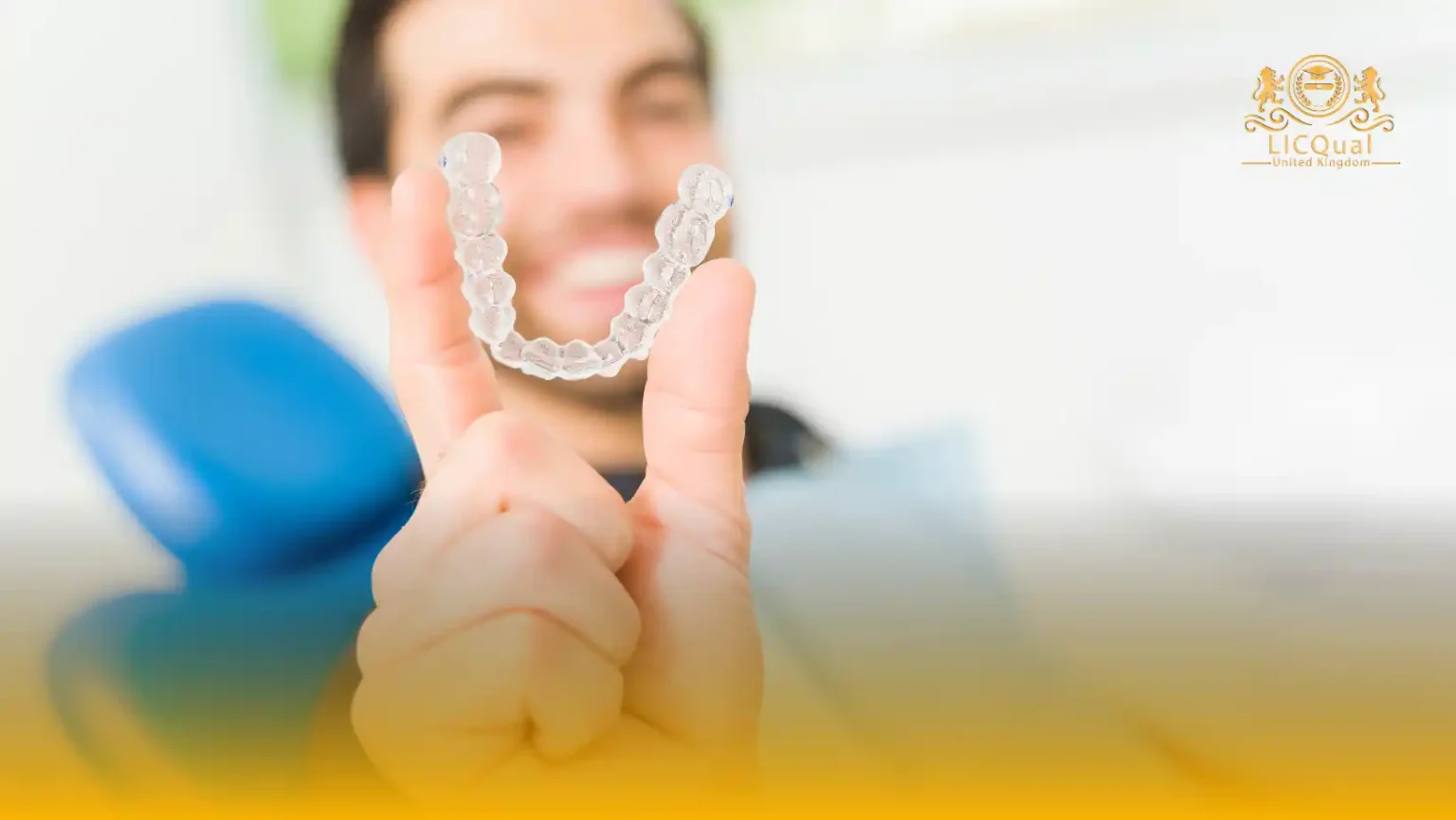
Postgraduate Diploma in Orthodontics
The LICQual Level 7 Postgraduate Diploma in Orthodontics (PgD Orthodontics) is an advanced qualification designed to help learners develop expert-level understanding of modern orthodontic care within a professional healthcare and clinical environment. This course focuses on complex orthodontic principles such as advanced treatment planning, precise dental alignment techniques, diagnostic evaluation, and evidence-based patient care.
It is aligned with UK healthcare and dental standards, ensuring learners gain knowledge that reflects current clinical practice and professional expectations. Throughout this postgraduate diploma, learners understand how advanced orthodontic cases are managed in real clinical settings, including decision-making, patient assessment, and safe treatment approaches. The course also strengthens understanding of ethical responsibilities, professional communication, and leadership within orthodontic practice.
All topics are delivered in a clear and structured way, making advanced concepts easier to understand and apply in real healthcare environments. This qualification helps learners build strong confidence in orthodontic expertise and deepens their understanding of clinical dental systems, supporting professional growth within a regulated healthcare framework.
Course Overview
Qualification Title
LICQual Level 7 Postgraduate Diploma in Orthodontics (PgD Orthodontics)
Total Units
6
Total Credits
120
GLH
600
Qualification #
LICQ2200688
Qualification Specification
To enroll in the LICQual Level 7 Postgraduate Diploma in Orthodontics (PgD Orthodontics), applicants must meet the following criteria:
|
Qualification# |
Unit Title |
Credits |
GLH |
|---|---|---|---|
|
LICQ2200688-1 |
Advanced Principles of Orthodontic Diagnosis and Treatment Planning |
20 |
100 |
|
LICQ2200688-2 |
Orthodontic Biomechanics and Force Systems |
20 |
100 |
|
LICQ2200688-3 |
Fixed and Removable Orthodontic Appliances |
20 |
100 |
|
LICQ2200688-4 |
Orthodontics for Complex and Interdisciplinary Cases |
20 |
100 |
|
LICQ2200688-5 |
Clinical Orthodontics: Hands-on Practice and Case Management |
20 |
100 |
|
LICQ2200688-6 |
Professional Practice, Ethics, and Continuing Professional Development in Orthodontics |
20 |
100 |
By the end of this course, learners will be able to:
1. Advanced Principles of Orthodontic Diagnosis and Treatment Planning
By the end of this unit, the learner will be able to:
- Critically analyse malocclusion types and their underlying skeletal and dental causes.
- Perform comprehensive orthodontic assessments using clinical, radiographic, and photographic records.
- Formulate patient-specific treatment plans integrating functional, aesthetic, and long-term stability considerations.
- Evaluate risks, benefits, and alternative treatment options for informed patient consent.
2. Orthodontic Biomechanics and Force Systems
By the end of this unit, the learner will be able to:
- Explain the biological basis of tooth movement and periodontal response to orthodontic forces.
- Apply biomechanical principles to achieve controlled and predictable tooth movement.
- Assess and select appropriate force systems for various clinical scenarios.
- Analyse and resolve biomechanical challenges during treatment progression.
3. Fixed and Removable Orthodontic Appliances
By the end of this unit, the learner will be able to:
- Compare and contrast different fixed and removable appliance systems, including their indications and limitations.
- Design and adjust appliances to meet individual patient requirements.
- Manage patient compliance and troubleshoot appliance-related complications.
- Integrate emerging technologies, such as clear aligners, into treatment protocols.
4. Orthodontics for Complex and Interdisciplinary Cases
By the end of this unit, the learner will be able to:
- Assess and plan orthodontic treatment for patients with severe skeletal or dental discrepancies.
- Collaborate effectively with other dental specialists for integrated care plans.
- Manage orthodontic treatment in cases requiring surgical or restorative interventions.
- Apply evidence-based approaches to complex case management.
5. Clinical Orthodontics: Hands-on Practice and Case Management
By the end of this unit, the learner will be able to:
- Demonstrate advanced clinical skills in appliance placement, adjustment, and finishing.
- Document, monitor, and critically review treatment progress using standardised protocols.
- Apply problem-solving strategies to address unexpected clinical challenges.
- Present detailed case studies showcasing treatment outcomes and reflective learning.
6. Professional Practice, Ethics, and Continuing Professional Development in Orthodontics
By the end of this unit, the learner will be able to:
- Apply ethical principles and legal requirements in orthodontic practice.
- Communicate effectively with patients, colleagues, and other healthcare professionals.
- Develop a personal CPD plan to maintain and enhance professional competence.
- Engage with current research and innovations to improve clinical practice.
The LICQual Level 7 Postgraduate Diploma in Orthodontics (PgD Orthodontics) is designed for experienced dental and healthcare professionals who want to advance their expertise in orthodontic practice and clinical decision-making.
- Qualified dentists (BDS, DDS, or equivalent) seeking advanced specialisation in orthodontics
- Practising dental professionals who want to develop postgraduate-level knowledge in orthodontic treatment planning and management
- Clinicians involved in complex dental cases who aim to strengthen their diagnostic and treatment skills
- Dental practitioners working in hospital or private clinical settings who want to progress into advanced orthodontic roles
- Professionals already engaged in orthodontic or restorative dentistry who wish to enhance evidence-based clinical practice
- Experienced healthcare professionals committed to high-level Continuing Professional Development (CPD) in dentistry
- Senior dental staff aiming to expand leadership, clinical judgement, and specialist knowledge in orthodontic care
This programme is structured for professionals who are ready to engage with advanced orthodontic concepts and apply them within a regulated clinical healthcare environment.
Centres delivering the LICQual Level 7 Postgraduate Diploma in Orthodontics must meet strict quality assurance standards to ensure effective learning, professional competence, and successful learner outcomes.
1. Qualified and Experienced Staff
- Instructors must hold recognised dental qualifications, relevant postgraduate training in orthodontics, and substantial clinical experience.
- Teaching staff should demonstrate current and relevant Continuing Professional Development (CPD) in orthodontics and dental education.
2. Suitable Facilities and Learning Environment
- Access to fully equipped clinical training areas, including dental chairs, orthodontic instruments, and appliance systems.
- Lecture and seminar rooms with appropriate seating, lighting, and audio-visual equipment for theoretical learning.
3. Access to Clinical Cases and Practical Training
- Centres must provide opportunities for supervised clinical practice on real patients or approved clinical simulations.
- Adequate patient case variety to meet learning and assessment requirements.
4. Learning and Assessment Resources
- Availability of up-to-date orthodontic textbooks, journals, and digital learning materials.
- Access to diagnostic tools such as radiography, cephalometric analysis software, and photographic equipment.
5. Quality Assurance and Compliance
- Centres must implement robust internal quality assurance (IQA) procedures.
- Compliance with all relevant health, safety, and infection control regulations in dental practice.
6. Learner Support
- Provision of academic guidance, clinical supervision, and mentorship throughout the programme.
- Access to feedback systems to support learner progress and professional development.
Assessment and Verification
All units within this qualification are subject to internal assessment by the approved centre and external verification by LICQual. The qualification follows a criterion-referenced assessment approach, ensuring that learners meet all specified learning outcomes.
To achieve a ‘Pass’ in any unit, learners must provide valid, sufficient, and authentic evidence demonstrating their attainment of all learning outcomes and compliance with the prescribed assessment criteria. The Assessor is responsible for evaluating the evidence and determining whether the learner has successfully met the required standards.
Assessors must maintain a clear and comprehensive audit trail, documenting the basis for their assessment decisions to ensure transparency, consistency, and compliance with quality assurance requirements.