
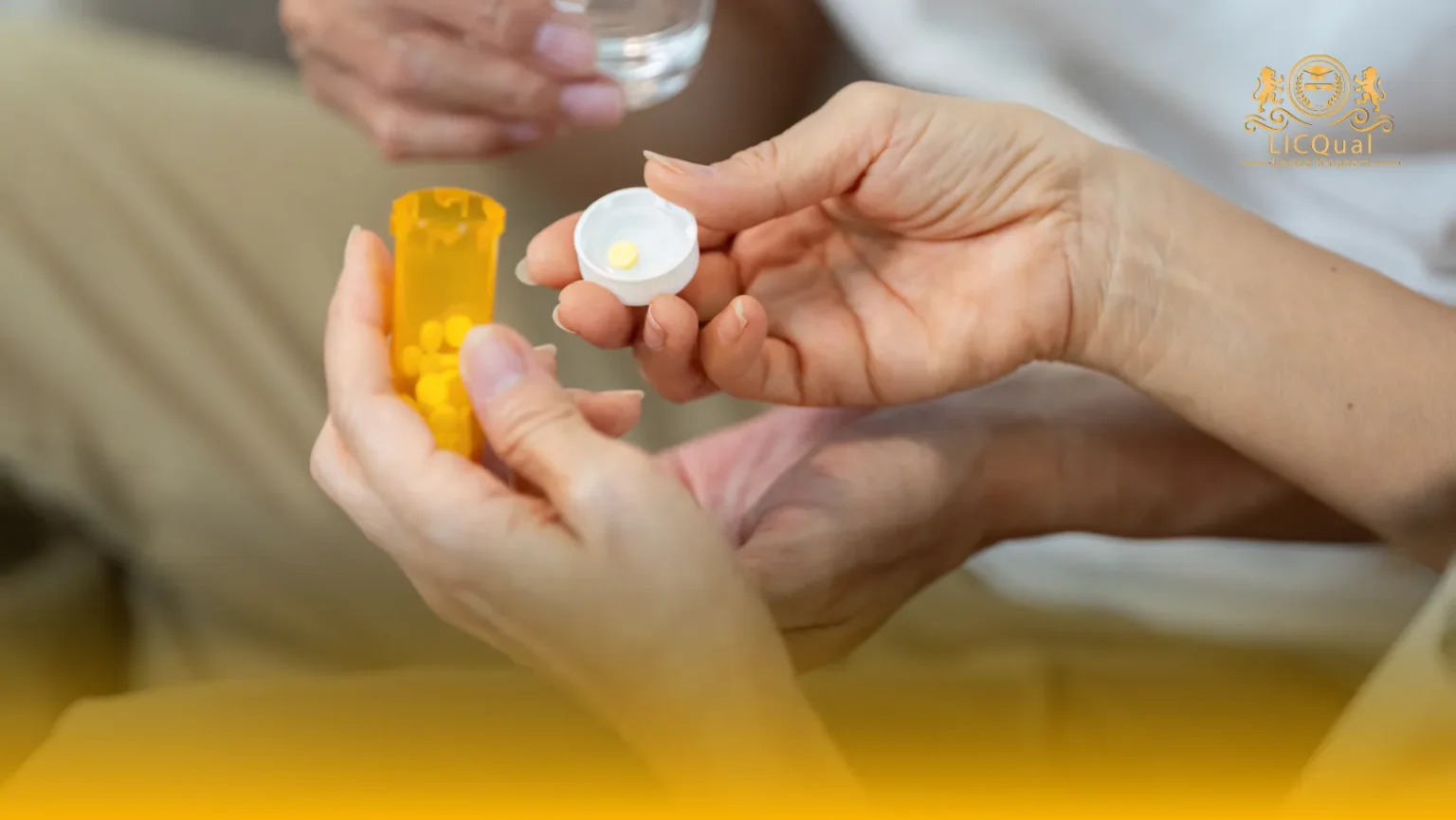
The LICQual Level 7 Postgraduate Diploma in Medication Safety and Quality Assurance (PgD Medication Safety) is a specialized program designed for healthcare professionals, pharmacists, and medical graduates who want to strengthen their expertise in safe medication practices and quality assurance systems. This UK accredited postgraduate diploma in medication safety provides advanced knowledge and practical skills to help professionals reduce medication errors, improve patient safety, and ensure compliance with international healthcare standards.
Medication safety has become one of the most critical priorities in modern healthcare. With increasing complexity in pharmaceutical treatments, hospitals and healthcare organizations need experts who can design, implement, and monitor effective safety protocols. This Level 7 diploma in medication safety and quality assurance equips learners with the tools to manage risk, analyze medication processes, and apply evidence‑based strategies to improve outcomes.
The PgD Medication Safety course online is structured for flexibility, making it accessible to busy professionals worldwide. Whether you are a pharmacist aiming to advance your career, a nurse seeking specialization, or an international student looking for a globally recognized postgraduate diploma in medication safety, this program offers the credibility and practical training you need.
Graduates of the LICQual Level 7 Postgraduate Diploma in Medication Safety and Quality Assurance are prepared for leadership roles in hospitals, pharmaceutical companies, regulatory agencies, and public health organizations. The curriculum emphasizes both technical expertise and strategic decision‑making, ensuring that learners can contribute to safer healthcare systems and improved patient care.
With its strong focus on accreditation, career advancement, and international recognition, this postgraduate diploma in medication safety is more than just a qualification—it is a pathway to becoming a trusted leader in healthcare quality assurance. If you are ready to enhance your career and make a meaningful impact in patient safety, enrolling in this internationally recognized PgD Medication Safety program is the right step forward.
Course Overview
Qualification Title
LICQual Level 7 Postgraduate Diploma in Medication Safety and Quality Assurance (PgD Medication Safety)
Total Units
6
Total Credits
120
GLH
600
Qualification #
LICQ2201229
Qualification Specification
To enroll in the LICQual Level 7 Postgraduate Diploma in Medication Safety and Quality Assurance (PgD Medication Safety), applicants must meet the following criteria:
|
Qualification# |
Unit Title |
Credits |
GLH |
|---|---|---|---|
|
LICQ2201229-1 |
Principles of Medication Safety |
20 |
100 |
|
LICQ2201229-2 |
Clinical Governance and Quality Assurance |
20 |
100 |
|
LICQ2201229-3 |
Pharmacovigilance and Risk Management |
20 |
100 |
|
LICQ2201229-4 |
Regulatory Frameworks in Medication Safety |
20 |
100 |
|
LICQ2201229-5 |
Data Analytics and Safety Reporting |
20 |
100 |
|
LICQ2201229-6 |
Medication Safety Leadership Project |
20 |
100 |
By the end of this course, learners will be able to:
Unit 1: Principles of Medication Safety
Learning Outcomes:
- Critically evaluate the principles and frameworks underpinning medication safety in healthcare settings.
- Analyse common medication errors and identify strategies to prevent them.
- Apply evidence-based approaches to improve patient safety and medication management.
- Demonstrate understanding of safety culture and its impact on clinical practice.
Unit 2: Clinical Governance and Quality Assurance
Learning Outcomes:
- Critically assess systems and frameworks for clinical governance and quality assurance in healthcare.
- Analyse policies, audit processes, and regulatory standards to ensure safe practice.
- Develop strategies to implement quality improvement initiatives and monitor outcomes.
- Apply leadership and management principles to enhance organisational safety and efficiency.
Unit 3: Pharmacovigilance and Risk Management
Learning Outcomes:
- Critically evaluate pharmacovigilance systems and adverse drug reaction monitoring processes.
- Apply risk assessment techniques to identify, mitigate, and manage medication-related risks.
- Analyse safety data to inform clinical decision-making and regulatory compliance.
- Develop strategies to enhance patient safety and organisational risk management practices.
Unit 4: Regulatory Frameworks in Medication Safety
Learning Outcomes:
- Analyse national and international regulatory requirements related to medication safety and quality assurance.
- Apply compliance strategies to adhere to legal and ethical standards in healthcare.
- Critically evaluate the impact of legislation and regulatory policies on clinical practice.
- Develop approaches to integrate regulatory requirements into organisational safety systems.
Unit 5: Data Analytics and Safety Reporting
Learning Outcomes:
- Apply data collection, analysis, and reporting techniques to monitor medication safety.
- Critically interpret safety reports to identify trends, risks, and areas for improvement.
- Develop evidence-based strategies to enhance patient safety and clinical outcomes.
- Demonstrate competence in using data to support organisational decision-making and quality improvement.
Unit 6: Medication Safety Leadership Project
Learning Outcomes:
- Design and implement a practical project addressing a medication safety or quality assurance challenge.
- Demonstrate advanced leadership, problem-solving, and project management skills in a healthcare context.
- Critically evaluate project outcomes using performance metrics and evidence-based indicators.
- Reflect on professional practice and propose recommendations for enhancing medication safety and quality assurance.
The LICQual Level 7 Postgraduate Diploma in Medication Safety and Quality Assurance (PgD Medication Safety) is designed for healthcare professionals, pharmacists, nurses, and medical graduates who want to specialize in safe medication practices and quality assurance systems. This UK accredited postgraduate diploma in medication safety is ideal for those seeking international recognition, career advancement, and practical expertise in reducing medication errors and improving patient outcomes. Whether you are working in hospitals, pharmaceutical companies, or regulatory agencies, this program provides the skills and accreditation needed to excel in the growing field of medication safety.
1. Pharmacists Seeking Career Growth
- Strengthen expertise in medication safety and quality assurance practices
- Gain UK accredited postgraduate diploma credentials recognized internationally
- Learn advanced risk management and compliance strategies
- Improve patient care through safe medication protocols
- Position yourself for leadership roles in pharmacy and healthcare organizations
2. Nurses and Clinical Practitioners
- Acquire specialized knowledge in medication safety for clinical environments
- Enhance career prospects with a Level 7 postgraduate diploma
- Learn to identify, prevent, and manage medication errors
- Gain skills in patient safety and quality assurance systems
- Improve employability in hospitals and healthcare institutions worldwide
3. Medical Graduates and Healthcare Professionals
- Build expertise in pharmaceutical informatics and medication safety systems
- Strengthen career opportunities with international accreditation
- Learn to integrate safety protocols into healthcare workflows
- Gain practical skills in medication risk assessment and quality assurance
- Prepare for advanced roles in healthcare management and patient safety
4. International Students and Global Learners
- Earn a globally recognized PgD Medication Safety qualification
- Access flexible online learning tailored for international professionals
- Benefit from UK accreditation and worldwide credibility
- Build career opportunities across diverse healthcare markets
- Join a global network of healthcare and pharmaceutical experts
5. Professionals in Pharmaceutical Companies
- Learn to manage medication safety and quality assurance systems
- Gain expertise in regulatory compliance and international standards
- Improve efficiency in pharmaceutical operations through safety protocols
- Enhance career prospects in multinational pharmaceutical corporations
- Position yourself as a specialist in medication safety and quality assurance
6. Public Health and Regulatory Specialists
- Acquire skills in medication safety for public health management
- Strengthen knowledge of compliance, accreditation, and healthcare standards
- Learn to apply safety protocols in policy development and regulation
- Gain career opportunities in government and international health agencies
- Build credibility with a UK accredited postgraduate diploma
7. Researchers and Academics in Healthcare Safety
- Deepen knowledge of medication safety and quality assurance research
- Strengthen academic credentials with a postgraduate diploma in medication safety
- Explore advanced modules in risk management and patient safety
- Contribute to innovation in healthcare safety and pharmaceutical research
- Gain recognition in international academic and research communities
To deliver the Level 7 Postgraduate Diploma in Medication Safety and Quality Assurance effectively, centres must meet the following requirements:
- Accreditation and recognition: Centres must be accredited by recognised national or international educational authorities and approved to deliver postgraduate-level programmes in healthcare, pharmacy, or clinical governance.
- Qualified academic staff: Centres should employ competent and experienced teaching staff with expertise in medication safety, quality assurance, pharmacovigilance, and clinical governance at Level 7 or equivalent.
- Learning resources: Centres must provide learners with access to comprehensive learning materials, including textbooks, regulatory guidelines, research journals, case studies, and digital learning platforms.
- ICT and online learning infrastructure: Reliable internet access, computers or laptops, and secure online platforms are required to facilitate interactive learning, research, and assessments.
- Practical and research facilities: Centres must provide facilities for project work, simulations, and research activities relevant to medication safety, quality assurance, and clinical governance.
- Assessment and quality assurance systems: Centres should maintain robust assessment processes, including formative and summative evaluations, and implement quality assurance procedures aligned with international standards.
- Learner support services: Centres must provide academic guidance, career advice, and access to professional networks to support learner progression and success.
These requirements ensure that centres deliver a high-quality, internationally recognised programme, equipping learners with the knowledge, skills, and practical experience needed to excel in medication safety, quality assurance, and clinical governance leadership roles.
Assessment and Verification
All units within this qualification are subject to internal assessment by the approved centre and external verification by LICQual. The qualification follows a criterion-referenced assessment approach, ensuring that learners meet all specified learning outcomes.
To achieve a ‘Pass’ in any unit, learners must provide valid, sufficient, and authentic evidence demonstrating their attainment of all learning outcomes and compliance with the prescribed assessment criteria. The Assessor is responsible for evaluating the evidence and determining whether the learner has successfully met the required standards.
Assessors must maintain a clear and comprehensive audit trail, documenting the basis for their assessment decisions to ensure transparency, consistency, and compliance with quality assurance requirements.