
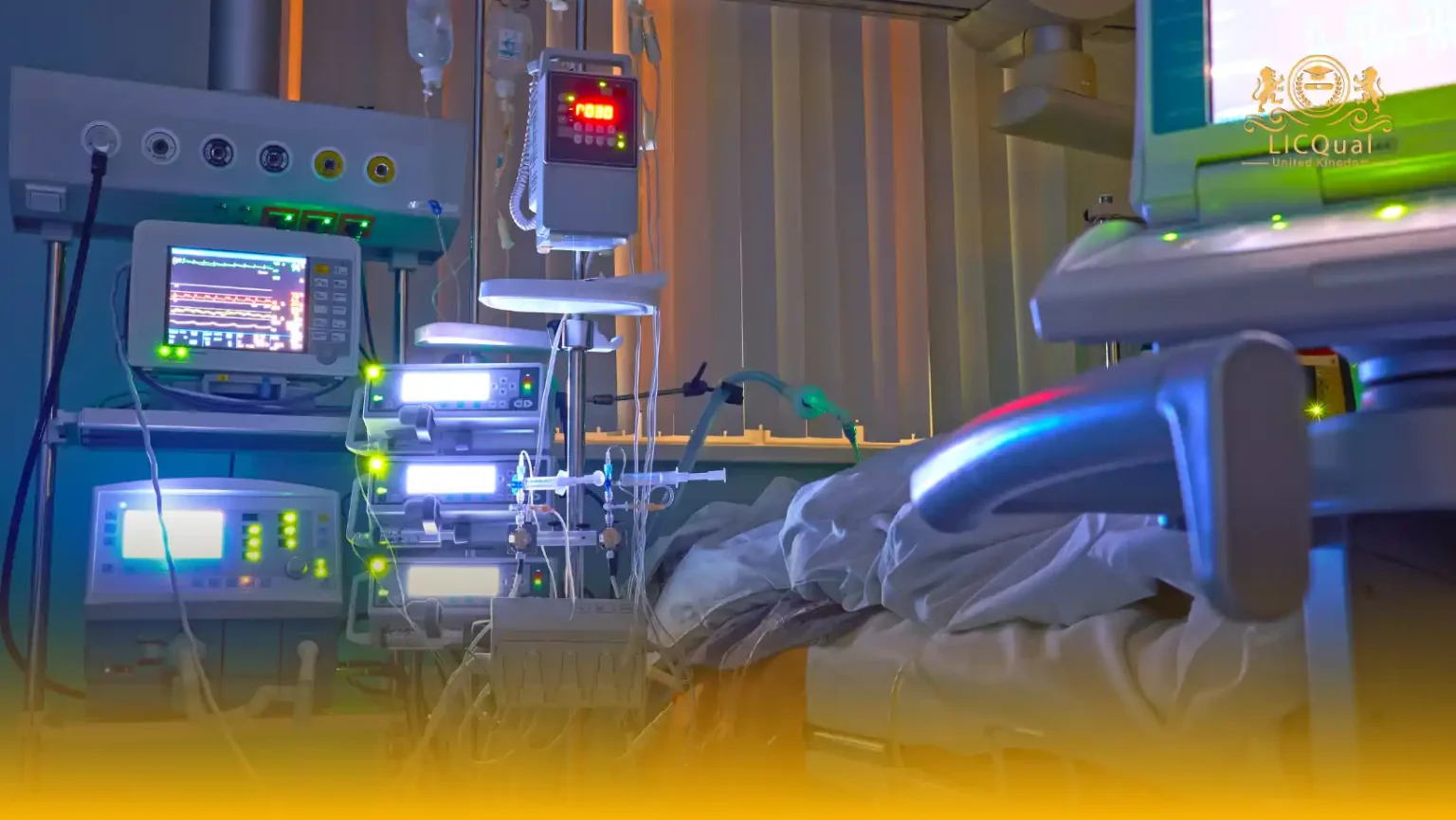
The LICQual Level 7 Postgraduate Diploma in Critical Care Medicine (PgDCCM) is a UK-accredited qualification designed for healthcare professionals, medical graduates, and career changers who want to specialize in intensive care and emergency medicine. This internationally recognized postgraduate diploma provides advanced knowledge of organ support, life-saving interventions, and evidence-based patient management, making it an essential program for those aiming to excel in critical care and hospital medicine.
Critical care medicine is one of the most demanding and rewarding fields in healthcare. With the PgDCCM Critical Care Medicine UK accredited qualification, learners gain practical skills in managing critically ill patients, handling complex emergencies, and applying advanced diagnostic techniques. The Level 7 Critical Care postgraduate diploma combines academic rigor with real-world application, preparing graduates for leadership roles in intensive care units, emergency departments, and global healthcare institutions.
This postgraduate diploma in Critical Care Medicine is structured to meet international healthcare standards, offering CPD credits and global recognition. Whether you are an experienced doctor seeking advanced specialization, a nurse aiming to strengthen intensive care expertise, or a professional transitioning into healthcare, the PgDCCM provides the flexibility and credibility you need to succeed.
The PgDCCM program emphasizes EEAT principles—expertise, experience, authority, and trustworthiness—making it a reliable choice for professionals who value accredited, evidence-based education. Students benefit from a curriculum that covers advanced critical illness management, organ support strategies, and patient-centered care, all delivered in a format that supports busy practitioners.
By enrolling in the LICQual Level 7 Postgraduate Diploma in Critical Care Medicine, you gain more than a qualification—you gain a competitive edge in the global healthcare market. Whether your goal is to enhance your clinical expertise, pursue academic research, or secure senior roles in intensive care and emergency medicine, this program opens doors to new opportunities.
Course Overview
Qualification Title
LICQual Level 7 Postgraduate Diploma in Critical Care Medicine (PgDCCM)
Total Units
6
Total Credits
120
GLH
600
Qualification #
LICQ2200973
Qualification Specification
To enroll in the LICQual Level 7 Postgraduate Diploma in Critical Care Medicine (PgDCCM), applicants must meet the following criteria:
|
Qualification# |
Unit Title |
Credits |
GLH |
|---|---|---|---|
|
LICQ2200973-1 |
Advanced Physiology and Pathophysiology in Critical Care |
20 |
100 |
|
LICQ2200973-2 |
Monitoring and Assessment in Critical Care |
20 |
100 |
|
LICQ2200973-3 |
Respiratory and Cardiovascular Support |
20 |
100 |
|
LICQ2200973-4 |
Pharmacology and Therapeutics in Critical Care |
20 |
100 |
|
LICQ2200973–5 |
Ethical, Legal, and Organisational Aspects of Critical Care |
20 |
100 |
|
LICQ2200973-6 |
Research Methods and Evidence-Based Practice in Critical Care |
20 |
100 |
By the end of this course, learners will be able to:
Unit 1: Advanced Physiology and Pathophysiology in Critical Care
Learners will be able to:
- Critically evaluate the physiological and pathological mechanisms underlying critical illness.
- Analyse the processes of organ dysfunction, shock, sepsis, and multi-organ failure.
- Apply advanced pathophysiological knowledge to clinical assessment and decision-making.
- Assess the impact of systemic diseases on patient outcomes in critical care settings.
Unit 2: Monitoring and Assessment in Critical Care
Learners will be able to:
- Demonstrate advanced skills in monitoring critically ill patients using invasive and non-invasive techniques.
- Critically interpret physiological data to inform timely clinical interventions.
- Apply assessment strategies to support early detection of deterioration and improve patient safety.
- Evaluate monitoring technologies and their limitations in ICU practice.
Unit 3: Respiratory and Cardiovascular Support
Learners will be able to:
- Critically analyse respiratory and cardiovascular pathologies and their management in critical care.
- Apply mechanical ventilation, oxygen therapy, and haemodynamic support principles effectively.
- Evaluate advanced interventions for respiratory and cardiovascular failure.
- Integrate evidence-based strategies into patient care plans in ICU settings.
Unit 4: Pharmacology and Therapeutics in Critical Care
Learners will be able to:
- Critically assess pharmacological principles and drug therapies relevant to critically ill patients.
- Analyse the use of sedation, analgesia, and other therapeutics in ICU settings.
- Apply evidence-based treatment strategies to optimise patient outcomes.
- Evaluate potential adverse effects and interactions of critical care medications.
Unit 5: Ethical, Legal, and Organisational Aspects of Critical Care
Learners will be able to:
- Critically evaluate ethical and legal frameworks in critical care practice.
- Apply principles of patient safety, professional responsibility, and multidisciplinary teamwork.
- Assess organisational structures and policies to improve ICU efficiency and patient care.
- Integrate ethical and legal considerations into complex clinical decision-making.
Unit 6: Research Methods and Evidence-Based Practice in Critical Care
Learners will be able to:
- Design and conduct research projects relevant to critical care medicine.
- Critically appraise scientific literature and apply findings to clinical practice.
- Apply statistical and analytical methods to evaluate outcomes and inform evidence-based interventions.
- Demonstrate professional communication and reporting skills for research dissemination.
The LICQual Level 7 Postgraduate Diploma in Critical Care Medicine (PgDCCM) is designed for a diverse group of learners. Whether you are an experienced healthcare professional, a beginner entering the medical field, or a career changer seeking new opportunities, this internationally recognized postgraduate diploma provides advanced knowledge, practical skills, and accredited qualifications. The PgDCCM is flexible, globally recognized, and tailored to meet the needs of professionals at different stages of their careers, making it a perfect choice for anyone passionate about intensive care and emergency medicine.
1. Experienced Medical Professionals
- Doctors seeking advanced specialization in critical care and intensive medicine
- Healthcare leaders preparing for senior roles in hospitals and ICUs
- Specialists aiming to strengthen diagnostic and patient management expertise
- Professionals looking to earn CPD credits and international recognition
- Practitioners wanting to expand authority in evidence-based critical care
2. Beginners Entering Healthcare and Critical Care
- Fresh graduates interested in postgraduate qualifications in intensive care medicine
- Students aiming to build strong foundations in emergency and organ support practices
- Learners seeking UK-accredited diplomas for global career opportunities
- Beginners who want structured, flexible learning with practical application
- Individuals motivated to gain advanced knowledge early in their careers
3. Career Changers Transitioning into Healthcare
- Professionals from other fields seeking a new career in critical care medicine
- Individuals motivated to enter healthcare with internationally recognized qualifications
- Career changers looking for flexible postgraduate study options
- Learners seeking practical training in intensive care and patient management
- Those aiming to secure stable, rewarding roles in healthcare institutions
4. International Healthcare Practitioners
- Doctors and medical technologists outside the UK seeking accredited qualifications
- Professionals aiming to meet international healthcare standards
- Learners interested in globally recognized postgraduate diplomas
- Practitioners seeking career mobility across countries and institutions
- Healthcare workers wanting to enhance diagnostic accuracy worldwide
5. Academic Researchers and Educators
- Researchers focusing on advanced critical illness management and intensive care studies
- Educators seeking postgraduate credentials to strengthen teaching authority
- Medical academics aiming to publish or contribute to critical care research
- Professionals interested in evidence-based curriculum development
- Scholars looking to align with EEAT principles in healthcare education
6. Hospital and ICU Staff
- Intensive care nurses aiming to upgrade qualifications to postgraduate level
- Staff seeking advanced training in critical illness management and patient care
- Healthcare workers preparing for leadership roles in ICUs and emergency departments
- Professionals wanting to improve patient outcomes through accurate interventions
- Teams seeking internationally recognized CPD qualifications
7. Public Health and Emergency Medicine Specialists
- Public health professionals seeking advanced knowledge in critical care medicine
- Specialists aiming to integrate intensive care into patient care strategies
- Healthcare workers focusing on emergency medicine and life-saving interventions
- Practitioners looking to strengthen evidence-based healthcare delivery
- Professionals preparing for senior roles in public health institutions
Centres delivering the LICQual Level 7 Postgraduate Diploma in Critical Care Medicine (PgDCCM) must maintain the highest academic and clinical standards to ensure learner success and high-quality training. Key requirements include:
- Qualified and Experienced Faculty
- Centres must employ trainers, lecturers, and assessors with advanced qualifications in critical care medicine, acute medicine, intensive care, or related health disciplines.
- Staff must demonstrate substantial professional experience in ICU management, emergency care, or acute patient services.
- Clinical and Simulation Facilities
- Access to fully equipped intensive care units, high-fidelity simulation labs, and practical training environments.
- Facilities must comply with health and safety regulations and support advanced critical care skill development.
- Up-to-Date Learning Resources
- Provision of current textbooks, journals, digital resources, and research databases relevant to critical care medicine.
- Access to e-learning platforms and interactive materials to enhance learner engagement.
- Robust Quality Assurance
- Centres must have systems to monitor teaching quality, assessment integrity, and learner progress.
- Regular evaluation of course delivery to maintain compliance with international Level 7 standards.
- Learner Support Services
- Academic guidance, mentoring, and career development support throughout the programme.
- Administrative assistance to ensure learners successfully complete their qualification.
- Commitment to CPD and Innovation
- Centres must encourage Continuing Professional Development (CPD) for both staff and learners.
- Course delivery should integrate the latest research, evidence-based practices, and innovations in critical care medicine.
- Ethical and Professional Standards
- Centres must adhere to the highest ethical, academic, and professional standards in all aspects of programme delivery.
Assessment and Verification
All units within this qualification are subject to internal assessment by the approved centre and external verification by LICQual. The qualification follows a criterion-referenced assessment approach, ensuring that learners meet all specified learning outcomes.
To achieve a ‘Pass’ in any unit, learners must provide valid, sufficient, and authentic evidence demonstrating their attainment of all learning outcomes and compliance with the prescribed assessment criteria. The Assessor is responsible for evaluating the evidence and determining whether the learner has successfully met the required standards.
Assessors must maintain a clear and comprehensive audit trail, documenting the basis for their assessment decisions to ensure transparency, consistency, and compliance with quality assurance requirements.