
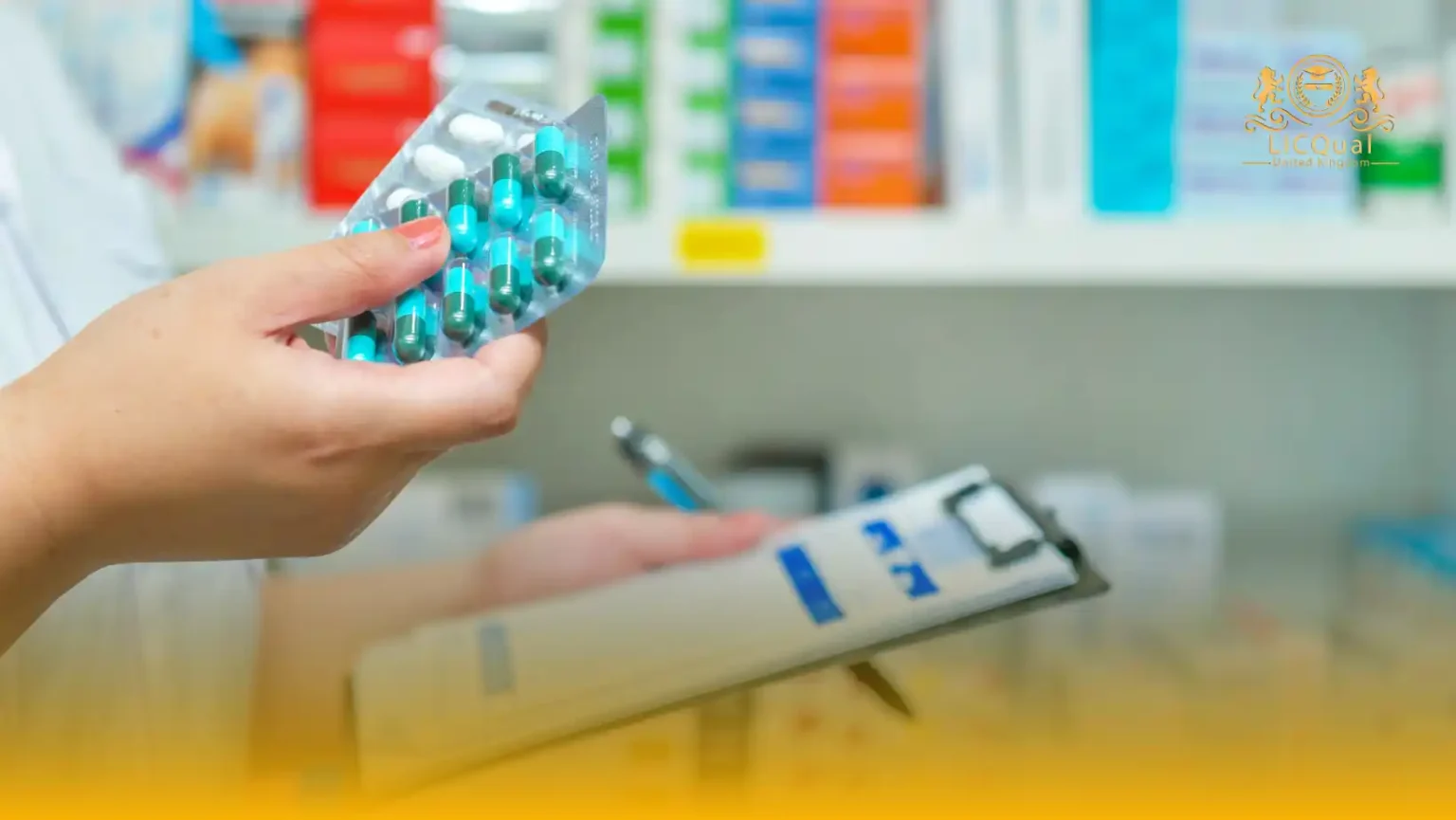
Pharmacy is no longer just about dispensing medicines—it’s about harnessing the power of data to improve patient outcomes, streamline healthcare systems, and drive innovation. The LICQual Level 6 Diploma in Pharmacy Data Analytics (D Pharmacy Data Analytics) is an internationally recognized qualification designed to equip professionals with advanced skills in data analysis, healthcare informatics, and pharmaceutical decision‑making.
Unlike traditional pharmacy programs, this diploma focuses on the integration of data science with pharmacy practice. With the D Pharmacy Data Analytics Diploma, you will gain expertise in statistical modeling, predictive analytics, big data applications, and evidence‑based healthcare strategies. This qualification ensures that pharmacists, healthcare professionals, and industry experts can confidently use data to optimize drug therapy, improve patient safety, and support healthcare policy development.
The Pharmacy Data Analytics Qualification Level 6 stands out because it blends academic depth with practical, real‑world applications. You will explore advanced pharmacy data analytics training modules, engage with case studies, and develop the ability to interpret complex datasets for clinical and pharmaceutical decision‑making. Whether your goal is career progression, international recognition, or specialized skills, this diploma opens doors to opportunities across hospitals, pharmaceutical companies, research institutions, and regulatory agencies.
The International Diploma in Pharmacy Data Analytics is flexible, career‑focused, and accredited, ensuring your qualification is valued worldwide. It is not just a course—it is a professional milestone that strengthens your role in healthcare and empowers you to contribute meaningfully to pharmacy innovation, patient safety, and global healthcare standards.
By enrolling in the LICQual Level 6 Diploma in Pharmacy Data Analytics, you are investing in a future where your expertise directly impacts healthcare efficiency, pharmaceutical innovation, and international pharmacy practice. With its comprehensive curriculum, supportive learning environment, and worldwide accreditation, this diploma is the perfect choice for professionals ready to take the next step in pharmacy data analytics.
Course Overview
Qualification Title
LICQual Level 6 Diploma in Pharmacy Data Analytics (D Pharmacy Data Analytics)
Total Units
6
Total Credits
120
GLH
480
Qualification #
LICQ2201220
Qualification Specification
To enroll in the LICQual Level 6 Diploma in Pharmacy Data Analytics (D Pharmacy Data Analytics), applicants must meet the following criteria:
|
Qualification# |
Unit Title |
Credits |
GLH |
|---|---|---|---|
|
LICQ2201220-1 |
Fundamentals of Pharmacy Data Analytics |
20 |
80 |
|
LICQ2201220-2 |
Data Collection, Management, and Governance |
20 |
80 |
|
LICQ2201220-3 |
Statistical Analysis and Interpretation |
20 |
80 |
|
LICQ2201220-4 |
Predictive Analytics and Modelling |
20 |
80 |
|
LICQ2201220-5 |
Data Visualization and Reporting |
20 |
80 |
|
LICQ2201220-6 |
Research, Innovation, and Continuing Professional Development (CPD) |
20 |
80 |
By the end of this course, learners will be able to:
Unit 1: Fundamentals of Pharmacy Data Analytics
By the end of this unit, learners will be able to:
- Analyse the role and significance of data analytics in pharmacy and healthcare
- Identify key data types, sources, and structures relevant to pharmacy practice
- Evaluate the impact of data analytics on operational efficiency and patient outcomes
Unit 2: Data Collection, Management, and Governance
By the end of this unit, learners will be able to:
- Implement best practices for data collection, storage, and management in pharmacy settings
- Apply data governance principles, ensuring compliance with privacy and regulatory requirements
- Maintain data integrity, accuracy, and security in healthcare environments
Unit 3: Statistical Analysis and Interpretation
By the end of this unit, learners will be able to:
- Apply statistical methods to analyse pharmacy and healthcare data
- Identify trends, patterns, and correlations to support informed decision-making
- Evaluate operational performance and patient care outcomes using statistical tools
Unit 4: Predictive Analytics and Modelling
By the end of this unit, learners will be able to:
- Develop predictive models to forecast trends in pharmacy and healthcare operations
- Apply data-driven and machine learning approaches to assess risks and optimise processes
- Utilise predictive analytics to support proactive and evidence-based decision-making
Unit 5: Data Visualisation and Reporting
By the end of this unit, learners will be able to:
- Create clear and actionable data visualisations to communicate complex information
- Produce reports that effectively inform stakeholders and support decision-making
- Utilise dashboards and business intelligence tools to present insights in pharmacy practice
Unit 6: Research, Innovation, and Continuing Professional Development (CPD)
By the end of this unit, learners will be able to:
- Conduct research projects to enhance pharmacy operations and patient outcomes
- Implement innovative strategies and analytical approaches in pharmacy data analytics
- Engage in Continuing Professional Development (CPD) to maintain expertise and advance professional capabilities
The LICQual Level 6 Diploma in Pharmacy Data Analytics (D Pharmacy Data Analytics) is designed for professionals who want to specialize in healthcare informatics, pharmaceutical data management, and evidence‑based decision‑making. This internationally recognized qualification is ideal for pharmacists, healthcare managers, researchers, and graduates seeking global accreditation, career advancement, and specialized skills in pharmacy data analytics. Whether your goal is to contribute to healthcare innovation, pursue international opportunities, or strengthen your professional profile, this diploma provides the perfect pathway.
1. Practicing Pharmacists
- Looking to expand expertise into pharmacy data analytics and healthcare informatics
- Interested in gaining international accreditation and recognition in pharmaceutical data management
- Seeking advanced knowledge in predictive analytics and drug utilization review
- Wanting to explore career opportunities in hospitals, pharmaceutical companies, and healthcare organizations
- Focused on improving patient safety and pharmaceutical care through data‑driven insights
2. Hospital and Clinical Pharmacists
- Managing patients with complex therapies requiring data‑driven monitoring
- Seeking structured pharmacy data analytics training with practical applications
- Interested in evidence‑based pharmaceutical practices supported by analytics
- Looking to enhance collaboration with physicians and healthcare teams using data insights
- Aiming to strengthen their role in multidisciplinary patient care through analytics
3. Pharmaceutical Industry Professionals
- Working in drug development, production, or clinical trial design
- Interested in pharmacy data analytics diploma online for career advancement
- Seeking specialized knowledge in big data applications and compliance with global standards
- Looking to improve efficiency in pharmaceutical research and manufacturing processes
- Focused on bridging research, development, and patient care with data analytics
4. Academic and Research Professionals
- Teaching or publishing in pharmacy data analytics and healthcare informatics
- Seeking advanced pharmacy data analytics certification programs
- Interested in contributing to evidence‑based drug development and innovation
- Looking to strengthen academic credentials with a Level 6 qualification
- Focused on advancing research methodologies in pharmacy data analytics
5. International Students and Graduates
- Seeking globally accredited pharmacy data analytics diploma programs
- Interested in flexible, career‑focused pharmacy data analytics education
- Looking to qualify for international healthcare and pharmaceutical opportunities
- Wanting to enhance employability with recognized pharmacy data analytics certification
- Focused on building a career in pharmacy data analytics worldwide
6. Healthcare Managers and Regulatory Professionals
- Working in healthcare administration, compliance, or regulatory agencies
- Interested in pharmacy data analytics diploma online for career growth
- Seeking specialized knowledge in healthcare data safety and therapeutic standards
- Looking to improve compliance with international healthcare regulations using analytics
- Focused on bridging management, ethics, and patient care with data‑driven strategies
7. Career‑Focused Science and Pharmacy Graduates
- Recent graduates aiming to specialize in pharmacy data analytics and healthcare informatics
- Looking for structured pharmacy data analytics career qualifications
- Interested in pharmacy data analytics diploma with global accreditation
- Seeking advanced training for professional growth in pharmaceutical innovation
- Focused on building a strong foundation in data‑driven healthcare and pharmacy practice
Centres delivering the LICQual Level 6 Diploma in Pharmacy Data Analytics must adhere to rigorous standards to ensure learners receive a high-quality, professional, and engaging learning experience. Meeting these requirements guarantees that learners develop the advanced knowledge, practical skills, and professional competencies necessary to excel in pharmacy data analytics.
- Qualified and Experienced Staff – Tutors, trainers, and assessors must possess relevant academic qualifications and professional experience in pharmacy, healthcare data analytics, or related fields. Staff should actively participate in Continuing Professional Development (CPD) to remain up-to-date with data analytics techniques, pharmacy operations, and regulatory requirements.
- Access to Learning and Analytical Resources – Centres must provide learners with up-to-date study materials, digital platforms, software tools, datasets, and practical resources to support both theoretical and applied learning.
- Specialized Facilities and Technology – Centres should maintain computer labs, data analysis software, simulation environments, and other technology required for practical data analytics exercises and real-world projects.
- Robust Quality Assurance Systems – Centres must implement internal quality assurance processes, including learner progress monitoring, assessment verification, and compliance with LICQual standards.
- Comprehensive Learner Support – Learners should have access to academic guidance, mentoring, and professional support to enhance their analytical skills, practical competencies, and CPD outcomes.
- Commitment to Educational Excellence – Centres must uphold high standards of teaching, assessment, and learner engagement to ensure learners develop the skills, knowledge, and professional competencies required to succeed in pharmacy data analytics and contribute effectively to healthcare decision-making.
By meeting these requirements, centres provide a world-class learning environment, equipping learners to become highly skilled professionals capable of driving innovation, evidence-based decision-making, and operational excellence within pharmacy and healthcare organizations.
Assessment and Verification
All units within this qualification are subject to internal assessment by the approved centre and external verification by LICQual. The qualification follows a criterion-referenced assessment approach, ensuring that learners meet all specified learning outcomes.
To achieve a ‘Pass’ in any unit, learners must provide valid, sufficient, and authentic evidence demonstrating their attainment of all learning outcomes and compliance with the prescribed assessment criteria. The Assessor is responsible for evaluating the evidence and determining whether the learner has successfully met the required standards.
Assessors must maintain a clear and comprehensive audit trail, documenting the basis for their assessment decisions to ensure transparency, consistency, and compliance with quality assurance requirements.