
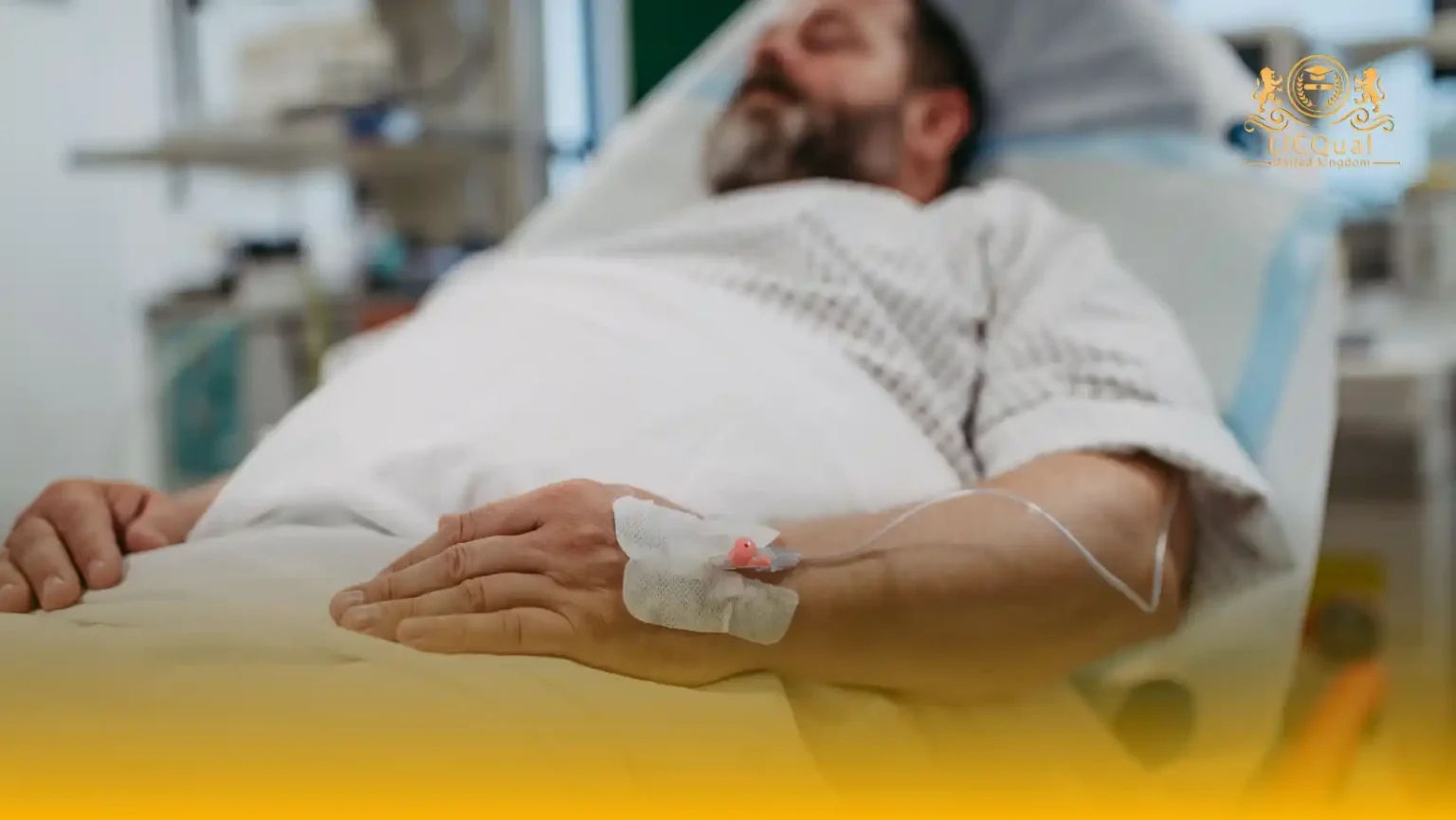
The LICQual Level 6 Diploma in Critical Care Medicine (Dip CCM) is an internationally recognized qualification designed for healthcare professionals who wish to specialize in the management of critically ill patients. This Level 6 Diploma in Critical Care Medicine focuses on developing advanced clinical skills and in-depth knowledge required to deliver life-saving care in emergency and intensive care settings.
This Diploma in Critical Care Medicine UK provides a comprehensive understanding of intensive care principles, mechanical ventilation, emergency response, trauma management, and advanced life support. Learners gain the confidence and expertise to handle high-pressure medical situations and make critical decisions that directly impact patient survival. The program bridges theoretical learning with practical application, making it ideal for doctors, nurses, and paramedics who aim to work in intensive care units (ICUs), emergency departments, and trauma centers.
The LICQual Diploma in Critical Care Medicine also emphasizes evidence-based clinical practices, ethical decision-making, and interdisciplinary collaboration. Students explore a range of topics, including cardiovascular support, sepsis management, airway management, organ failure, and post-operative critical care. By the end of the course, learners will be able to assess, diagnose, and treat critically ill patients using the latest international critical care protocols.
This Advanced Diploma in Critical Care Medicine prepares professionals for leadership roles in hospitals, healthcare facilities, and emergency medical services. The qualification is globally accredited, providing learners with the opportunity to work across different healthcare systems worldwide. It also helps professionals meet continuing medical education requirements while enhancing their career prospects in emergency and intensive care medicine.
The LICQual Level 6 Diploma in Critical Care Medicine (Dip CCM) is more than just a qualification—it’s a gateway to mastering the art and science of saving lives. Whether you are looking to advance your career, gain specialized ICU expertise, or strengthen your ability to provide advanced life support, this program equips you with the skills, confidence, and global recognition to excel in the demanding field of critical care medicine.
Course Overview
Qualification Title
LICQual Level 6 Diploma in Critical Care Medicine (Dip CCM)
Total Units
6
Total Credits
120
GLH
480
Qualification #
LICQ2200930
Qualification Specification
To enroll in theLICQual Level 6 Diploma in Critical Care Medicine (Dip CCM), applicants must meet the following criteria:
|
Qualification# |
Unit Title |
Credits |
GLH |
|---|---|---|---|
|
LICQ2200930-1 |
Principles of Critical Care Medicine |
20 |
80 |
|
LICQ2200930-2 |
Patient Assessment and Monitoring |
20 |
80 |
|
LICQ2200930-3 |
Respiratory and Cardiovascular Critical Care |
20 |
80 |
|
LICQ2200930-4 |
Neurological, Renal, and Multi-Organ Support |
20 |
80 |
|
LICQ2200930-5 |
Infectious Diseases and Critical Care Pharmacology |
20 |
80 |
|
LICQ2200930-6 |
Research, Leadership, and Professional Development in Critical Care |
20 |
80 |
By the end of this course, learners will be able to:
Unit 1: Principles of Critical Care Medicine
By the end of this unit, learners will be able to:
- Critically evaluate the principles and scope of critical care medicine.
- Analyse the roles and responsibilities of critical care professionals in diverse healthcare settings.
- Demonstrate understanding of ethical and legal considerations in intensive care practice.
- Integrate evidence-based approaches to ensure patient safety and quality improvement.
- Apply critical care guidelines and protocols to professional practice.
Unit 2: Patient Assessment and Monitoring
By the end of this unit, learners will be able to:
- Conduct thorough patient assessments in critical care environments.
- Analyse advanced monitoring data including haemodynamic, respiratory, and neurological parameters.
- Apply early warning systems and risk assessment tools effectively.
- Demonstrate accurate documentation and communication of clinical findings.
- Develop patient management strategies based on monitoring outcomes.
Unit 3: Respiratory and Cardiovascular Critical Care
By the end of this unit, learners will be able to:
- Assess and manage acute respiratory failure using evidence-based ventilation strategies.
- Demonstrate competence in advanced airway management techniques.
- Analyse cardiovascular function and implement haemodynamic support measures.
- Identify and manage shock and acute cardiac emergencies.
- Apply advanced cardiac life support principles in critical care scenarios.
Unit 4: Neurological, Renal, and Multi-Organ Support
By the end of this unit, learners will be able to:
- Monitor and manage neurological conditions in critically ill patients.
- Implement renal replacement therapy and optimise fluid management.
- Analyse and manage multi-organ dysfunction and sepsis.
- Apply evidence-based approaches to pain, sedation, and delirium management.
- Demonstrate understanding of end-of-life care considerations in ICU settings.
Unit 5: Infectious Diseases and Critical Care Pharmacology
By the end of this unit, learners will be able to:
- Apply infection control and prevention strategies in intensive care units.
- Analyse and manage sepsis and systemic infections using evidence-based protocols.
- Demonstrate knowledge of critical care pharmacology, including antibiotics, vasoactive drugs, and sedatives.
- Evaluate drug interactions and adjust dosages for critically ill patients.
- Implement antimicrobial stewardship in intensive care practice.
Unit 6: Research, Leadership, and Professional Development in Critical Care
By the end of this unit, learners will be able to:
- Critically appraise research and evidence-based practices in critical care.
- Design and conduct clinical audits and research projects relevant to ICU settings.
- Demonstrate leadership and team management skills in critical care environments.
- Develop a personal Continuing Professional Development (CPD) plan.
- Apply ethical, cultural, and legal considerations to clinical decision-making in intensive care.
The LICQual Level 6 Diploma in Critical Care Medicine (Dip CCM) is designed for healthcare professionals who aim to work in demanding medical environments and deliver advanced patient care. This qualification equips learners with the practical expertise, critical judgment, and clinical knowledge required to manage seriously ill patients in emergency, trauma, and intensive care settings. Whether you are a doctor, nurse, or paramedic, this diploma helps you strengthen your skills, make informed medical decisions, and advance your career in critical care medicine.
1. Medical Doctors and Physicians
- Ideal for doctors who want to specialize in critical care, emergency medicine, or intensive care management.
- Provides comprehensive knowledge of mechanical ventilation, hemodynamic monitoring, and organ support systems.
- Enhances diagnostic and clinical decision-making skills in life-threatening conditions.
- Builds proficiency in managing sepsis, cardiac arrest, trauma, and postoperative complications.
- Helps physicians fulfill international CME requirements and gain global recognition.
2. Intensive Care and Emergency Nurses
- Tailored for nurses working or aspiring to work in ICU, CCU, or emergency departments.
- Strengthens understanding of advanced life support systems and patient monitoring equipment.
- Develops confidence in caring for ventilated or multi-organ failure patients.
- Improves teamwork and communication skills in interdisciplinary settings.
- Supports career advancement into specialized or senior nursing positions.
3. Paramedics and Emergency Medical Technicians (EMTs)
- Equips paramedics with the ability to stabilize and manage critically ill patients during transport.
- Covers emergency response protocols and trauma management strategies.
- Focuses on rapid assessment and early intervention techniques.
- Enhances coordination with hospital emergency and intensive care teams.
- Opens up opportunities for leadership roles in emergency medical services.
4. Anaesthetists and Critical Care Specialists
- Provides advanced training in airway management, sedation, and patient resuscitation.
- Focuses on perioperative and postoperative critical care management.
- Develops expertise in ventilator settings and pain management in ICUs.
- Promotes understanding of multidisciplinary patient care models.
- Suitable for professionals seeking international credentials in critical care.
5. Hospital Administrators and Healthcare Managers
- Designed for professionals managing critical care or emergency departments.
- Builds understanding of healthcare resource allocation and crisis management.
- Strengthens the ability to implement evidence-based care protocols.
- Supports initiatives in patient safety and quality improvement.
- Enhances leadership skills in managing critical care units effectively.
6. Medical Educators and Clinical Trainers
- Suitable for educators training healthcare staff in emergency and intensive care practices.
- Offers up-to-date insights into critical care technologies and global best practices.
- Enables the design of simulation-based medical training programs.
- Encourages research and academic growth in the field of critical care.
- Strengthens credibility as an expert in medical education and clinical mentorship.
7. Healthcare Professionals Seeking Global Career Growth
- Ideal for those seeking internationally recognized qualifications in critical care medicine.
- Opens pathways to global healthcare roles in hospitals and humanitarian organizations.
- Enhances employability in specialized and high-acuity care environments.
- Provides a solid foundation for postgraduate studies in critical care.
- Builds the confidence to deliver life-saving care under pressure with international standards.
To ensure high-quality delivery and learner success, centres offering the LICQual Level 6 Diploma in Critical Care Medicine must meet the following requirements:
- Qualified and Competent Staff: Centres must have experienced and professionally qualified tutors, instructors, and support staff with expertise in critical care, intensive medicine, or related healthcare fields.
- Comprehensive Learning Resources: Access to up-to-date textbooks, journals, e-learning platforms, clinical case studies, and practical resources to support in-depth learning.
- Clinical and Simulation Facilities: Centres should provide access to appropriate clinical settings or high-fidelity simulation labs to enable practical training and skill development.
- Technology and IT Infrastructure: Reliable IT resources, online learning platforms, and multimedia tools to facilitate blended or remote learning.
- Supportive Learning Environment: Mentoring, academic guidance, and learner support should be available throughout the course to maximise engagement and achievement.
- Assessment and Quality Assurance: Centres must implement robust assessment, feedback, and quality assurance systems to maintain compliance with LICQual standards and international best practices.
- Health and Safety Compliance: All practical and clinical training areas must meet health, safety, and ethical standards relevant to intensive care medicine.
Meeting these requirements ensures that learners receive professional, high-quality education and practical experience, enabling them to successfully complete the LICQual Level 6 Diploma in Critical Care Medicine and advance their careers in critical care and acute medicine.
Assessment and Verification
All units within this qualification are subject to internal assessment by the approved centre and external verification by LICQual. The qualification follows a criterion-referenced assessment approach, ensuring that learners meet all specified learning outcomes.
To achieve a ‘Pass’ in any unit, learners must provide valid, sufficient, and authentic evidence demonstrating their attainment of all learning outcomes and compliance with the prescribed assessment criteria. The Assessor is responsible for evaluating the evidence and determining whether the learner has successfully met the required standards.
Assessors must maintain a clear and comprehensive audit trail, documenting the basis for their assessment decisions to ensure transparency, consistency, and compliance with quality assurance requirements.