
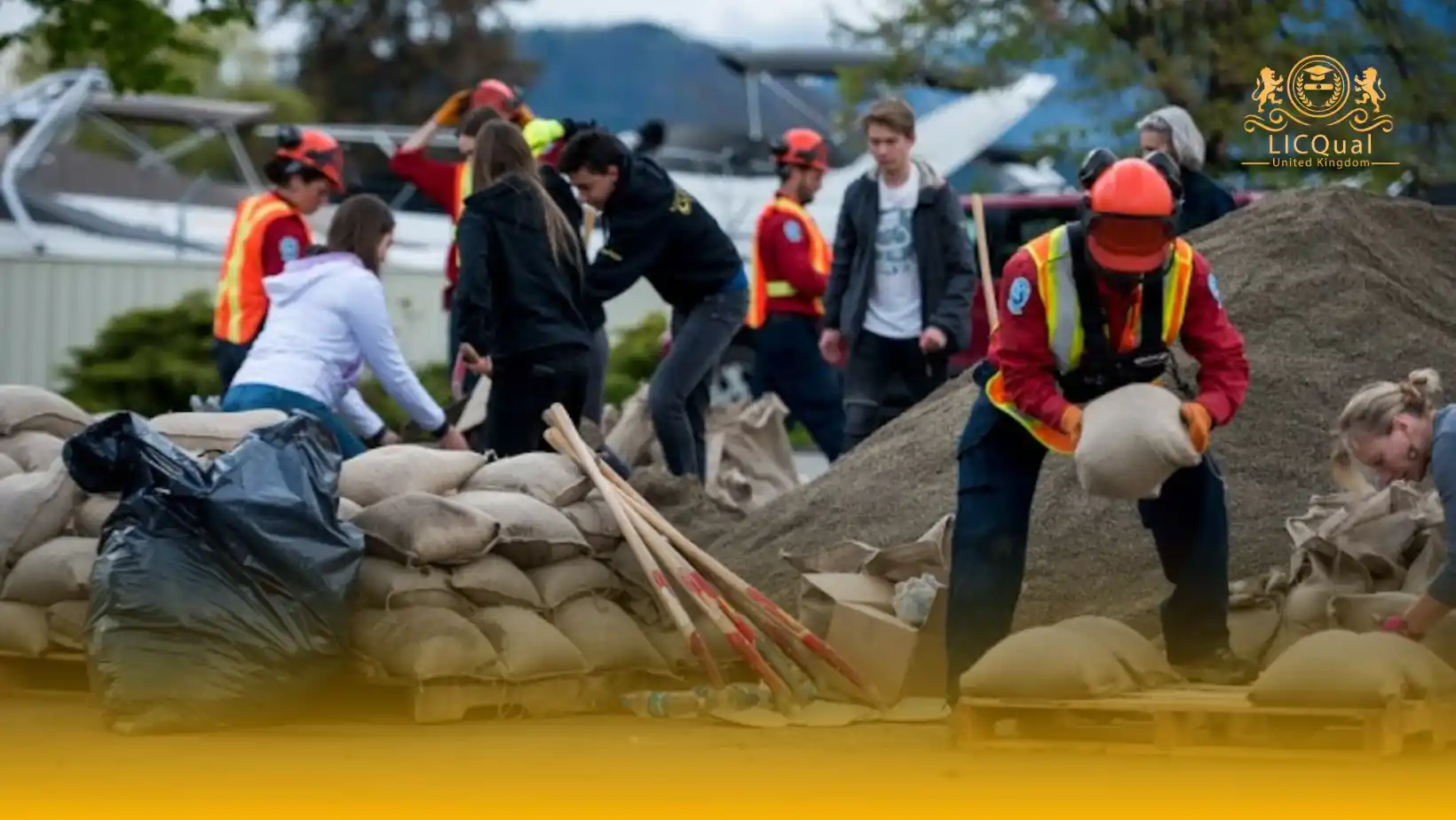
Unlock your potential in the field of disaster management with the LICQual Level 4 International Diploma in Disaster Management. This advanced qualification is designed for professionals who want to deepen their knowledge and expand their skills in handling large-scale, complex disasters.
Whether you’re aiming to take on leadership roles in emergency response, humanitarian aid, or disaster risk management, this diploma provides the critical expertise required to succeed in today’s rapidly changing global landscape.
The LICQual Level 4 International Diploma in Disaster Management is perfect for individuals seeking to enhance their career prospects by mastering disaster risk reduction, effective response strategies, and recovery planning on an international scale. This comprehensive course will prepare you to tackle real-world challenges and lead disaster management efforts with confidence and expertise.
The LICQual Level 4 International Diploma in Disaster Management is a specialized program designed to equip learners with the advanced skills needed to manage disasters and emergency situations on a global scale. This course focuses on the development of strategic disaster management skills, emphasizing risk assessment, crisis communication, resource mobilization, and long-term recovery processes.
LICQual Level 4 International Diploma in Disaster Management is ideal for professionals already working in disaster management or related sectors such as public safety, healthcare, or environmental science. It also serves as a stepping stone for those aspiring to lead large-scale disaster response initiatives and international humanitarian operations.
Upon successful completion of the LICQual Level 4 International Diploma in Disaster Management, you will have the practical skills and strategic insight to drive effective disaster management efforts, mitigate risks, and lead recovery processes in both local and global contexts. Start your journey today and become a global leader in disaster management.
Course Overview
Qualification Title
LICQual Level 4 International Diploma in Disaster Management
Total Units
6
Total Credits
60
GLH
300
Qualification #
LICQ2200007
Qualification Specification
To enroll in the LICQual Level 4 International Diploma in Disaster Management, applicants must meet the following criteria:
|
Qualification# |
Unit Title |
Credits |
GLH |
|---|---|---|---|
|
LICQ2200007-1 |
Overview of Disaster Management |
10 |
50 |
|
LICQ2200007-2 |
Disaster Management Approaches: Preparedness, Response and Recovery |
10 |
50 |
|
LICQ2200007-3 |
Natural Hazards and Resilient Communities |
10 |
50 |
|
LICQ2200007-4 |
Geospatial Techniques in Disaster Management: A Critical Introduction |
10 |
50 |
|
LICQ2200007-5 |
Leadership in Disaster Management |
10 |
50 |
|
LICQ2200007-6 |
International Collaboration in Disaster Management |
10 |
50 |
By the end of this course, learners will be able to:
Overview of Disaster Management
- Demonstrate a comprehensive understanding of the principles, frameworks, and stages involved in disaster management.
- Analyze the global disaster management structure, including the roles of various stakeholders such as governments, NGOs, and international organizations.
- Evaluate the significance of disaster management policies, standards, and agreements in shaping response and recovery efforts.
- Identify the key factors that influence disaster risk and develop strategies to address them on an international scale.
Disaster Management Approaches: Preparedness, Response, and Recovery
- Assess and apply strategies for effective disaster preparedness, including risk assessment, early warning systems, and public awareness campaigns.
- Evaluate the operational aspects of disaster response, including coordination, logistics, and resource management.
- Analyze the phases of disaster recovery, focusing on long-term rebuilding and resilience-building strategies.
- Integrate the phases of preparedness, response, and recovery to create a seamless disaster management plan.
Natural Hazards and Resilient Communities
- Identify and evaluate different types of natural hazards (earthquakes, floods, hurricanes) and their impact on communities and infrastructure.
- Assess community vulnerability to natural hazards and develop strategies for disaster risk reduction (DRR) and resilience building.
- Explore methods for enhancing community preparedness and creating adaptive, resilient environments in the face of recurring natural hazards.
- Examine the role of sustainable development in fostering resilience and reducing vulnerability to disasters.
Geospatial Techniques in Disaster Management: A Critical Introduction
- Understand the key geospatial technologies, including Geographic Information Systems (GIS) and remote sensing, used in disaster management.
- Analyze the role of spatial data collection, mapping, and analysis in disaster risk assessment, response, and recovery.
- Apply geospatial tools to real-world disaster scenarios, demonstrating how they can support decision-making and operational efficiency in disaster management.
- Critically evaluate the benefits and limitations of geospatial techniques in enhancing disaster management practices.
Leadership in Disaster Management
- Develop leadership skills crucial for disaster management, including effective decision-making, crisis management, and communication during high-stress situations.
- Lead disaster management teams, managing resources and coordinating efforts among diverse stakeholders in response to emergencies.
- Assess different leadership styles and their application in disaster management settings, fostering collaboration and motivating teams.
- Demonstrate strategic thinking in planning, managing, and executing disaster response and recovery operations.
International Collaboration in Disaster Management
- Examine the role of international collaboration in disaster management and the coordination required among multiple agencies and nations.
- Understand global disaster management frameworks, humanitarian aid systems, and the complexities of cross-border disaster relief.
- Analyze the challenges and benefits of working collaboratively in international disaster scenarios, ensuring effective resource-sharing and operational coordination.
- Evaluate case studies of international disaster response efforts, identifying best practices and lessons learned for future collaboration.
This diploma is ideal for:
Assessment and Verification
All units within this qualification are subject to internal assessment by the approved centre and external verification by LICQual. The qualification follows a criterion-referenced assessment approach, ensuring that learners meet all specified learning outcomes.
To achieve a ‘Pass’ in any unit, learners must provide valid, sufficient, and authentic evidence demonstrating their attainment of all learning outcomes and compliance with the prescribed assessment criteria. The Assessor is responsible for evaluating the evidence and determining whether the learner has successfully met the required standards.
Assessors must maintain a clear and comprehensive audit trail, documenting the basis for their assessment decisions to ensure transparency, consistency, and compliance with quality assurance requirements.