
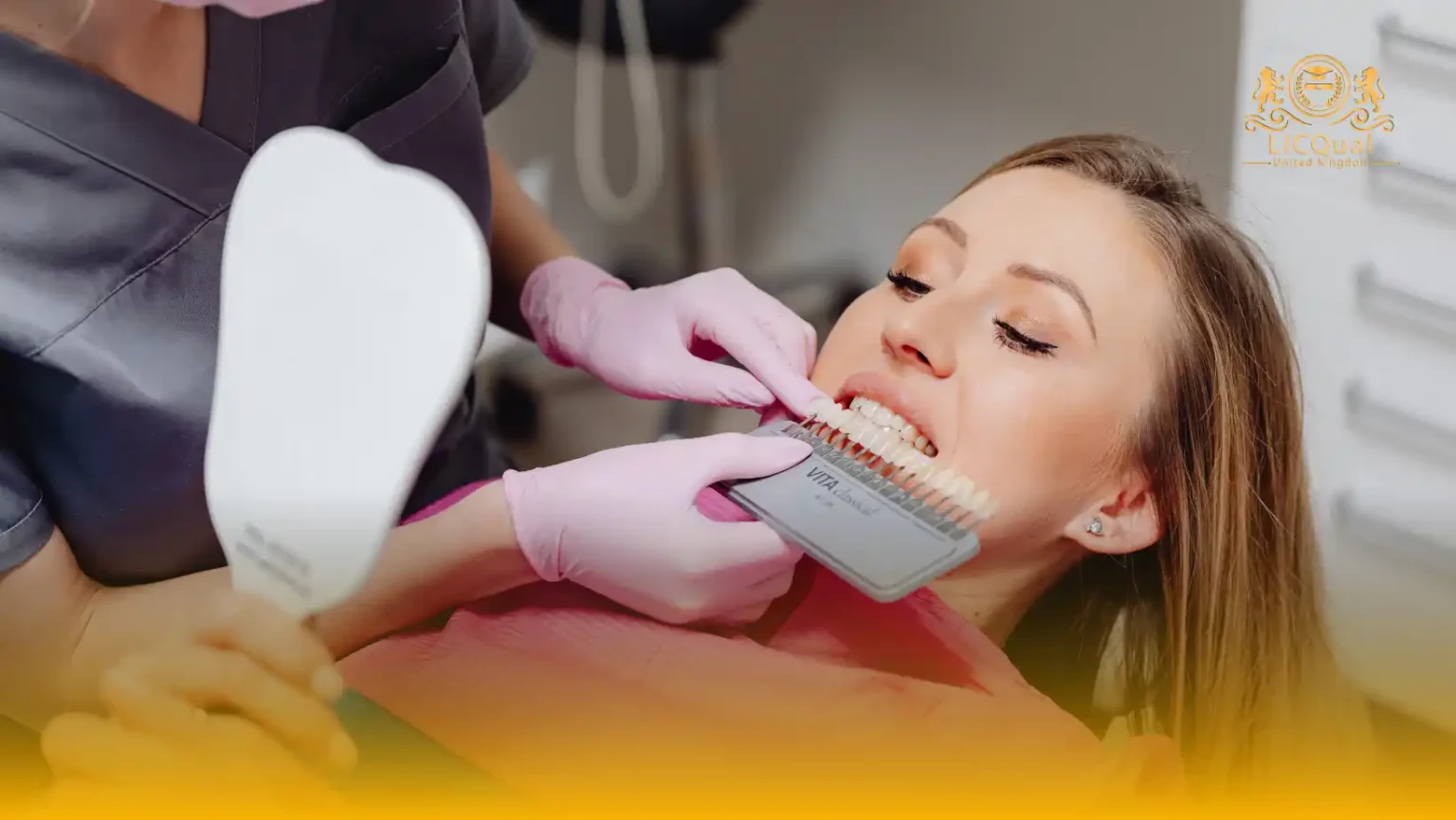
Prosthodontics
Restoring oral function, comfort, and aesthetics is a fundamental goal of modern dentistry, and prosthodontics plays a central role in achieving these outcomes. The LICQual Level 3 Diploma in Prosthodontics provides learners with an in-depth understanding of the specialised branch of dentistry focused on the replacement and restoration of missing or damaged teeth through advanced prosthetic solutions.
A key element of this diploma is the study of fixed and removable prosthodontic treatments, including crowns, bridges, dentures, implant-supported restorations, and full-mouth rehabilitation concepts. Learners explore dental occlusion, treatment planning, restorative materials, patient assessment, and the principles used to restore oral function, appearance, and long-term dental health. The programme also examines contemporary technologies and evidence-based approaches used in prosthodontic care.
Built around current developments in restorative dentistry, this qualification offers valuable insight into the science and practice of tooth replacement and oral rehabilitation. Learners develop a comprehensive understanding of prosthodontic procedures, restorative treatment strategies, and the clinical considerations involved in delivering functional, durable, and natural-looking dental restorations.
Course Overview
Qualification Title
LICQual Level 3 Diploma in Prosthodontics
Total Units
6
Total Credits
60
GLH
240
Qualification #
LICQ2200655
Qualification Specification
To enroll in the LICQual Level 3 Diploma in Prosthodontics, applicants must meet the following criteria:
|
Qualification# |
Unit Title |
Credits |
GLH |
|---|---|---|---|
|
LICQ2200655-1 |
Principles of Prosthodontics |
10 |
40 |
|
LICQ2200655-2 |
Removable Prosthodontics |
10 |
40 |
|
LICQ2200655-3 |
Fixed Prosthodontics |
10 |
40 |
|
LICQ2200655-4 |
Implant-Supported Prosthodontics |
10 |
40 |
|
LICQ2200655-5 |
Occlusion and Functional Assessment |
10 |
40 |
|
LICQ2200655-6 |
Clinical Case Management and Treatment Planning |
10 |
40 |
By the end of this course, learners will be able to:
Unit 1: Principles of Prosthodontics
- Explain the fundamental concepts and principles of prosthodontics.
- Assess patients’ oral health and identify prosthodontic needs.
- Understand different types of prosthetic appliances and their applications.
- Apply knowledge of prosthodontic terminology in clinical contexts.
Unit 2: Removable Prosthodontics
- Design and fabricate removable dental prostheses.
- Evaluate patient suitability for dentures and other removable appliances.
- Perform fitting, adjustment, and maintenance of removable prosthetics.
- Address common complications associated with removable appliances.
Unit 3: Fixed Prosthodontics
- Plan and prepare teeth for fixed restorations such as crowns and bridges.
- Select appropriate materials for fixed prosthetic applications.
- Demonstrate clinical procedures for the placement of fixed restorations.
- Identify and manage potential complications in fixed prosthodontic treatments.
Unit 4: Implant-Supported Prosthodontics
- Understand the principles and procedures of implant-supported prostheses.
- Evaluate patients for suitability for dental implants.
- Plan and restore implant-supported prosthetic treatments.
- Demonstrate knowledge of surgical considerations and post-operative care.
Unit 5: Occlusion and Functional Assessment
- Analyse occlusion and jaw function in prosthodontic patients.
- Apply bite analysis techniques to support treatment planning.
- Identify and correct occlusal issues in prosthetic cases.
- Understand the relationship between occlusion, function, and patient comfort.
Unit 6: Clinical Case Management and Treatment Planning
- Assess complex prosthodontic cases and develop comprehensive treatment plans.
- Apply clinical decision-making skills in patient management.
- Integrate knowledge of removable, fixed, and implant prosthodontics in case planning.
- Evaluate treatment outcomes and propose improvements for future cases.
This qualification is ideal for:
- Dental professionals looking to enhance their understanding of prosthodontics and restorative dental care.
- Individuals interested in studying crowns, bridges, dentures, and implant-supported prosthetic restorations.
- Learners seeking in-depth knowledge of tooth replacement techniques and full-mouth rehabilitation concepts.
- Professionals wishing to develop expertise in restorative treatment planning and prosthodontic procedures.
- Individuals interested in understanding dental occlusion, oral function, and aesthetic restoration principles.
- Learners aiming to explore modern prosthodontic materials, technologies, and evidence-based treatment approaches.
- Those seeking knowledge of fixed and removable prosthodontic appliances used in contemporary dentistry.
- Professionals looking to strengthen their understanding of patient assessment and long-term restorative care strategies.
- Individuals interested in improving their knowledge of oral rehabilitation and functional dental restoration.
- Learners seeking a recognised qualification in a specialised field of restorative and prosthetic dentistry with growing global demand.
To deliver the LICQual Level 3 Certificate in Prosthodontics effectively, training centres must meet the following requirements to ensure high-quality learning and learner success:
- Qualified and Competent Staff: Centres must have experienced dental educators and clinicians who hold recognised qualifications in prosthodontics or related dental fields. Staff should be skilled in both theoretical instruction and practical training.
- Adequate Facilities: Centres must provide suitable clinical environments, including treatment rooms, laboratories, and demonstration areas that meet health and safety standards.
- Access to Prosthodontic Materials: Centres should supply learners with all necessary materials, tools, and equipment for practical training, including removable and fixed prosthetic components, dental implants, and impression materials.
- Learning Resources: Centres must provide up-to-date learning materials, textbooks, and digital resources to support both theoretical and practical components of the course.
- Health and Safety Compliance: Centres must comply with all relevant dental health and safety regulations, infection control standards, and professional guidelines.
- Assessment and Support: Centres should have systems in place for continuous learner assessment, feedback, and guidance to ensure successful course completion.
- Commitment to Quality: Centres must maintain high standards of teaching, monitoring, and quality assurance to provide an effective and professional learning experience.
Meeting these centre requirements ensures learners receive comprehensive, safe, and practical training, equipping them with the skills and confidence to excel in prosthodontics.
Assessment and Verification
All units within this qualification are subject to internal assessment by the approved centre and external verification by LICQual. The qualification follows a criterion-referenced assessment approach, ensuring that learners meet all specified learning outcomes.
To achieve a ‘Pass’ in any unit, learners must provide valid, sufficient, and authentic evidence demonstrating their attainment of all learning outcomes and compliance with the prescribed assessment criteria. The Assessor is responsible for evaluating the evidence and determining whether the learner has successfully met the required standards.
Assessors must maintain a clear and comprehensive audit trail, documenting the basis for their assessment decisions to ensure transparency, consistency, and compliance with quality assurance requirements.