
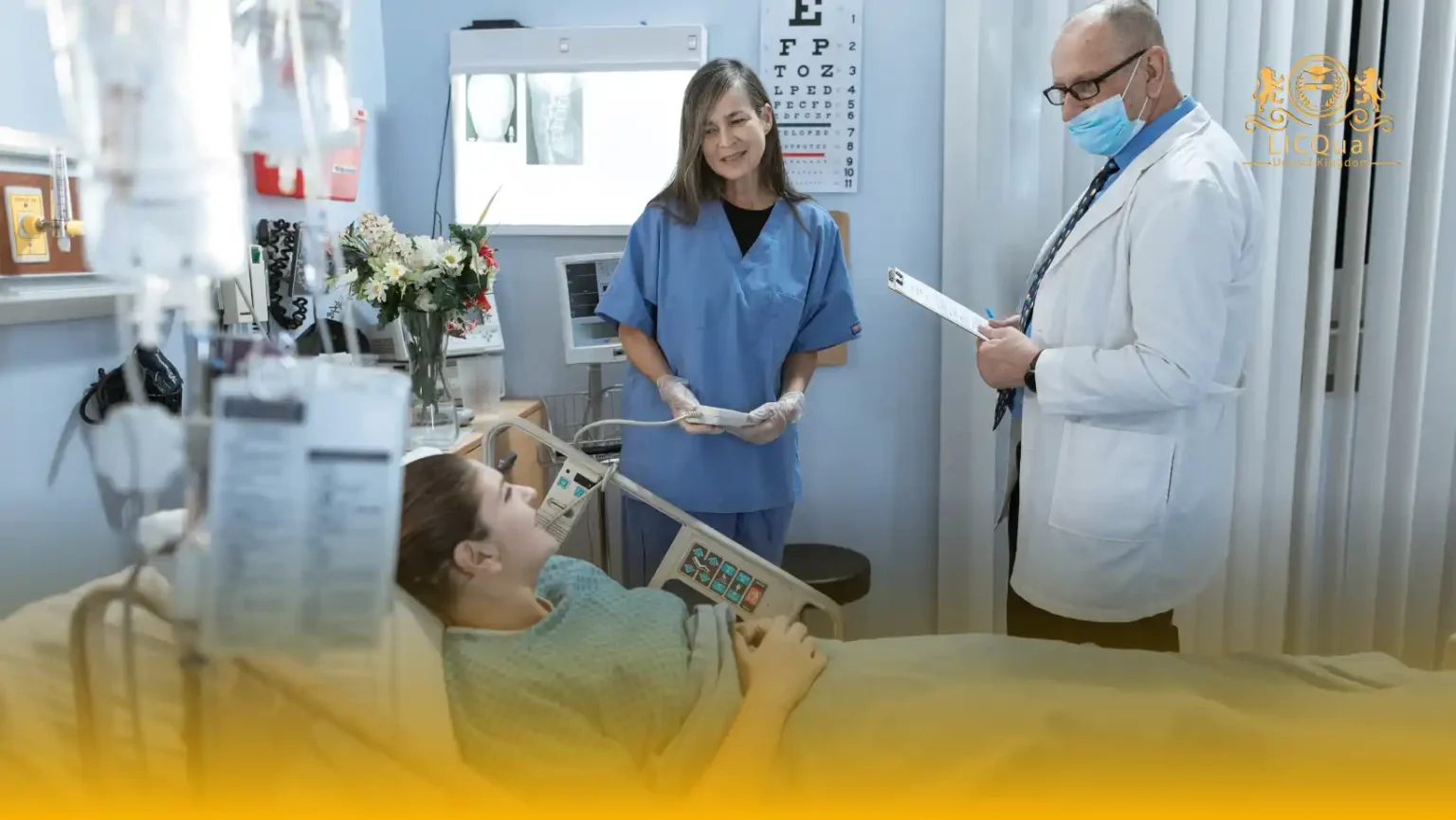
The LICQual Level 3 Diploma in Healthcare Quality and Patient Safety is a practical and comprehensive program designed to equip healthcare professionals with the knowledge and skills needed to improve patient care and ensure safety across healthcare settings. This diploma focuses on building expertise in healthcare quality management, patient safety protocols, risk assessment, and compliance with industry standards. It is ideal for healthcare staff, administrators, and professionals who want to advance their careers in hospital and clinical management.
Through this Level 3 Healthcare Quality and Patient Safety course, learners gain a deep understanding of healthcare quality improvement strategies, patient safety management, and hospital risk reduction. The program combines theory with real-world applications, ensuring that you can implement effective quality and safety practices in your workplace. By completing this diploma, you will be prepared to manage patient safety initiatives, lead quality improvement projects, and contribute to safer and more efficient healthcare operations.
This LICQual Healthcare Quality and Patient Safety Diploma emphasizes professional growth and practical skills, enabling learners to become certified patient safety specialists and healthcare quality managers. Whether you are new to healthcare administration or looking to enhance your expertise, this program equips you with the tools to improve healthcare outcomes, reduce risks, and enhance operational efficiency.
The course is structured to be accessible and interactive, with case studies, practical exercises, and guided learning, allowing you to learn healthcare quality and patient safety skills online at your own pace.
Course Overview
Qualification Title
LICQual Level 3 Diploma in Healthcare Quality and Patient Safety
Total Units
6
Total Credits
60
GLH
240
Qualification #
LICQ2200735
Qualification Specification
To enroll in the LICQual Level 3 Diploma in Healthcare Quality and Patient Safety, applicants must meet the following criteria:
|
Qualification# |
Unit Title |
Credits |
GLH |
|---|---|---|---|
|
LICQ2200735-1 |
Principles of Healthcare Quality Management |
10 |
40 |
|
LICQ2200735-2 |
Patient Safety and Risk Management |
10 |
40 |
|
LICQ2200735-3 |
Clinical Governance and Compliance |
10 |
40 |
|
LICQ2200735-4 |
Data Management and Quality Improvement Tools |
10 |
40 |
|
LICQ2200735-5 |
Leadership and Communication in Quality and Safety |
10 |
40 |
|
LICQ2200735-6 |
Applied Healthcare Quality and Safety Projects |
10 |
40 |
By the end of this course, learners will be able to:
Unit 1: Principles of Healthcare Quality Management
By the end of this unit, learners will be able to:
- Explain the core principles and concepts of healthcare quality management.
- Analyse the role of quality frameworks and accreditation standards in patient care.
- Evaluate regulatory and ethical considerations in healthcare quality assurance.
- Apply quality management principles to real-world healthcare settings.
Unit 2: Patient Safety and Risk Management
By the end of this unit, learners will be able to:
- Identify and assess potential risks to patient safety within healthcare settings.
- Implement strategies to prevent errors and adverse events.
- Monitor and report safety incidents in accordance with best practice.
- Promote a culture of safety and accountability among healthcare teams.
Unit 3: Clinical Governance and Compliance
By the end of this unit, learners will be able to:
- Explain the principles and purpose of clinical governance in healthcare.
- Monitor compliance with healthcare policies, procedures, and regulations.
- Analyse clinical processes and performance indicators to identify improvement opportunities.
- Apply continuous improvement strategies to enhance patient care quality.
Unit 4: Data Management and Quality Improvement Tools
By the end of this unit, learners will be able to:
- Collect, analyse, and interpret healthcare quality and safety data.
- Apply quality improvement tools and methodologies effectively.
- Present data-driven findings to support decision-making processes.
- Implement data-based strategies to improve patient outcomes and organisational performance.
Unit 5: Leadership and Communication in Quality and Safety
By the end of this unit, learners will be able to:
- Demonstrate leadership skills in managing quality and patient safety initiatives.
- Communicate effectively with healthcare teams and stakeholders.
- Foster collaboration and accountability within healthcare organisations.
- Influence organisational culture to prioritise quality and patient safety.
Unit 6: Applied Healthcare Quality and Safety Projects
By the end of this unit, learners will be able to:
- Analyse real-world healthcare quality and patient safety challenges.
- Plan, implement, and manage improvement projects effectively.
- Evaluate project outcomes and determine effectiveness.
- Recommend strategies for sustainable improvements in healthcare quality and safety.
The LICQual Level 3 Diploma in Healthcare Quality and Patient Safety is designed for experienced healthcare professionals who wish to advance their expertise in delivering high-quality care and maintaining patient safety across healthcare settings. This qualification is not intended for fresh candidates and is ideal for those seeking to enhance their career prospects, broaden their knowledge, and strengthen their Continuing Professional Development (CPD).
This course is suitable for:
- Healthcare quality assurance and compliance officers aiming to improve organizational standards.
- Hospital administrators and operational managers responsible for implementing quality and safety initiatives.
- Clinical supervisors and department heads seeking to enhance patient safety and service delivery.
- Healthcare professionals committed to CPD who wish to develop leadership, analytical, and risk management skills.
- Allied health professionals and clinicians interested in understanding and applying quality management principles to improve patient outcomes.
- Risk management and safety coordinators who want to implement effective patient safety strategies and continuous improvement initiatives.
Enrolling in this course enables learners to gain practical, strategic, and analytical skills to lead quality improvement initiatives, enhance patient safety protocols, and contribute to organisational excellence, preparing them for senior roles in healthcare quality and patient safety management.
To deliver the LICQual Level 3 Diploma in Healthcare Quality and Patient Safety, centres must meet specific standards to ensure high-quality training, learner success, and compliance with international educational standards. Key requirements include:
- Qualified and Competent Staff – Trainers, assessors, and internal quality assurers must hold relevant qualifications and professional experience in healthcare quality management, patient safety, and operational governance.
- Access to Learning Resources – Centres must provide learners with up-to-date study materials, case studies, practical tools, and digital resources to support effective learning and skill development.
- Appropriate Facilities – Training environments, whether physical or online, should include secure IT systems, multimedia equipment, and collaborative spaces for workshops, seminars, and project-based learning.
- Assessment and Quality Assurance Systems – Centres must implement robust assessment procedures, internal verification, and quality assurance processes to ensure consistent and credible learner outcomes.
- Learner Support Services – Academic guidance, technical support, and career development resources should be available to support learners throughout the qualification.
- Compliance and Data Security – Centres must follow best practices in information management, data protection, and adherence to relevant healthcare regulations when handling learner information.
- Commitment to CPD and Continuous Improvement – Centres should foster a professional learning environment that encourages continuous improvement, staff development, and learner progression.
By meeting these requirements, centres create an environment that enables learners to develop practical, strategic, and analytical skills, preparing them to lead quality improvement initiatives, enhance patient safety, and contribute to healthcare organizational excellence.
Assessment and Verification
All units within this qualification are subject to internal assessment by the approved centre and external verification by LICQual. The qualification follows a criterion-referenced assessment approach, ensuring that learners meet all specified learning outcomes.
To achieve a ‘Pass’ in any unit, learners must provide valid, sufficient, and authentic evidence demonstrating their attainment of all learning outcomes and compliance with the prescribed assessment criteria. The Assessor is responsible for evaluating the evidence and determining whether the learner has successfully met the required standards.
Assessors must maintain a clear and comprehensive audit trail, documenting the basis for their assessment decisions to ensure transparency, consistency, and compliance with quality assurance requirements.