
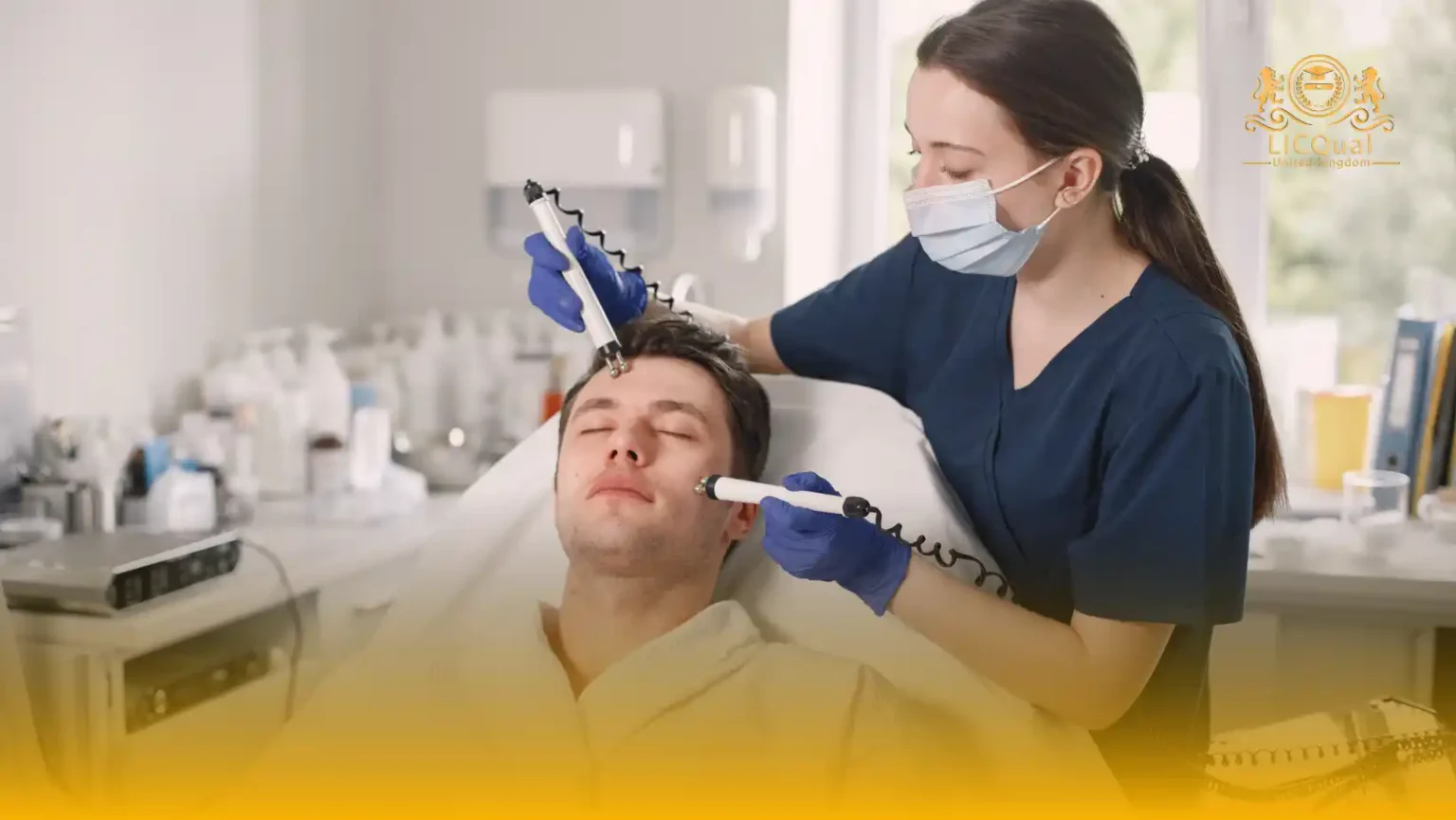
The LICQual Level 3 Diploma in Clinical Dermatology (Dip CD) is a globally recognized qualification designed for healthcare professionals who want to build advanced expertise in diagnosing, managing, and treating common skin conditions. This clinical dermatology diploma course provides a strong foundation in dermatological science, equipping learners with the skills to deliver safe, effective, and evidence-based care in both clinical and community settings.
Unlike short workshops or unaccredited programs, the Level 3 Diploma in Clinical Dermatology offers a structured, accredited pathway that combines academic knowledge with practical application. Whether you are a doctor, nurse, or healthcare practitioner, this LICQual clinical dermatology qualification ensures you gain the confidence and credibility to address a wide range of dermatological concerns, from acne and eczema to pigmentation disorders and chronic skin conditions.
The curriculum is designed to be comprehensive yet approachable, covering essential topics such as skin anatomy, dermatological diagnostics, treatment protocols, and patient-centered care. With a focus on real-world application, the Dip CD clinical dermatology training prepares learners to integrate dermatology into their professional practice while meeting international standards of care.
What makes this program stand out is its balance of theory and practice. Learners benefit from expert-led modules, case-based learning, and interactive resources that simplify complex concepts. The accredited clinical dermatology course is also CPD-approved, making it an excellent choice for professionals seeking continuous development and career advancement.
If you are looking for the best clinical dermatology diploma for healthcare professionals, the LICQual Level 3 Diploma in Clinical Dermatology offers the perfect opportunity to enhance your career, expand your clinical expertise, and join a growing network of specialists shaping the future of skin health.
Course Overview
Qualification Title
LICQual Level 3 Diploma in Clinical Dermatology (Dip CD)
Total Units
6
Total Credits
60
GLH
240
Qualification #
LICQ2200869
Qualification Specification
To enroll in the LICQual Level 3 Diploma in Clinical Dermatology (Dip CD), applicants must meet the following criteria:
|
Qualification# |
Unit Title |
Credits |
GLH |
|---|---|---|---|
|
LICQ2200869-1 |
Skin Anatomy and Physiology |
10 |
40 |
|
LICQ2200869-2 |
Dermatological Conditions and Pathophysiology |
10 |
40 |
|
LICQ2200869-3 |
Patient Assessment and Diagnostic Techniques |
10 |
40 |
|
LICQ2200869-4 |
Therapeutic Interventions and Treatment Planning |
10 |
40 |
|
LICQ2200869-5 |
Patient Care, Safety, and Ethical Practice |
10 |
40 |
|
LICQ2200869-6 |
Evidence-Based Practice and Professional Development |
10 |
40 |
By the end of this course, learners will be able to:
Unit 1: Skin Anatomy and Physiology
- Explain the structure and function of different skin layers.
- Describe the role of skin appendages in health and disease.
- Understand skin barrier function and repair mechanisms.
- Recognise how ageing, injury, and disease affect the skin.
Unit 2: Dermatological Conditions and Pathophysiology
- Classify common and complex dermatological disorders.
- Explain the pathophysiology of inflammatory, infectious, and autoimmune skin conditions.
- Identify dermatological signs and symptoms accurately.
- Understand the progression of acute and chronic skin diseases.
Unit 3: Patient Assessment and Diagnostic Techniques
- Conduct comprehensive dermatological history-taking.
- Perform effective skin examinations and lesion identification.
- Utilise diagnostic tools, including dermoscopy and laboratory tests.
- Develop differential diagnoses and apply clinical reasoning in dermatology.
Unit 4: Therapeutic Interventions and Treatment Planning
- Apply pharmacological management for dermatological conditions.
- Implement non-pharmacological and procedural interventions safely.
- Develop personalised treatment plans based on patient assessment.
- Monitor treatment outcomes and manage complications effectively.
Unit 5: Patient Care, Safety, and Ethical Practice
- Communicate effectively and educate patients about skin conditions.
- Apply informed consent and ethical principles in dermatology care.
- Implement infection control and safe clinical practices.
- Maintain accurate documentation and comply with clinical governance standards.
Unit 6: Evidence-Based Practice and Professional Development
- Apply research and evidence-based approaches in dermatology.
- Engage in continuous professional development (CPD) and reflective practice.
- Implement quality improvement and patient safety strategies.
- Stay updated with emerging dermatology treatments and industry standards.
The LICQual Level 3 Diploma in Clinical Dermatology (Dip CD) is designed for healthcare professionals, clinicians, and aspiring specialists who want to gain accredited expertise in diagnosing and managing skin conditions. This clinical dermatology diploma course is ideal for doctors, nurses, dentists, researchers, and students who aim to strengthen their knowledge of dermatology and enhance their career prospects. Whether you are looking to expand your clinical practice, pursue academic growth, or gain international recognition, this program provides the skills and credibility you need.
1. Medical Doctors and Physicians
- Expand your clinical services with accredited dermatology training.
- Learn evidence-based approaches to diagnosing skin conditions.
- Gain expertise in acne, eczema, psoriasis, and pigmentation disorders.
- Strengthen your professional profile with a recognized qualification.
- Stay competitive in the evolving field of clinical dermatology.
2. Nurses and Allied Health Professionals
- Acquire practical skills in dermatology for patient care.
- Support physicians in managing common and complex skin conditions.
- Improve career prospects with a CPD-approved qualification.
- Gain confidence in patient communication and treatment support.
- Build expertise in a high-demand medical specialty.
3. Dental and Oral Health Practitioners
- Understand the link between dermatology and oral/maxillofacial health.
- Learn to identify dermatological conditions affecting oral care.
- Enhance treatment outcomes with complementary dermatology knowledge.
- Strengthen your dental practice with advanced clinical skills.
- Position yourself as a leader in integrated healthcare.
4. Biomedical and Clinical Researchers
- Deepen your understanding of skin biology and dermatological science.
- Contribute to research in clinical dermatology and skin health.
- Gain a recognized qualification to support academic publications.
- Collaborate with healthcare institutions on clinical studies.
- Advance your career in medical research and innovation.
5. Public Health and Healthcare Administrators
- Understand the role of dermatology in public health systems.
- Gain insights into ethical and regulatory frameworks.
- Support policy-making and program development in dermatology.
- Strengthen institutional credibility with accredited staff.
- Promote innovation in patient-centered skin care.
6. Students and Aspiring Healthcare Professionals
- Build a strong foundation in clinical dermatology early in your career.
- Gain a competitive edge when applying for advanced programs.
- Learn from expert-led modules designed for beginners and professionals.
- Acquire knowledge that bridges theory with clinical practice.
- Position yourself for future specialization in dermatology.
7. International Healthcare Practitioners
- Access a globally recognized qualification in clinical dermatology.
- Learn flexible, online modules designed for international learners.
- Gain skills applicable across diverse healthcare systems.
- Enhance employability in global healthcare markets.
- Join a worldwide community of dermatology specialists.
Centres delivering the LICQual Level 3 Diploma in Clinical Dermatology must maintain the highest standards of education and training to ensure learners achieve professional competence and success. Centres should meet the following requirements:
- Qualified and Experienced Staff: Centres must employ trainers and assessors with recognised qualifications and practical expertise in clinical dermatology and healthcare practice. Staff should be capable of delivering high-quality teaching, guidance, and assessment.
- Adequate Learning Facilities: Centres should provide suitable classrooms, clinical simulation spaces, and practical training areas that support both theoretical learning and hands-on clinical experience.
- Access to Clinical and Treatment Resources: Centres must have access to hospitals, clinics, or clinical settings where learners can gain supervised practical experience. Essential dermatology equipment and materials must be available.
- Comprehensive Learning Materials: Centres should provide learners with textbooks, e-resources, clinical guidelines, and other relevant materials to support both theoretical and practical learning.
- Assessment and Learner Support Systems: Centres must implement robust assessment procedures, feedback mechanisms, and learner support services to facilitate academic progress and skills development.
- Health and Safety Compliance: Centres must comply with all applicable health and safety regulations, infection control protocols, and clinical governance standards to ensure a safe learning environment.
- Commitment to Quality: Centres should continuously monitor and improve teaching quality, ensuring alignment with LICQual standards and international best practices in dermatology education.
By meeting these requirements, centres provide a professional, safe, and effective learning environment, enabling learners to successfully complete the LICQual Level 3 Diploma in Clinical Dermatology and advance their careers in dermatology and healthcare practice.
Assessment and Verification
All units within this qualification are subject to internal assessment by the approved centre and external verification by LICQual. The qualification follows a criterion-referenced assessment approach, ensuring that learners meet all specified learning outcomes.
To achieve a ‘Pass’ in any unit, learners must provide valid, sufficient, and authentic evidence demonstrating their attainment of all learning outcomes and compliance with the prescribed assessment criteria. The Assessor is responsible for evaluating the evidence and determining whether the learner has successfully met the required standards.
Assessors must maintain a clear and comprehensive audit trail, documenting the basis for their assessment decisions to ensure transparency, consistency, and compliance with quality assurance requirements.