
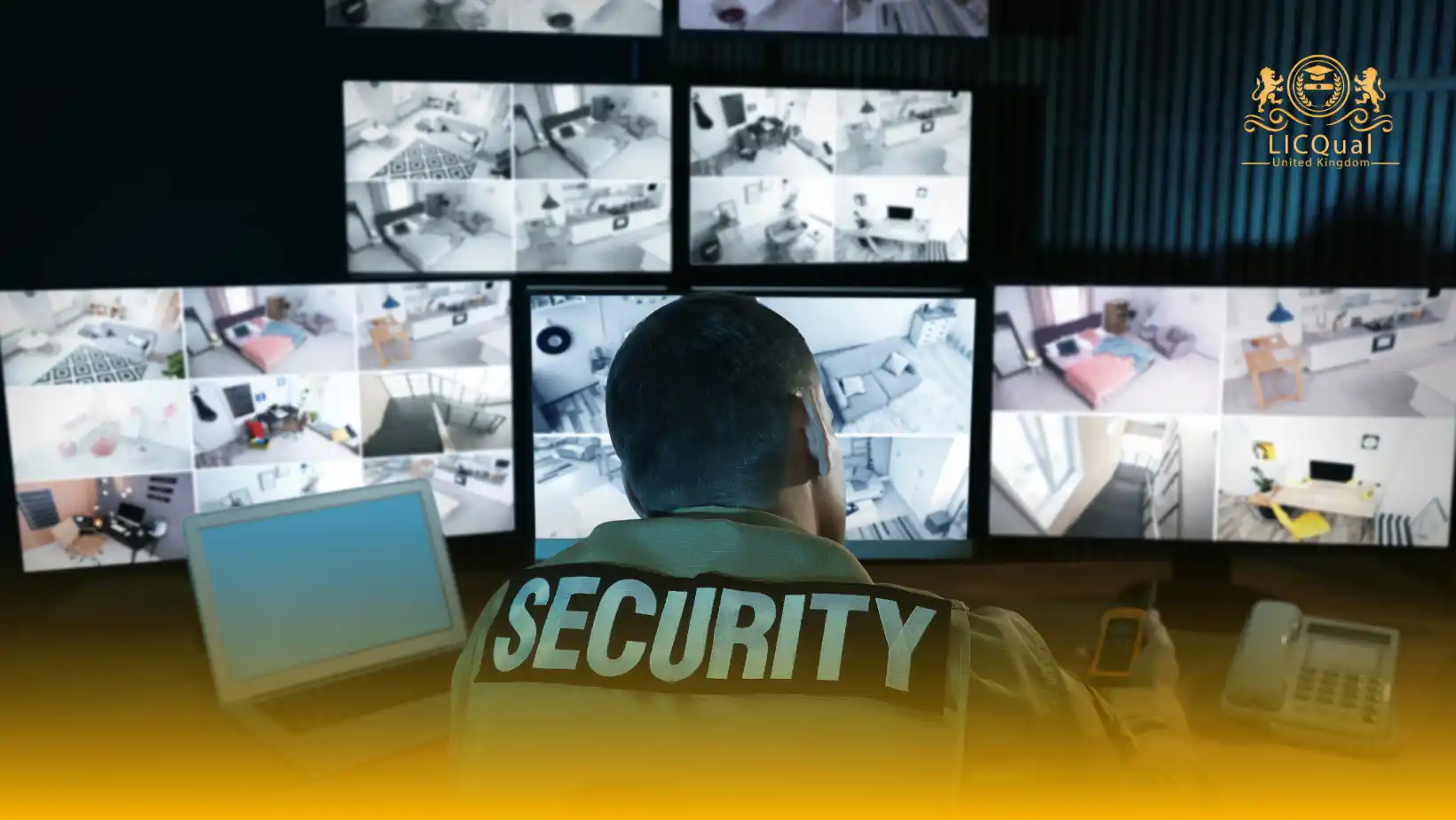
CCTV Security
The LICQual Level 3 Diploma in CCTV Security is a practical and industry-relevant qualification that provides learners with a strong foundation in modern CCTV systems, surveillance operations, and security monitoring practices. As businesses, public facilities, residential developments, and critical infrastructure increasingly rely on surveillance technology to enhance safety and protect assets, the demand for skilled professionals with CCTV security knowledge continues to grow across the security sector.
This diploma introduces the key principles of CCTV security, including surveillance system operation, camera technologies, monitoring procedures, incident reporting, security regulations, risk awareness, and the effective use of CCTV systems in real-world environments. Learners will develop an understanding of how CCTV technology supports crime prevention, security management, and operational safety in a wide range of settings.
The course also explores the practical application of CCTV security within commercial, industrial, retail, transportation, and public-sector environments. By building essential technical knowledge and industry-relevant skills, learners will be better prepared to contribute to security operations and support the effective management of modern surveillance systems in today’s technology-driven security industry.
Course Overview
Qualification Title
LICQual Level 3 Diploma in CCTV Security
Total Units
6
Total Credits
24
GLH
60
Qualification #
LICQ2200368
Qualification Specification
To enrol in the LICQual Level 3 Diploma in CCTV Security, applicants must meet the following entry requirements:
- Age Requirement: Applicant must be at least 18 years of age at the time of enrolment.
- Educational Requirements: While no formal qualifications are required, a basic understanding of English and mathematics is beneficial.
- Experience: No prior experience is required; this course is suitable for both beginners and experienced professionals seeking to develop or enhance their CCTV security knowledge and skills.
- English Language Proficiency: Since the course involves technical concepts and legal aspects, a good command of written and spoken English is recommended.
|
Qualification# |
Unit Title |
Credits |
GLH |
|---|---|---|---|
|
LICQ2200368-1 |
Comprehensive CCTV System Design and Management |
10 |
40 |
|
LICQ2200368-2 |
Advanced AI and Facial Recognition in CCTV Security |
10 |
40 |
|
LICQ2200368-3 |
Legal Frameworks and International Security Regulations |
10 |
40 |
|
LICQ2200368-4 |
Risk Assessment and Security Strategy Development |
10 |
40 |
|
LICQ2200368-5 |
Emergency Response Planning and Crisis Management |
10 |
40 |
|
LICQ2200368-6 |
Leadership, Training, and Professional Development in CCTV Security |
10 |
40 |
By the end of this course, learners will be able to:
Comprehensive CCTV System Design and Management
- Understand the core components of a CCTV system, including cameras, recording devices, and monitoring software.
- Learn how to design, install, and configure an efficient and effective surveillance system.
- Develop the ability to assess and optimize CCTV placement for maximum coverage and security effectiveness.
- Gain knowledge of maintenance, troubleshooting, and upgrading CCTV systems.
Advanced AI and Facial Recognition in CCTV Security
- Explore the latest advancements in AI-driven security systems and facial recognition technology.
- Understand the ethical and legal implications of AI surveillance in different sectors.
- Learn how to analyze AI-generated security data for crime prevention and threat detection.
- Gain hands-on experience in configuring and managing AI-powered CCTV analytics.
Legal Frameworks and International Security Regulations
- Understand global and regional laws governing CCTV surveillance and data privacy.
- Learn about GDPR, human rights considerations, and compliance in CCTV operations.
- Develop skills in writing security policies that align with legal standards.
- Gain insight into legal responsibilities, including evidence collection and admissibility in court.
Risk Assessment and Security Strategy Development
- Learn how to identify potential security threats and vulnerabilities using CCTV surveillance.
- Develop risk assessment methodologies tailored to different environments (corporate, public, residential).
- Create and implement effective security strategies to mitigate risks.
- Understand the role of CCTV in proactive threat detection and response planning.
Emergency Response Planning and Crisis Management
- Develop a structured approach to handling security breaches, emergencies, and crises.
- Learn how to coordinate with emergency services using CCTV surveillance insights.
- Understand evacuation procedures, communication strategies, and real-time incident management.
- Gain skills in post-incident reporting, evaluation, and security enhancements.
Leadership, Training, and Professional Development in CCTV Security
- Learn key leadership skills for managing a security team in a CCTV control room environment.
- Develop strategies for training personnel in effective CCTV monitoring and response.
- Understand career progression opportunities in CCTV security and professional development pathways.
- Enhance decision-making, communication, and problem-solving skills in a security leadership role.
This qualification is ideal for:
- Individuals seeking to start a career in CCTV security and surveillance operations.
- Security personnel looking to develop specialist knowledge of CCTV systems and monitoring procedures.
- CCTV Operators who want to strengthen their understanding of surveillance technology and security best practices.
- Security Guards seeking to expand their skills and career opportunities within the security industry.
- Professionals working in retail, commercial, industrial, or public-sector security environments.
- Individuals responsible for monitoring, reporting, and responding to security incidents.
- Those interested in learning about CCTV installation principles, system functionality, and operational security procedures.
- Personnel involved in asset protection, loss prevention, and site security management.
- Individuals seeking a recognised qualification to support professional development in the security sector.
- Learners wishing to progress to advanced qualifications and supervisory roles in CCTV security and security management.
This diploma provides a strong foundation in CCTV surveillance, security monitoring, incident reporting, and operational security practices, supporting career development across a wide range of security-related roles.
Assessment and Verification
All units within this qualification are subject to internal assessment by the approved centre and external verification by LICQual. The qualification follows a criterion-referenced assessment approach, ensuring that learners meet all specified learning outcomes.
To achieve a ‘Pass’ in any unit, learners must provide valid, sufficient, and authentic evidence demonstrating their attainment of all learning outcomes and compliance with the prescribed assessment criteria. The Assessor is responsible for evaluating the evidence and determining whether the learner has successfully met the required standards.
Assessors must maintain a clear and comprehensive audit trail, documenting the basis for their assessment decisions to ensure transparency, consistency, and compliance with quality assurance requirements.