
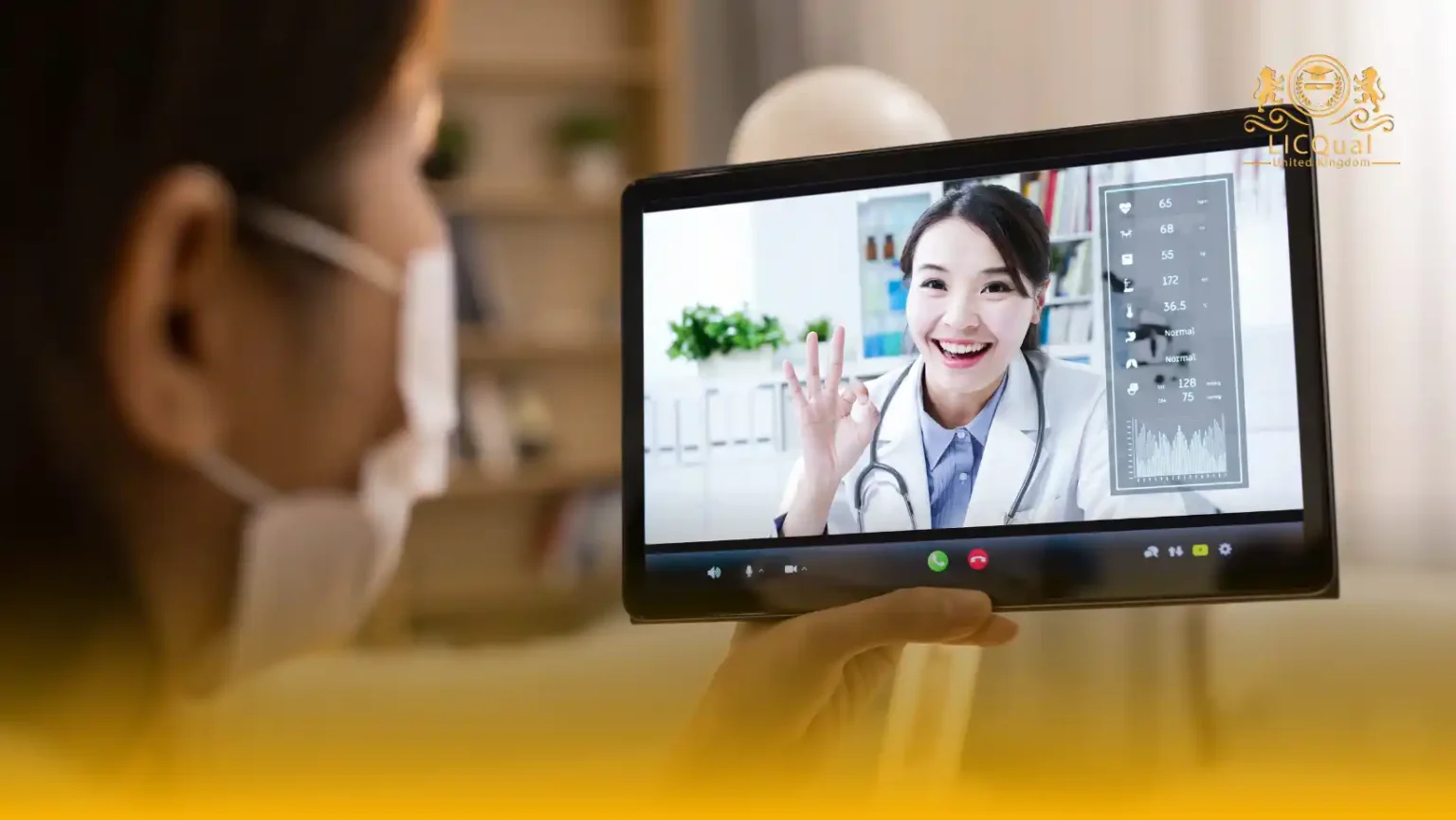
Healthcare Management
The LICQual Level 3 Certificate in Telehealth and Remote Healthcare Management is a professional qualification designed to provide the learner with comprehensive knowledge and practical skills in delivering healthcare services through digital and remote platforms. This course equips the learner with the ability to manage telehealth systems, optimize remote care delivery, and ensure patient safety and data security in virtual healthcare environments.
Throughout the program, the learner gains expertise in telehealth technologies, digital communication, remote patient monitoring, and virtual consultation management. The learner also develops skills in workflow optimization, regulatory compliance, ethical considerations, and effective communication strategies for remote healthcare.
By completing the LICQual Level 3 Certificate in Telehealth and Remote Healthcare Management, the learner strengthens their professional competence in managing digital healthcare services. This qualification empowers the learner to enhance patient care, improve operational efficiency, and contribute to the successful implementation and management of telehealth and remote healthcare solutions.
Course Overview
Qualification Title
LICQual Level 3 Certificate in Telehealth and Remote Healthcare Management
Total Units
6
Total Credits
24
GLH
120
Qualification #
LICQ2200720
Qualification Specification
To enroll in the LICQual Level 3 Certificate in Telehealth and Remote Healthcare Management, applicants must meet the following criteria:
|
Qualification# |
Unit Title |
Credits |
GLH |
|---|---|---|---|
|
LICQ2200720-1 |
Introduction to Telehealth and Remote Healthcare |
4 |
20 |
|
LICQ2200720-2 |
Digital Tools and Technologies in Telehealth |
4 |
20 |
|
LICQ2200720-3 |
Patient-Centred Care in Remote Healthcare Delivery |
4 |
20 |
|
LICQ2200720-4 |
Data Protection, Security, and Compliance in Telehealth |
4 |
20 |
|
LICQ2200720-5 |
Communication and Collaboration in Virtual Healthcare |
4 |
20 |
|
LICQ2200720-6 |
Project and Service Management in Telehealth Systems |
4 |
20 |
By the end of this course, learners will be able to:
Unit 1: Introduction to Telehealth and Remote Healthcare
By the end of this unit, learners will be able to:
- Explain the fundamental principles and scope of telehealth and remote healthcare.
- Assess the benefits and challenges of implementing telehealth services.
- Differentiate between various models of telehealth delivery.
- Evaluate the role of telehealth in improving access to healthcare services.
Unit 2: Digital Tools and Technologies in Telehealth
By the end of this unit, learners will be able to:
- Identify the key digital tools and platforms used in telehealth.
- Demonstrate knowledge of hardware, software, and mobile health applications in remote care.
- Analyse how emerging technologies support patient care and monitoring.
- Apply best practices for selecting and using telehealth technologies effectively.
Unit 3: Patient-Centred Care in Remote Healthcare Delivery
By the end of this unit, learners will be able to:
- Define the principles of patient-centred care in a telehealth context.
- Demonstrate methods to engage and support patients remotely.
- Evaluate strategies for improving patient satisfaction and trust in virtual healthcare.
- Apply ethical and compassionate approaches when managing remote healthcare interactions.
Unit 4: Data Protection, Security, and Compliance in Telehealth
By the end of this unit, learners will be able to:
- Explain key data protection and confidentiality requirements in telehealth.
- Apply cybersecurity practices to safeguard patient information.
- Analyse relevant healthcare compliance frameworks and standards.
- Evaluate the consequences of non-compliance in telehealth systems.
Unit 5: Communication and Collaboration in Virtual Healthcare
By the end of this unit, learners will be able to:
- Demonstrate effective communication skills in remote healthcare consultations.
- Apply techniques to overcome communication barriers in virtual care.
- Evaluate the importance of teamwork and inter-professional collaboration in telehealth.
- Use digital communication platforms to coordinate patient care effectively.
Unit 6: Project and Service Management in Telehealth Systems
By the end of this unit, learners will be able to:
- Explain the principles of healthcare project management in telehealth.
- Develop strategies for implementing and managing telehealth services.
- Analyse the key performance indicators (KPIs) for measuring telehealth success.
- Apply project management tools and techniques to optimise remote healthcare delivery.
This qualification is ideal for:
- Healthcare professionals aiming to enhance skills in telehealth and virtual care management.
- Individuals responsible for implementing and managing remote healthcare systems and workflows.
- Learners interested in improving patient engagement through digital healthcare platforms.
- Professionals seeking expertise in remote patient monitoring, virtual consultations, and telemedicine tools.
- Healthcare staff focused on ensuring data security, compliance, and ethical practices in telehealth.
- Learners aiming to optimize telehealth service delivery and operational efficiency.
- Individuals responsible for coordinating virtual care teams and digital healthcare resources.
- Professionals seeking to enhance communication, reporting, and patient management in remote settings.
- Learners looking to integrate telehealth strategies into healthcare organizations effectively.
- Individuals aiming to boost career growth and professional credibility in telehealth and remote healthcare management.
Centres delivering the LICQual Level 3 Certificate in Telehealth and Remote Healthcare Management must meet high-quality standards to ensure effective teaching, learning, and assessment. To deliver this qualification successfully, centres are required to have:
- Qualified and experienced staff with relevant expertise in healthcare management, telehealth systems, and digital healthcare delivery.
- Access to up-to-date learning resources, including textbooks, digital tools, case studies, and telehealth simulation platforms.
- Robust IT infrastructure to support online learning, video conferencing, and remote healthcare training activities.
- Facilities that meet international training standards, ensuring a safe and supportive environment for learners.
- Effective administrative and academic support systems to guide learners throughout their training and assessment.
- Clear policies for learner support and assessment, including equal opportunities, quality assurance, and academic integrity.
- Commitment to Continuing Professional Development (CPD) for trainers and assessors, ensuring that staff remain current with advancements in healthcare innovation and telehealth technologies.
- Efficient communication channels to maintain strong engagement with learners, assessors, and external quality assurance teams.
By fulfilling these requirements, centres will provide learners with the knowledge, skills, and confidence to excel in telehealth and remote healthcare management, contributing to improved patient care and healthcare accessibility.
Assessment and Verification
All units within this qualification are subject to internal assessment by the approved centre and external verification by LICQual. The qualification follows a criterion-referenced assessment approach, ensuring that learners meet all specified learning outcomes.
To achieve a ‘Pass’ in any unit, learners must provide valid, sufficient, and authentic evidence demonstrating their attainment of all learning outcomes and compliance with the prescribed assessment criteria. The Assessor is responsible for evaluating the evidence and determining whether the learner has successfully met the required standards.
Assessors must maintain a clear and comprehensive audit trail, documenting the basis for their assessment decisions to ensure transparency, consistency, and compliance with quality assurance requirements.