
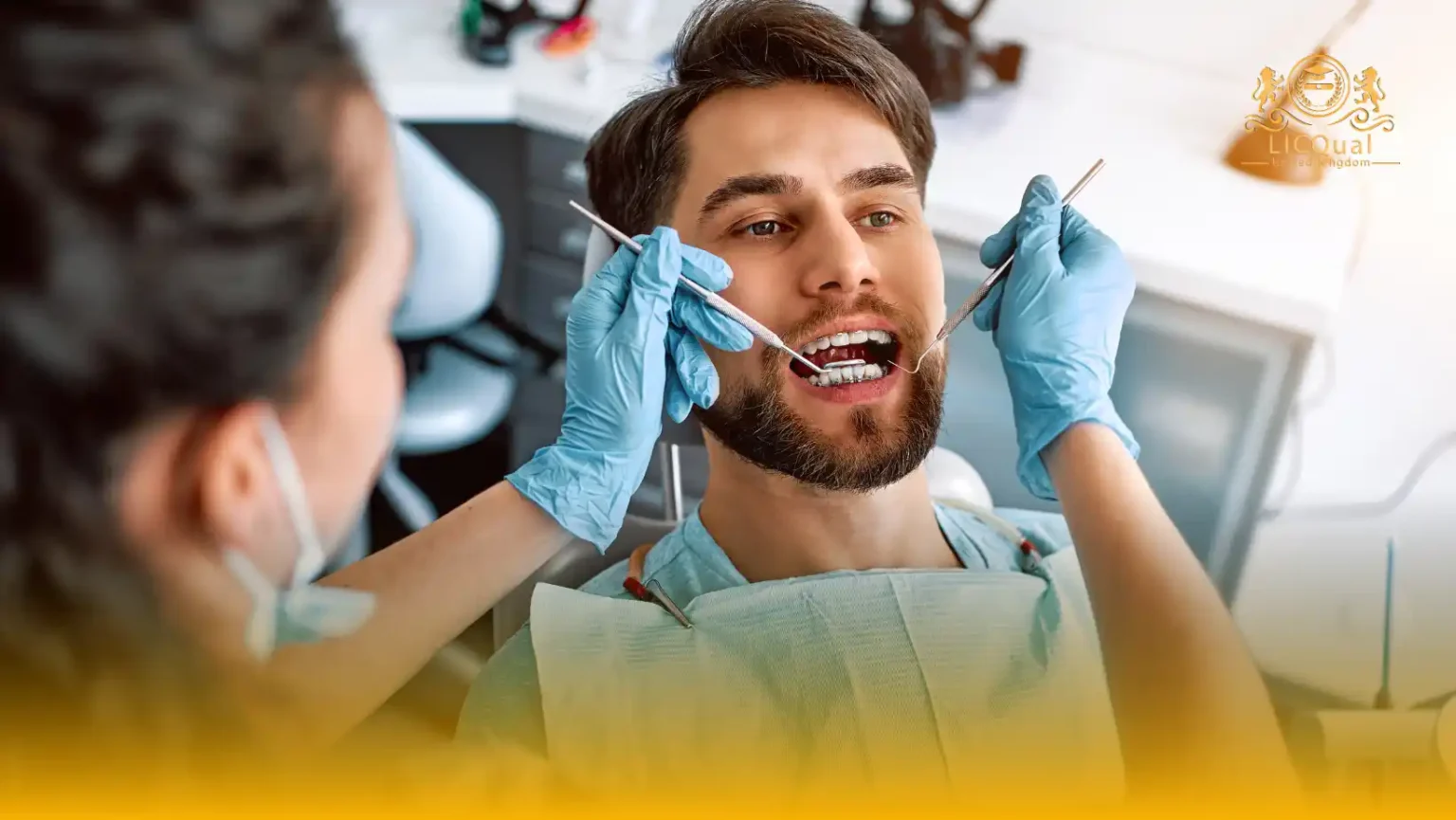
Restorative Dentistry
The LICQual Level 3 Certificate in Restorative Dentistry provides an in-depth introduction to the essential concepts, methods, and applications of restorative dental treatment. This qualification is designed to build a strong understanding of how damaged, decayed, or missing tooth structures can be restored to support oral function, comfort, and long-term dental health.
The course covers a broad range of restorative dentistry topics, including restorative treatment planning, dental materials, tooth conservation techniques, direct and indirect restorations, and the principles of repairing and maintaining natural teeth. Learners also explore the clinical considerations involved in selecting appropriate restorative solutions and delivering effective dental care based on current professional standards.
With a focus on contemporary restorative dental practices, this qualification examines the science and techniques behind successful tooth restoration and rehabilitation. The LICQual Level 3 Certificate in Restorative Dentistry equips learners with specialised knowledge of restorative procedures, modern dental technologies, and quality-focused treatment approaches that play a vital role in today’s evolving dental sector.
Course Overview
Qualification Title
LICQual Level 3 Certificate in Restorative Dentistry
Total Units
6
Total Credits
24
GLH
120
Qualification #
LICQ2200640
Qualification Specification
To enroll in the LICQual Level 3 Certificate in Restorative Dentistry , applicants must meet the following criteria:
|
Qualification# |
Unit Title |
Credits |
GLH |
|---|---|---|---|
|
LICQ2200640-1 |
Foundational Principles & Minimal Intervention |
4 |
20 |
|
LICQ2200640-2 |
Tooth Preparation, Adhesion & Composite Techniques |
4 |
20 |
|
LICQ2200640-3 |
Endodontic and Vital Pulp Therapy |
4 |
20 |
|
LICQ2200640-4 |
Fixed & Removable Prosthodontics |
4 |
20 |
|
LICQ2200640-5 |
Aesthetic & Functional Rehabilitation |
4 |
20 |
|
LICQ2200640-6 |
Evidence-Based Practice & Treatment Planning |
4 |
20 |
By the end of this course, learners will be able to:
Unit 1: Foundational Principles & Minimal Intervention
- Explain the core principles of restorative dentistry and their role in modern clinical practice.
- Identify the biological, functional, and aesthetic considerations in restorative treatment.
- Apply minimal intervention dentistry techniques to preserve tooth structure.
- Select appropriate dental materials based on patient needs and evidence-based guidelines.
Unit 2: Tooth Preparation, Adhesion & Composite Techniques
- Demonstrate correct cavity preparation designs for various restorative procedures.
- Apply adhesive dentistry protocols to optimise bonding strength and durability.
- Perform composite restoration techniques with correct layering, shaping, and finishing.
- Utilise rubber dam isolation and occlusal adjustment techniques effectively.
Unit 3: Endodontic and Vital Pulp Therapy
- Diagnose endodontic conditions accurately using clinical and radiographic assessments.
- Carry out safe and effective access cavity preparation, cleaning, and shaping.
- Complete obturation procedures to an accepted clinical standard.
- Apply pulp therapy protocols for both vital and non-vital teeth.
Unit 4: Fixed & Removable Prosthodontics
- Design and plan crowns, bridges, partial and complete dentures.
- Integrate laboratory processes with clinical procedures for prosthetic restorations.
- Assess occlusal relationships and make necessary adjustments for functional balance.
- Deliver patient education on the care and maintenance of prosthetic devices.
Unit 5: Aesthetic & Functional Rehabilitation
- Plan and execute aesthetic restorative treatments including veneers and smile design.
- Accurately match shade, texture, and contour for optimal aesthetic results.
- Restore occlusal harmony in complex restorative cases.
- Integrate functional and aesthetic considerations into comprehensive treatment plans.
Unit 6: Evidence-Based Practice & Treatment Planning
- Interpret and apply current research to clinical decision-making in restorative dentistry.
- Develop structured, patient-centred treatment plans for simple and complex cases.
- Critically evaluate treatment outcomes and make improvements where necessary.
- Demonstrate professional ethics and reflective practice in line with CPD requirements.
This qualification is ideal for:
- Individuals seeking to develop specialised knowledge in restorative dentistry and modern tooth restoration techniques.
- Dental professionals aiming to strengthen their understanding of fillings, crowns, bridges, and restorative treatment procedures.
- Clinical dental support staff involved in assisting restorative treatments and patient care in dental environments.
- Professionals working in dental clinics, hospitals, or oral healthcare settings focusing on tooth repair and rehabilitation.
- Individuals interested in understanding dental materials, restorative procedures, and treatment planning concepts.
- Those wishing to gain knowledge of infection control, patient safety, and clinical standards within restorative dental practice.
- Individuals aiming to improve awareness of functional and aesthetic restoration of damaged or missing teeth.
- Learners planning to build a strong foundation for further study in advanced restorative or prosthodontic dentistry pathways.
This qualification provides structured understanding of restorative dental practice and supports professional growth within modern dental healthcare environments.
To deliver the LICQual Level 3 Certificate in Restorative Dentistry, centres must meet the following requirements to ensure high-quality training and assessment:
- Qualified and Experienced Tutors: Centres should have dental professionals or educators with relevant qualifications and practical experience in restorative dentistry to deliver effective teaching and supervision.
- Appropriate Training Facilities: Centres must provide a fully equipped dental training environment, including clinical practice areas with necessary restorative dental materials and instruments.
- Assessment Resources: Availability of assessment tools and resources that comply with LICQual standards to accurately evaluate learners’ practical skills and theoretical knowledge.
- Health and Safety Compliance: Centres must adhere to strict health and safety regulations, ensuring safe clinical practice environments for both learners and patients.
- Access to Clinical Practice: Centres should facilitate supervised clinical placements or simulated practical sessions to provide learners with hands-on restorative dentistry experience.
- Quality Assurance Systems: Implementation of internal quality assurance procedures to maintain high standards of course delivery, learner support, and assessment integrity.
- Administrative Support: Adequate administrative systems to manage enrolments, learner records, and certification processes efficiently.
- Compliance with Regulatory Standards: Centres must comply with all relevant dental industry regulations and LICQual awarding body policies to maintain accreditation.
Assessment and Verification
All units within this qualification are subject to internal assessment by the approved centre and external verification by LICQual. The qualification follows a criterion-referenced assessment approach, ensuring that learners meet all specified learning outcomes.
To achieve a ‘Pass’ in any unit, learners must provide valid, sufficient, and authentic evidence demonstrating their attainment of all learning outcomes and compliance with the prescribed assessment criteria. The Assessor is responsible for evaluating the evidence and determining whether the learner has successfully met the required standards.
Assessors must maintain a clear and comprehensive audit trail, documenting the basis for their assessment decisions to ensure transparency, consistency, and compliance with quality assurance requirements.