
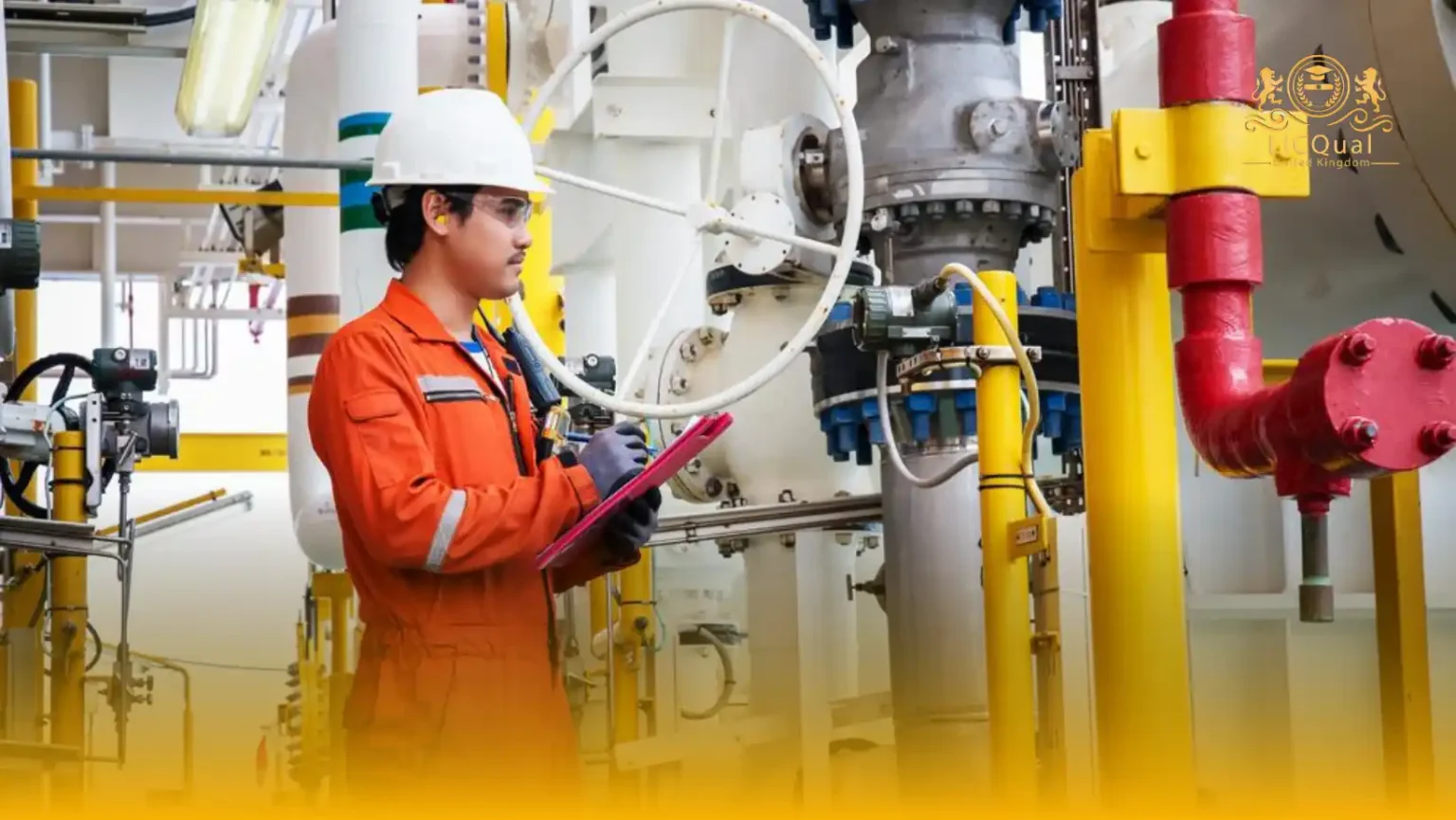
QA/QC Piping Inspector
The LICQual Level 3 Certificate in QA/QC Piping Inspector is a professional qualification designed to introduce learners to the fundamental principles of quality assurance and quality control within piping systems. This field plays a crucial role in engineering and industrial projects, ensuring that piping installations meet required specifications, safety standards, and regulatory compliance across construction and operational environments.
Learners will develop essential knowledge in inspection techniques, material identification, welding basics, interpretation of engineering drawings, and understanding of quality documentation and procedures. The course also covers inspection and test plans (ITPs), basic non-destructive testing concepts, and compliance with industry codes and standards used in piping projects.
The organisational scope of this qualification extends across industries such as oil and gas, petrochemical, power generation, and construction, where piping integrity is critical. Completing this certificate enhances career opportunities in entry-level QC inspection and site quality roles. Learners benefit from improved technical understanding, practical inspection awareness, and the ability to support quality assurance processes in engineering projects effectively.
Course Overview
Qualification Title
LICQual Level 3 Certificate in QA/QC Piping Inspector
Total Units
6
Total Credits
24
GLH
120
Qualification #
LICQ2200546
Qualification Specification
To enroll in theLICQual Level 3 Certificate in QC Piping Inspector, applicants must meet the following criteria:
|
Qualification# |
Unit Title |
Credits |
GLH |
|---|---|---|---|
|
LICQ2200546-1 |
Introduction to Piping Systems and Components |
4 |
20 |
|
LICQ2200546-2 |
Codes, Standards, and Specifications |
4 |
20 |
|
LICQ2200546-3 |
Welding Inspection and Processes |
4 |
20 |
|
LICQ2200546-4 |
Non-Destructive Testing (NDT) Methods |
4 |
20 |
|
LICQ2200546-5 |
QA/QC Documentation and Reporting |
4 |
20 |
|
LICQ2200546-6 |
Practical Inspection Procedures and Site Activities |
4 |
20 |
By the end of this course, applicants will be able to:
1. Introduction to Piping Systems and Components
By the end of this unit, learners will be able to:
- Identify various types of piping systems used in industrial projects.
- Describe the functions of pipes, fittings, valves, gaskets, and flanges.
- Interpret piping material specifications and classifications.
- Understand basic principles of piping layout and system design.
2. Codes, Standards, and Specifications
By the end of this unit, learners will be able to:
- Recognize the importance of codes and standards in QA/QC inspection.
- Interpret key industry standards such as ASME, API, ASTM, and ISO.
- Analyze and apply project-specific specifications to inspection tasks.
- Ensure compliance with applicable international standards and client requirements.
3. Welding Inspection and Processes
By the end of this unit, learners will be able to:
- Understand fundamental welding processes used in piping fabrication.
- Interpret welding symbols, joints, and positions from technical drawings.
- Review and verify Welding Procedure Specifications (WPS) and Procedure Qualification Records (PQR).
- Perform visual inspection of welds and identify common welding defects.
4. Non-Destructive Testing (NDT) Methods
By the end of this unit, learners will be able to:
- Explain the principles and applications of various NDT methods (VT, PT, MT, RT, UT).
- Select appropriate NDT methods for different inspection scenarios.
- Interpret NDT test results and identify defects or irregularities.
- Ensure NDT procedures comply with standards and QA/QC protocols.
5. QA/QC Documentation and Reporting
By the end of this unit, learners will be able to:
- Prepare and review inspection test plans (ITPs) and quality documentation.
- Maintain accurate inspection records, reports, and checklists.
- Track material traceability and manage quality control logs.
- Document non-conformities and assist in corrective/preventive actions.
6. Practical Inspection Procedures and Site Activities
By the end of this unit, learners will be able to:
- Conduct site-based piping inspections during various project stages.
- Perform dimensional and fit-up checks, and monitor pressure testing activities.
- Identify and report non-compliance during fabrication and installation.
- Apply safety procedures during inspection activities in line with industry best practices.
The LICQual Level 3 Certificate in QA/QC Piping Inspector is ideal for individuals who are passionate about quality control, inspection, and industrial piping systems. This course is particularly suited for:
- Fresh engineering graduates (Mechanical, Civil, Industrial, or Petroleum) seeking to enter the QA/QC field.
- Diploma holders or technicians in mechanical, piping, or welding trades looking to enhance their inspection skills.
- Welders, fabricators, and site supervisors aiming to transition into quality assurance and quality control roles.
- Professionals already working in the oil & gas, petrochemical, construction, or power sectors who want to upskill or formalize their knowledge.
- NDT technicians and QA/QC assistants preparing for advancement into inspector-level positions.
- Project and quality engineers who require a deeper understanding of piping inspection, welding standards, and industry compliance.
Whether you are starting your career or seeking professional development, this certification provides a solid foundation for a successful future in QA/QC and piping inspection across a range of industries worldwide.
Assessment and Verification
All units within this qualification are subject to internal assessment by the approved centre and external verification by LICQual. The qualification follows a criterion-referenced assessment approach, ensuring that learners meet all specified learning outcomes.
To achieve a ‘Pass’ in any unit, learners must provide valid, sufficient, and authentic evidence demonstrating their attainment of all learning outcomes and compliance with the prescribed assessment criteria. The Assessor is responsible for evaluating the evidence and determining whether the learner has successfully met the required standards.
Assessors must maintain a clear and comprehensive audit trail, documenting the basis for their assessment decisions to ensure transparency, consistency, and compliance with quality assurance requirements.