
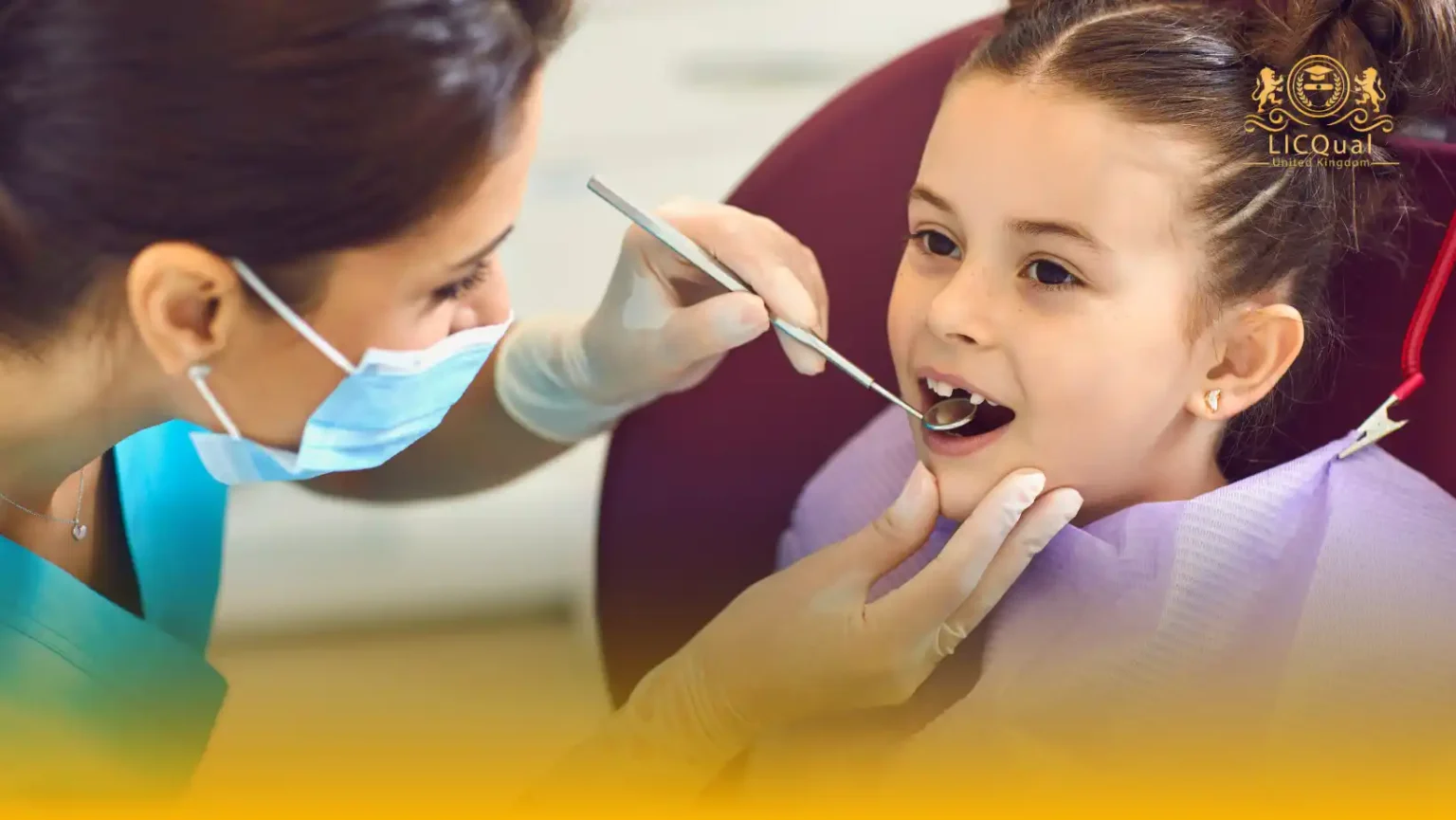
Pediatric Dentistry
The LICQual Level 3 Certificate in Pediatric Dentistry is a specialised dental qualification that builds foundational understanding of oral healthcare designed specifically for infants, children, and adolescents. Pediatric dentistry is concerned with the unique dental needs of growing patients, focusing on prevention, early diagnosis, and the management of oral health conditions during key stages of development.
This course explores how pediatric oral health differs significantly from adult dentistry, covering essential areas such as tooth eruption patterns, childhood dental caries, preventive care strategies, behaviour guidance techniques, and child-focused clinical approaches. Learners are introduced to how dental professionals assess oral conditions in children and apply safe, age-appropriate treatment methods that prioritise comfort and cooperation.
The LICQual Level 3 Certificate in Pediatric Dentistry further develops understanding of preventive dental practices, including fluoride use, oral hygiene education, dietary awareness, and early intervention techniques. It emphasises the importance of building strong oral health foundations in childhood, helping reduce long-term dental complications and supporting healthier lifelong outcomes through structured, evidence-based dental care principles.
Course Overview
Qualification Title
LICQual Level 3 Certificate in Pediatric Dentistry
Total Units
6
Total Credits
24
GLH
120
Qualification #
LICQ2200638
Qualification Specification
To enroll in the LICQual Level 3 Certificate in Pediatric Dentistry , applicants must meet the following criteria:
|
Qualification# |
Unit Title |
Credits |
GLH |
|---|---|---|---|
|
LICQ2200638-1 |
Behaviour Management in Paediatric Patients |
4 |
20 |
|
LICQ2200638-2 |
Child Assessment & Treatment Planning |
4 |
20 |
|
LICQ2200638-3 |
Preventive Dentistry & Oral Health Promotion |
4 |
20 |
|
LICQ2200638-4 |
Pulp Therapy & Restorative Techniques |
4 |
20 |
|
LICQ2200638-5 |
Dental Trauma & Emergency Management |
4 |
20 |
|
LICQ2200638-6 |
Research Methods & Evidence-Based Practice in Dentistry |
4 |
20 |
By the end of this course, learners will be able to:
1. Behaviour Management in Paediatric Patients
- Demonstrate effective behaviour guidance strategies suitable for children of different ages.
- Apply both pharmacological and non-pharmacological techniques to manage anxiety and pain in paediatric patients.
- Assess psychological and developmental factors influencing child behaviour in a dental setting.
2. Child Assessment & Treatment Planning
- Conduct comprehensive oral examinations for children, considering growth and developmental milestones.
- Perform accurate caries risk assessments and identify preventive priorities.
- Develop individualised, evidence-based treatment plans for paediatric patients.
3. Preventive Dentistry & Oral Health Promotion
- Identify key risk factors for caries and periodontal disease in children.
- Implement preventive measures, including fluoride therapy and fissure sealants.
- Promote oral health awareness through effective communication with children, parents, and caregivers.
4. Pulp Therapy & Restorative Techniques
- Apply appropriate pulp therapy techniques for primary and immature permanent teeth.
- Select and perform restorative procedures using suitable materials and methods for paediatric patients.
- Integrate minimal-intervention dentistry principles into clinical practice.
5. Dental Trauma & Emergency Management
- Diagnose and classify various types of dental trauma in children.
- Deliver prompt, evidence-based emergency care for traumatic dental injuries.
- Collaborate with multidisciplinary teams to manage complex trauma cases.
6. Research Methods & Evidence-Based Practice in Dentistry
- Critically appraise scientific literature to inform clinical decision-making.
- Apply research methodologies to support professional practice improvements.
- Develop a personal CPD plan that incorporates evidence-based approaches.
This qualification is ideal for:
- Dental professionals seeking to develop specialised knowledge in pediatric dentistry and child oral healthcare.
- Individuals aiming to understand preventive dentistry practices for infants, children, and adolescents.
- Dental assistants and clinical support staff looking to enhance their understanding of pediatric dental procedures and patient care.
- Professionals working in dental clinics, hospitals, or community oral health services focused on child dental treatment.
- Individuals interested in learning about oral hygiene management, fluoride application, and cavity prevention in children.
- Those wishing to develop awareness of behaviour management techniques used in pediatric dental practice.
- Individuals aiming to strengthen knowledge of infection control, clinical safety, and professional ethics in dental care environments.
- Learners planning to build a strong foundation for further study in pediatric dentistry or advanced dental specialisation pathways.
This qualification provides essential knowledge and structured understanding of pediatric dental care, supporting professional growth within child-focused dental healthcare services.
To ensure the highest standards of training and learner success, centres offering this qualification must meet the following requirements:
- Qualified and Competent Staff
- All teaching and assessment must be carried out by professionals who are appropriately qualified, experienced, and up to date with current paediatric dentistry practices.
- Staff should demonstrate expertise in both clinical and academic aspects of paediatric oral healthcare.
- Adequate Learning Resources
- Centres must provide access to up-to-date learning materials, reference texts, and evidence-based clinical guidelines.
- Digital learning platforms and multimedia resources should be available to support blended and flexible learning delivery.
- Clinical Facilities and Equipment
- Training should be conducted in fully equipped clinical environments that meet industry standards for safety, hygiene, and functionality.
- Essential paediatric dental instruments and materials must be available for practical skills development.
- Assessment and Quality Assurance
- Centres must follow structured assessment methods that meet awarding body requirements.
- Internal quality assurance procedures must be in place to maintain consistency, fairness, and reliability in learner assessment.
- Learner Support Services
- Centres should offer academic guidance, pastoral care, and CPD planning support.
- Facilities must be accessible, inclusive, and compliant with relevant equality and diversity legislation.
- Compliance with Regulatory Standards
- Centres must operate in line with national and international standards for vocational education and training delivery.
By meeting these requirements, centres can deliver high-quality, industry-relevant training that equips learners with the skills and knowledge to excel in paediatric dentistry.
Assessment and Verification
All units within this qualification are subject to internal assessment by the approved centre and external verification by LICQual. The qualification follows a criterion-referenced assessment approach, ensuring that learners meet all specified learning outcomes.
To achieve a ‘Pass’ in any unit, learners must provide valid, sufficient, and authentic evidence demonstrating their attainment of all learning outcomes and compliance with the prescribed assessment criteria. The Assessor is responsible for evaluating the evidence and determining whether the learner has successfully met the required standards.
Assessors must maintain a clear and comprehensive audit trail, documenting the basis for their assessment decisions to ensure transparency, consistency, and compliance with quality assurance requirements.