
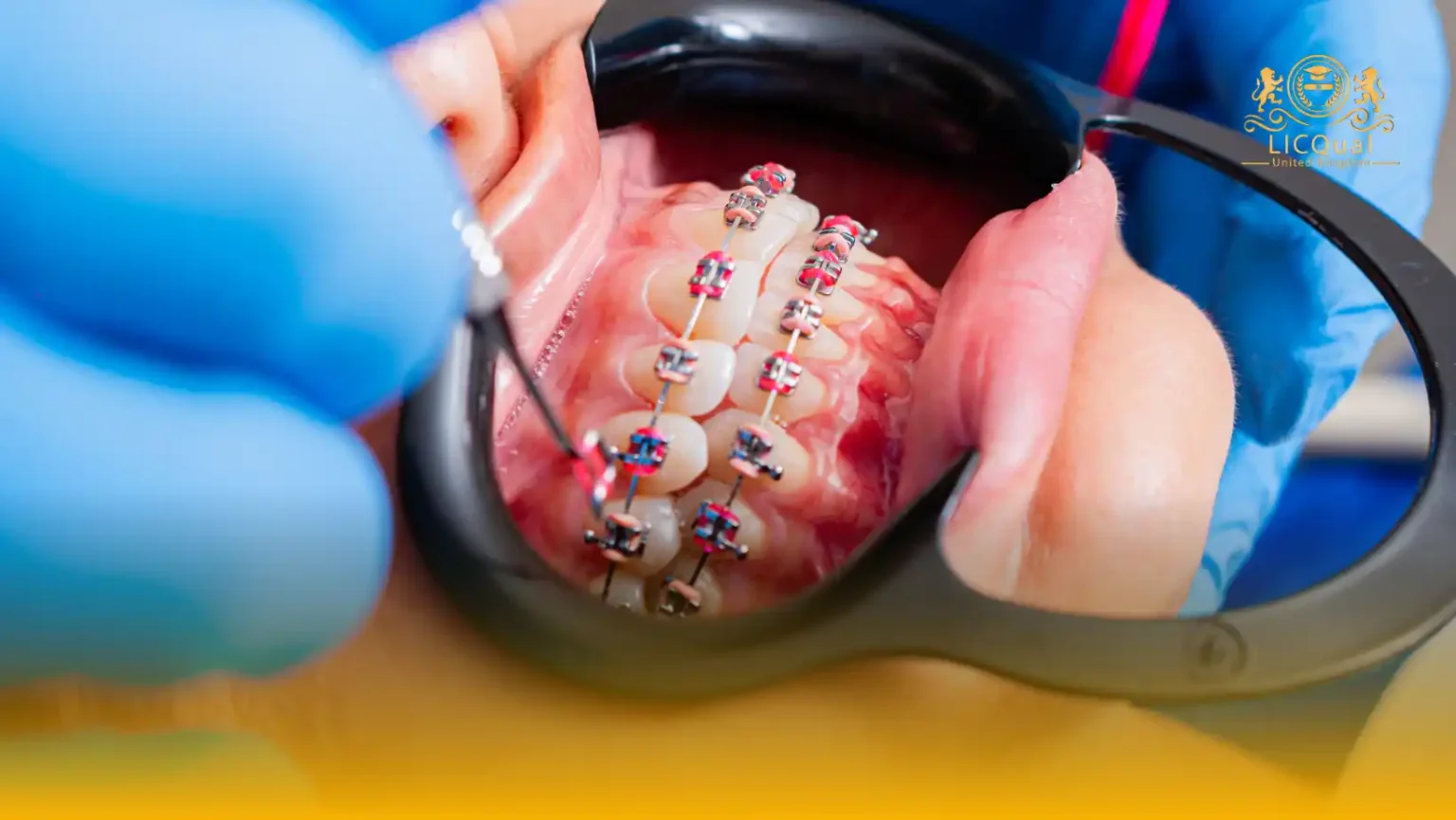
Certificate in Orthodontics
The LICQual Level 3 Certificate in Orthodontics is a foundation-level qualification that introduces learners to the core principles of orthodontic care within modern dental and healthcare environments. This course provides a clear understanding of basic orthodontic concepts, including dental anatomy, alignment principles, common orthodontic treatments, and the role of orthodontics in improving oral health and patient wellbeing.
The qualification focuses on developing essential knowledge of how orthodontic care is supported in clinical practice. Learners gain insight into key areas such as patient care, oral hygiene support, infection control awareness, communication in dental settings, and maintaining professional standards in orthodontic environments. The content is structured in a simple and accessible way to ensure clear understanding of fundamental orthodontic practices.
This course builds foundational awareness of orthodontics rather than advanced clinical expertise. It helps learners understand how orthodontic services operate within healthcare settings and how basic support roles contribute to effective patient care. The qualification develops essential introductory knowledge that supports progression within dental and healthcare education pathways while maintaining focus on safety, professionalism, and practical awareness in orthodontic care environments.
Course Overview
Qualification Title
LICQual Level 3 Certificate in Orthodontics
Total Units
6
Total Credits
24
GLH
120
Qualification #
LICQ2200633
Qualification Specification
To enroll in the LICQual Level 3 Certificate in Orthodontics, applicants must meet the following criteria:
|
Qualification# |
Unit Title |
Credits |
GLH |
|---|---|---|---|
|
LICQ2200633-1 |
Orthodontic Principles & Diagnostic Techniques |
4 |
20 |
|
LICQ2200633-2 |
Growth & Development, Biomechanics & Appliances |
4 |
20 |
|
LICQ2200633-3 |
Treatment Planning for Class I, II & III Malocclusions |
4 |
20 |
|
LICQ2200633-4 |
Digital Orthodontics & Self-ligating Systems |
4 |
20 |
|
LICQ2200633-5 |
Advanced Biomechanics & Temporary Anchorage Devices (TADs) |
4 |
20 |
|
LICQ2200633-6 |
Emergencies & Retention Management |
4 |
20 |
By the end of this course, learners will be able to:
1. Orthodontic Principles & Diagnostic Techniques
By the end of this unit, the learner will be able to:
- Explain the principles of orthodontics and their role in dental health.
- Classify malocclusions using internationally recognised systems.
- Accurately record and interpret patient diagnostic data, including cephalometric analysis and dental photography.
- Develop comprehensive orthodontic case histories for treatment planning.
2. Growth, Biomechanics & Appliances
By the end of this unit, the learner will be able to:
- Describe craniofacial growth and its impact on orthodontic treatment.
- Apply biomechanical principles to orthodontic tooth movement.
- Select and recommend appropriate appliance types for specific cases.
- Demonstrate understanding of anchorage control and retention methods.
3. Treatment Planning for Class I–III Malocclusions
By the end of this unit, the learner will be able to:
- Assess and diagnose Class I, II, and III malocclusions accurately.
- Create individualised treatment plans based on case complexity and patient needs.
- Incorporate interceptive orthodontics for mixed dentition cases.
- Evaluate treatment outcomes against planned objectives.
4. Digital Orthodontics & Self-ligating Systems
By the end of this unit, the learner will be able to:
- Use digital orthodontic tools, including CAD/CAM and aligner design software.
- Explain the benefits and limitations of self-ligating bracket systems.
- Integrate 3D printing into orthodontic appliance production.
- Apply digital technology to enhance patient outcomes and efficiency.
5. Advanced Biomechanics & Temporary Anchorage Devices (TADs)
By the end of this unit, the learner will be able to:
- Explain the biomechanical principles behind complex orthodontic movements.
- Safely recommend and use temporary anchorage devices (mini-implants).
- Plan anchorage strategies for challenging orthodontic cases.
- Monitor and evaluate patient progress using advanced biomechanics.
6. Emergencies, Pain Management & Retention Strategies
By the end of this unit, the learner will be able to:
- Identify and manage common orthodontic emergencies effectively.
- Apply pain management strategies for orthodontic patients.
- Recognise and address complications such as root resorption and oral lesions.
- Develop effective retention protocols to maintain treatment results.
This course is suitable for learners who want to build basic knowledge of orthodontics and dental care within a healthcare setting. It is designed for individuals who are interested in starting or developing understanding in this field.
- Learners who want to gain basic knowledge of orthodontic care and dental support practices
- Individuals interested in starting a career in the healthcare or dental sector
- Dental assistants or support staff who want to improve their understanding of orthodontics
- School leavers or beginners looking to enter the healthcare field with a foundation-level qualification
- Learners working in related healthcare environments who want to expand their basic professional knowledge
- Individuals seeking structured understanding of orthodontic procedures and patient care in a simple and practical way
This course is focused on foundational learning and is suitable for anyone who wants to understand orthodontics at an introductory level within a professional healthcare context.
Centres delivering the LICQual Level 3 Certificate in Orthodontics must meet strict quality and compliance standards to ensure a high-level learning experience and successful outcomes for every learner.
To be approved, centres must have:
- Qualified and Experienced Tutors – Instructors must hold relevant dental or orthodontic qualifications, along with proven clinical experience in orthodontics.
- Competent Assessors – Assessors must be suitably qualified and experienced to evaluate both theoretical knowledge and practical competencies.
- Adequate Facilities and Equipment – Centres must provide fully equipped training facilities, including clinical tools, orthodontic appliances, and simulation resources to meet course delivery requirements.
- Access to Learning Materials – Centres must offer comprehensive learning resources such as textbooks, digital content, and visual aids to support learner progress.
- Quality Assurance Systems – An internal quality assurance process must be in place to maintain consistent delivery, fair assessment, and continuous improvement.
- Learner Support Services – Centres should provide guidance, academic support, and pastoral care to ensure learner wellbeing and success.
- Compliance with LICQual Standards – Centres must adhere to all awarding body policies, assessment guidelines, and reporting requirements.
Meeting these centre requirements ensures that learners receive professional, structured, and effective orthodontic training that aligns with international educational best practices.
Assessment and Verification
All units within this qualification are subject to internal assessment by the approved centre and external verification by LICQual. The qualification follows a criterion-referenced assessment approach, ensuring that learners meet all specified learning outcomes.
To achieve a ‘Pass’ in any unit, learners must provide valid, sufficient, and authentic evidence demonstrating their attainment of all learning outcomes and compliance with the prescribed assessment criteria. The Assessor is responsible for evaluating the evidence and determining whether the learner has successfully met the required standards.
Assessors must maintain a clear and comprehensive audit trail, documenting the basis for their assessment decisions to ensure transparency, consistency, and compliance with quality assurance requirements.