
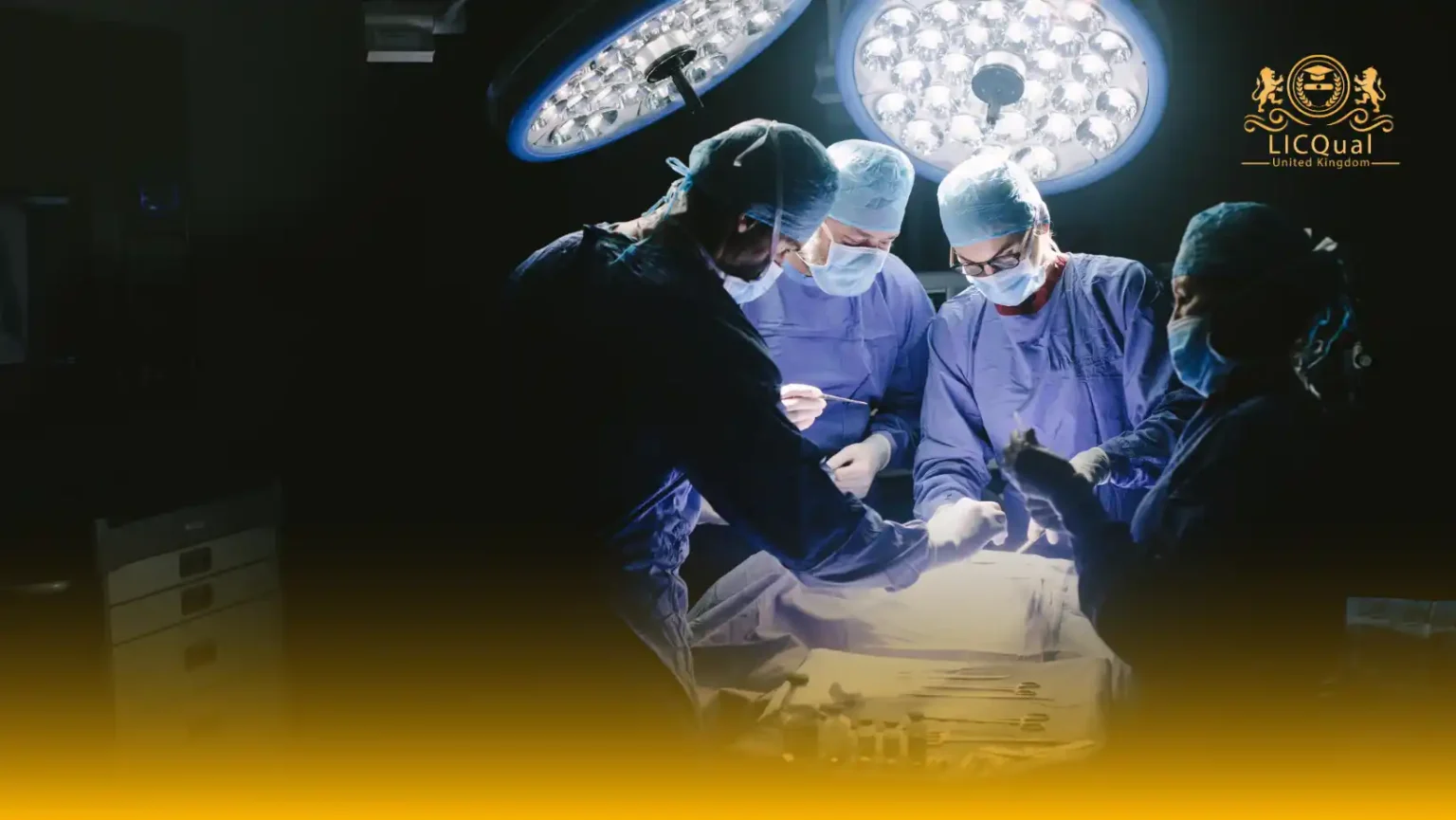
Oral and Maxillofacial Surgery
The LICQual Level 3 Certificate in Oral and Maxillofacial Surgery is a combined foundational qualification designed to develop learners’ understanding of essential principles in orthodontic care and oral surgical practice within modern dental and healthcare environments. This course introduces learners to key orthodontic concepts such as dental anatomy, tooth alignment principles, common orthodontic procedures, and their role in improving oral health outcomes, following recognised healthcare standards to ensure relevant and practical knowledge for clinical settings.
In addition, learners gain structured knowledge of oral and maxillofacial surgery, including surgical anatomy, patient assessment, pre-operative and post-operative care, instrumentation awareness, and surgical support procedures. The qualification focuses on developing an understanding of how orthodontic and surgical services work together to support effective patient treatment and recovery in dental healthcare environments.
Throughout the course, learners explore important areas such as patient safety, infection control, clinical governance, documentation standards, and professional conduct in both orthodontic and surgical contexts. The emphasis is placed on theoretical understanding supported by practical awareness, enabling learners to understand real-world clinical processes, support dental teams effectively, and maintain high standards of care in regulated healthcare environments.
Course Overview
Qualification Title
LICQual Level 3 Certificate in Oral and Maxillofacial Surgery
Total Units
6
Total Credits
24
GLH
120
Qualification #
LICQ2200635
Qualification Specification
To enroll in the LICQual Level 3 Certificate in Oral and Maxillofacial Surgery , applicants must meet the following criteria:
|
Qualification# |
Unit Title |
Credits |
GLH |
|---|---|---|---|
|
LICQ2200635-1 |
Surgical Basic Sciences & Patient Care |
4 |
20 |
|
LICQ2200635-2 |
Reflective Oral Surgery Practice |
4 |
20 |
|
LICQ2200635-3 |
Dental Tissues & Implantology |
4 |
20 |
|
LICQ2200635-4 |
Bone: Disease, Sinus, Trauma |
4 |
20 |
|
LICQ2200635-5 |
Soft Tissue and Neoplastic Conditions |
4 |
20 |
|
LICQ2200635-6 |
Salivary Glands, Facial Pain & TMJ |
4 |
20 |
By the end of this course, learners will be able to:
Unit 1: Surgical Basic Sciences & Patient Care
By the end of this unit, the learner will be able to:
- Demonstrate a comprehensive understanding of core surgical sciences relevant to oral and maxillofacial surgery.
- Conduct safe and effective preoperative assessments for surgical patients.
- Apply appropriate postoperative care principles to optimise patient recovery.
- Implement effective pain management and anxiety control strategies.
- Adhere to clinical safety protocols and best practices in surgical environments.
Unit 2: Reflective Oral Surgery Practice
By the end of this unit, the learner will be able to:
- Apply reflective practice techniques to improve surgical decision-making and outcomes.
- Recognise and apply ethical considerations in oral and maxillofacial surgical procedures.
- Critically evaluate personal clinical performance and identify areas for improvement.
- Integrate evidence-based research into surgical practice for enhanced patient care.
Unit 3: Dental Tissues – Infections, Inflammation & Implantology
By the end of this unit, the learner will be able to:
- Diagnose and manage common and complex infections affecting dental tissues.
- Identify and treat inflammatory conditions of the oral cavity and jaw.
- Perform surgical extractions and related oral surgical interventions.
- Demonstrate knowledge and practical understanding of implantology principles.
- Manage peri-implant diseases and ensure long-term implant success.
Unit 4: Bone, Disease & Injury Management
By the end of this unit, the learner will be able to:
- Diagnose and manage osseous pathology within the maxillofacial region.
- Apply effective treatment protocols for maxillary sinus diseases.
- Assess and manage injuries to facial bones and related structures.
- Implement appropriate surgical and non-surgical trauma management techniques.
Unit 5: Soft Tissue Pathology & Neoplastic Conditions
By the end of this unit, the learner will be able to:
- Identify and surgically manage oral and facial soft tissue cysts.
- Diagnose and treat mucosal diseases affecting the oral cavity.
- Recognise and manage premalignant lesions with evidence-based protocols.
- Apply surgical and clinical interventions for malignant oral conditions.
Unit 6: Salivary Tissue, Facial Pain & TMJ Disorders
By the end of this unit, the learner will be able to:
- Diagnose and manage disorders affecting the salivary glands.
- Assess and treat various types of facial pain syndromes.
- Implement effective interventions for temporomandibular joint (TMJ) disorders.
- Integrate multidisciplinary approaches for complex orofacial pain management.
This qualification is ideal for:
- Individuals seeking to develop foundational knowledge in Orthodontics and Oral & Maxillofacial Surgery within dental healthcare environments.
- Those aiming to understand core orthodontic principles, dental anatomy, and basic treatment approaches for oral health improvement.
- Individuals interested in gaining awareness of surgical anatomy and essential oral surgical procedures used in clinical practice.
- Those working in or aspiring to work in dental clinics, hospitals, or oral healthcare support roles.
- Individuals wishing to enhance their understanding of patient care, infection control practices, and clinical safety standards.
- Those looking to develop skills related to assisting in orthodontic and oral surgical procedures.
- Individuals seeking knowledge of clinical documentation, governance frameworks, and professional conduct in dental environments.
- Those intending to build a strong academic foundation for progression into advanced dental or surgical studies.
This qualification provides structured knowledge and practical understanding to support professional growth in orthodontic and oral surgery-related healthcare environments.
Training centres delivering the LICQual Level 3 Certificate in Oral and Maxillofacial Surgery must meet the following requirements to ensure high-quality training, learner success, and compliance with international standards:
- Qualified and Competent Staff – All trainers and assessors must hold relevant professional qualifications, clinical experience, and up-to-date industry knowledge in oral and maxillofacial surgery.
- Adequate Training Facilities – Centres must provide a safe, fully equipped learning environment, including access to surgical models, dental chairs, sterilisation units, and appropriate clinical instruments.
- Access to Learning Resources – Learners should have access to up-to-date study materials, textbooks, digital resources, and research databases to support their studies.
- Robust Assessment Systems – Centres must implement fair, transparent, and consistent assessment procedures aligned with LICQual standards.
- Compliance with Health and Safety Regulations – All practical training areas must meet current safety guidelines to protect learners, staff, and patients.
- Learner Support Services – Centres must provide academic guidance, pastoral support, and clear communication channels for all learners.
- Commitment to CPD for Staff – All teaching and assessing staff must engage in ongoing Continuing Professional Development to maintain industry relevance and teaching excellence.
- Monitoring and Quality Assurance – Centres must have internal quality assurance systems in place to ensure the integrity and effectiveness of the training programme.
By meeting these requirements, centres can deliver exceptional training that prepares learners for advanced roles in oral and maxillofacial surgery while upholding professional and ethical standards.
Assessment and Verification
All units within this qualification are subject to internal assessment by the approved centre and external verification by LICQual. The qualification follows a criterion-referenced assessment approach, ensuring that learners meet all specified learning outcomes.
To achieve a ‘Pass’ in any unit, learners must provide valid, sufficient, and authentic evidence demonstrating their attainment of all learning outcomes and compliance with the prescribed assessment criteria. The Assessor is responsible for evaluating the evidence and determining whether the learner has successfully met the required standards.
Assessors must maintain a clear and comprehensive audit trail, documenting the basis for their assessment decisions to ensure transparency, consistency, and compliance with quality assurance requirements.