
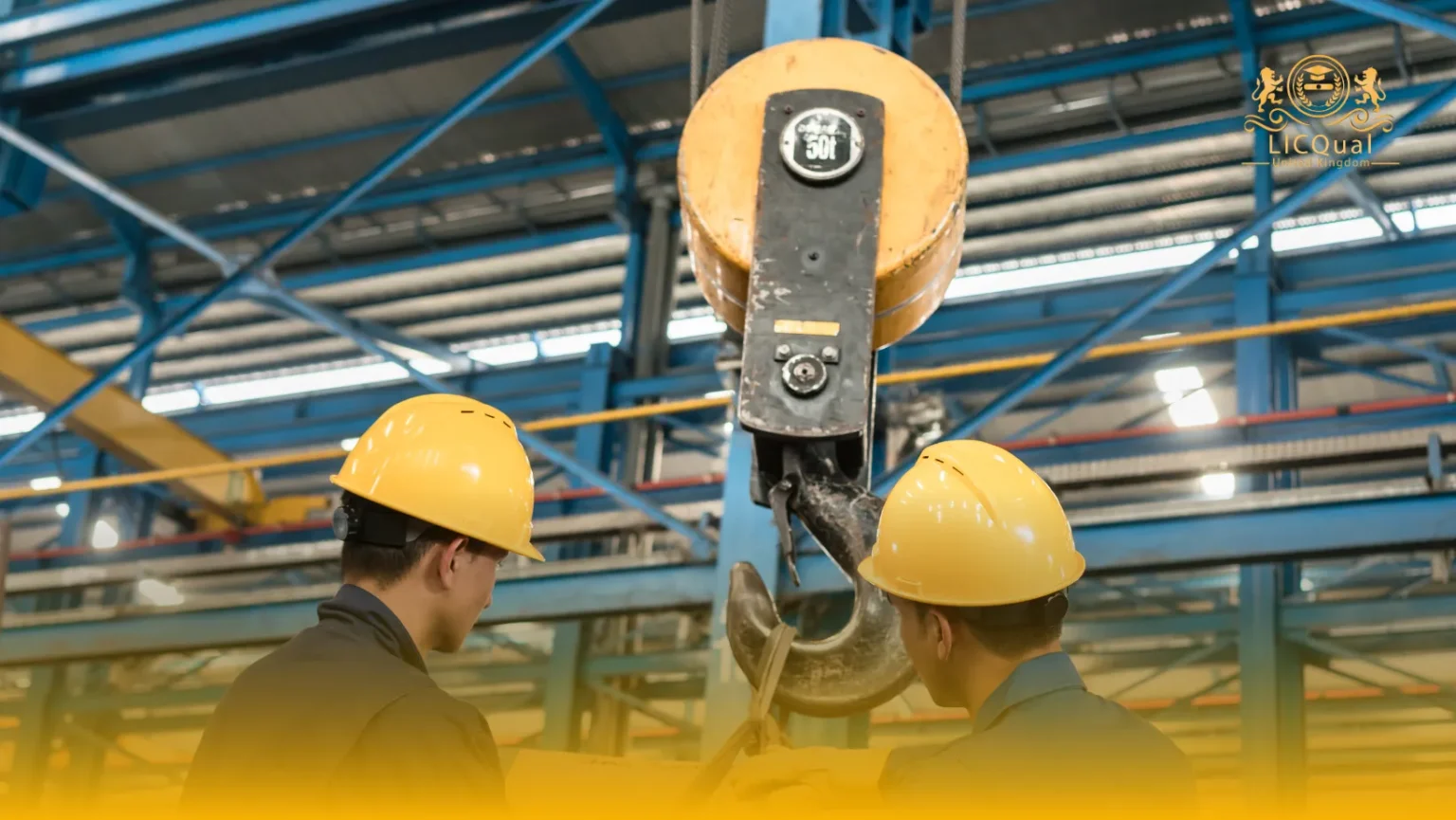
Manual Lifting Machines (MLM)
The LICQual Level 3 Certificate in Manual Lifting Machines (MLM) provides learners with advanced training in the safe operation, inspection, and management of manual lifting equipment, including chain blocks, lever hoists, manual winches, and pulley systems. This qualification equips learners with the technical knowledge and practical skills necessary to ensure safe and efficient lifting operations in compliance with international safety standards.
Learners gain a comprehensive understanding of equipment identification, operational techniques, load limits, mechanical advantages, inspection, maintenance procedures, and legal compliance. The curriculum aligns with regulations such as LOLER, ISO, OSHA, and manufacturer guidelines, providing relevant and practical knowledge across industries and environments.
Through a combination of theoretical learning and hands-on exercises, learners develop competence in applying safe handling practices, assessing risks, and maintaining lifting equipment. Completion of the LICQual Level 3 Certificate in Manual Lifting Machines demonstrates professional credibility, enhances operational competence, and supports career progression in construction, logistics, manufacturing, offshore, and industrial sectors.
Course Overview
Qualification Title
LICQual Level 3 Certificate in Manual Lifting Machines (MLM)
Total Units
6
Total Credits
24
GLH
120
Qualification #
LICQ2200531
Qualification Specification
To enroll in the LICQual Level 3 Certificate in Manual Lifting Machines (MLM) applicants must meet the following criteria:
|
Qualification# |
Unit Title |
Credits |
GLH |
|---|---|---|---|
|
LICQ2200531-1 |
Introduction to Manual Lifting Machines and Their Applications |
4 |
20 |
|
LICQ2200531-2 |
Safe Operation of Manual Lifting Equipment |
4 |
20 |
|
LICQ2200531-3 |
Inspection, Maintenance, and Fault Identification |
4 |
20 |
|
LICQ2200531-4 |
Load Limits, Lifting Angles, and Mechanical Advantage |
4 |
20 |
|
LICQ2200531-5 |
Legal and Regulatory Compliance in Manual Lifting Operations |
4 |
20 |
|
LICQ2200531-6 |
Handling, Storage, and Environmental Considerations |
4 |
20 |
By the end of this course, applicants will be able to:
1. Introduction to Manual Lifting Machines and Their Applications
- Identify different types of manual lifting machines such as chain blocks, lever hoists, and pulley systems.
- Explain the basic principles and mechanical functions behind manual lifting operations.
- Recognize the typical applications of manual lifting machines across various industries.
- Understand the importance of selecting the right tool for specific lifting tasks.
2. Safe Operation of Manual Lifting Equipment
- Operate manual lifting machines in accordance with international safety procedures.
- Perform pre-use checks and follow standard operating practices.
- Recognize unsafe lifting practices and apply corrective actions.
- Understand user responsibilities to prevent equipment misuse and workplace accidents.
3. Inspection, Maintenance, and Fault Identification
- Conduct routine inspections to identify mechanical faults and wear.
- Follow industry-recommended maintenance procedures and schedules.
- Apply rejection criteria to determine the fitness of equipment for use.
- Accurately document inspection findings in compliance with regulations.
4. Load Limits, Lifting Angles, and Mechanical Advantage
- Calculate safe working loads (SWL) and understand equipment-rated capacities.
- Assess the impact of lifting angles and load positioning on lifting performance.
- Apply principles of mechanical advantage in manual lifting scenarios.
- Avoid overloading and imbalance by correctly configuring lifting setups.
5. Legal and Regulatory Compliance in Manual Lifting Operations
- Identify and interpret key legal requirements and industry standards (e.g., LOLER, OSHA, ISO).
- Understand the roles and responsibilities of operators, employers, and inspectors.
- Maintain and verify documentation such as inspection logs and certificates.
- Ensure all lifting activities are conducted in compliance with applicable laws and best practices.
6. Handling, Storage, and Environmental Considerations
- Handle manual lifting machines safely during transport and storage.
- Implement best practices to prevent equipment corrosion, deformation, and damage.
- Recognize environmental risks (e.g., humidity, dust, chemicals) that can affect equipment performance.
- Extend the service life of lifting machines through proper care and storage procedures.
The LICQual Level 3 Certificate in Manual Lifting Machines (MLM) is designed for individuals who are involved in or responsible for the safe use, inspection, and management of manual lifting equipment. This includes professionals across a range of industries where manual lifting devices are frequently used.
This course is ideal for:
- Manual Lifting Equipment Operators
Individuals who regularly use chain blocks, lever hoists, or manual winches and need to ensure safe and proper operation. - Riggers and Mechanical Handling Personnel
Those working in rigging, mechanical lifting, or heavy equipment support roles on construction sites, offshore platforms, or in warehouses. - Safety Officers and HSE Professionals
Personnel responsible for enforcing lifting safety standards, conducting inspections, and ensuring legal compliance in lifting operations. - Maintenance and Inspection Technicians
Workers tasked with maintaining, inspecting, or certifying manual lifting machines according to regulatory requirements. - Supervisors and Team Leaders
Individuals overseeing lifting operations or managing teams who use manual lifting machines and need a clear understanding of safety and legal responsibilities. - Career Starters and Skill Enhancers
New entrants to the lifting or construction industry, or professionals seeking to upgrade their qualifications for better job opportunities or promotions.
Whether you’re working in construction, oil and gas, logistics, marine, or industrial maintenance, this course equips you with the internationally recognized skills and certification needed to operate safely and effectively.
Assessment and Verification
All units within this qualification are subject to internal assessment by the approved centre and external verification by LICQual. The qualification follows a criterion-referenced assessment approach, ensuring that learners meet all specified learning outcomes.
To achieve a ‘Pass’ in any unit, learners must provide valid, sufficient, and authentic evidence demonstrating their attainment of all learning outcomes and compliance with the prescribed assessment criteria. The Assessor is responsible for evaluating the evidence and determining whether the learner has successfully met the required standards.
Assessors must maintain a clear and comprehensive audit trail, documenting the basis for their assessment decisions to ensure transparency, consistency, and compliance with quality assurance requirements.