
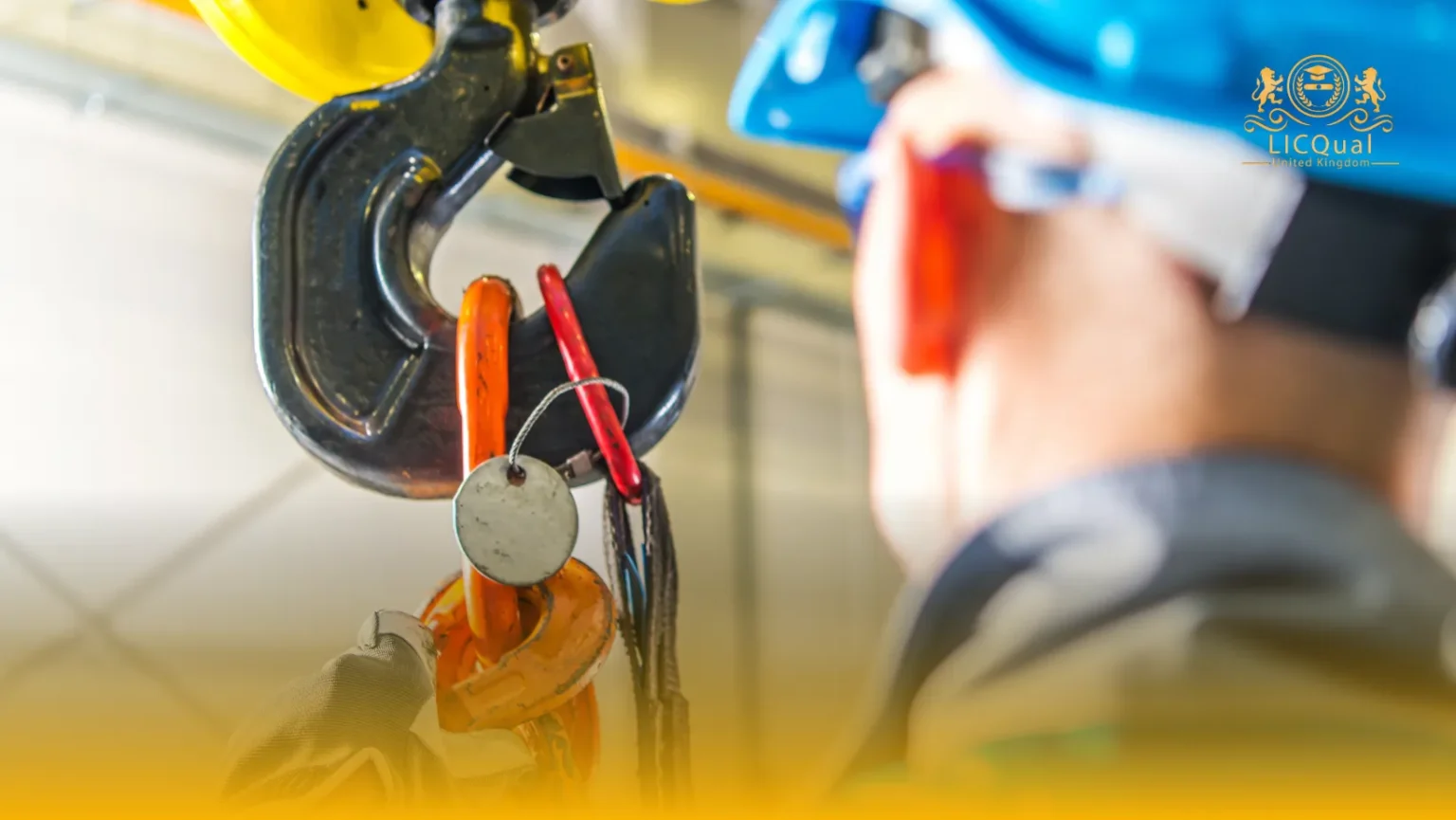
Lifting Accessories (LAC)
The LICQual Level 3 Certificate in Lifting Accessories (LAC) provides learners with advanced knowledge and practical skills for the safe selection, inspection, use, and maintenance of lifting accessories. This qualification ensures learners understand the critical role of slings, shackles, hooks, chains, eyebolts, and spreader beams in lifting operations, enhancing workplace safety, compliance, and operational efficiency.
Learners explore material properties, safe working load (SWL) markings, storage, pre-use inspections, and load handling techniques. Training aligns with international standards, including LOLER and PUWER, to ensure legal and safety compliance in all lifting activities.
Through theoretical lessons and practical demonstrations, learners develop competence in identifying defects, assessing risks, interpreting lifting plans, and applying preventive maintenance procedures. Emphasis is placed on operational hazards, environmental factors, and safe lifting practices.
Upon completion, learners gain a recognized qualification demonstrating expertise in lifting accessories, strengthening professional credibility, supporting site compliance, and preparing learners for advanced responsibilities in lifting and rigging operations.
Course Overview
Qualification Title
LICQual Level 3 Certificate in Lifting Accessories (LAC)
Total Units
6
Total Credits
24
GLH
120
Qualification #
LICQ2200530
Qualification Specification
To enroll in the LICQual Level 3 Certificate in Lifting Accessories (LAC) applicants must meet the following criteria:
|
Qualification# |
Unit Title |
Credits |
GLH |
|---|---|---|---|
|
LICQ2200530-1 |
Identification and Classification of Lifting Accessories |
4 |
20 |
|
LICQ2200530-2 |
Inspection, Maintenance, and Rejection Criteria |
4 |
20 |
|
LICQ2200530-3 |
Load Calculations and Safe Working Loads (SWL) |
4 |
20 |
|
LICQ2200530-4 |
Risk Assessment and Hazard Control in Lifting Operations |
4 |
20 |
|
LICQ2200530-5 |
Legal and Regulatory Requirements for Lifting Accessories |
4 |
20 |
|
LICQ2200530-6 |
Safe Use, Handling, and Storage of Lifting Accessories |
4 |
20 |
By the end of this course, applicants will be able to:
1. Identification and Classification of Lifting Accessories
- Accurately identify various types of lifting accessories and their components.
- Classify lifting accessories based on design, material, and usage.
- Interpret industry-standard markings and labels (e.g., WLL, CE marking).
- Distinguish between appropriate accessories for specific lifting tasks.
2. Inspection, Maintenance, and Rejection Criteria
- Perform routine and periodic inspections of lifting accessories.
- Identify signs of wear, deformation, corrosion, and other defects.
- Apply international rejection criteria to determine equipment usability.
- Understand maintenance schedules and document inspection findings accurately.
3. Load Calculations and Safe Working Loads (SWL)
- Calculate safe working loads (SWL) and working load limits (WLL) for various accessories.
- Apply load angle factors and sling configurations in lifting calculations.
- Select appropriate lifting accessories based on load weight and configuration.
- Ensure lifting operations comply with safe load handling practices.
4. Risk Assessment and Hazard Control in Lifting Operations
- Conduct structured risk assessments for lifting activities involving accessories.
- Identify and evaluate potential hazards in lifting operations.
- Implement control measures to minimize lifting-related risks.
- Understand and apply safety procedures in line with ISO 45001 and HSE best practices.
5. Legal and Regulatory Requirements for Lifting Accessories
- Understand and interpret key legal requirements related to lifting accessories.
- Comply with international regulations such as LOLER, OSHA, and ISO standards.
- Maintain proper documentation including inspection records and certifications.
- Recognize the responsibilities of duty holders and competent persons.
6. Safe Use, Handling, and Storage of Lifting Accessories
By the end of this unit, learners will be able to:
- Apply best practices for the safe use of lifting accessories during operations.
- Handle and store lifting equipment to prevent damage and extend service life.
- Identify environmental and operational risks related to improper storage.
- Ensure lifting accessories are always ready for safe deployment.
The LICQual Level 3 Certificate in Lifting Accessories (LAC) is designed for professionals who are directly or indirectly involved in lifting operations, equipment inspection, and material handling activities across various industries. This course is ideal for individuals looking to enhance their technical knowledge, improve workplace safety, and gain a recognized qualification to boost their career prospects.
This certification is particularly suitable for:
- Lifting Supervisors and Coordinators who are responsible for planning, overseeing, and executing lifting operations safely and in compliance with regulations.
- Riggers and Lifting Technicians involved in the setup and use of lifting equipment and accessories on construction sites, offshore platforms, warehouses, or industrial facilities.
- Safety Officers and Inspectors who need to understand lifting accessory standards, inspection criteria, and legal responsibilities to ensure regulatory compliance.
- Maintenance and Equipment Personnel working with cranes, hoists, and rigging systems who need to maintain and assess lifting accessories regularly.
- New Entrants or Career Changers with some industry experience who are seeking to enter lifting operations or upskill for a higher role in safety or inspection.
Whether you’re working in construction, oil & gas, logistics, marine, or heavy industry, this course equips you with the practical knowledge and certification required to operate safely and confidently in any lifting environment.
Assessment and Verification
All units within this qualification are subject to internal assessment by the approved centre and external verification by LICQual. The qualification follows a criterion-referenced assessment approach, ensuring that learners meet all specified learning outcomes.
To achieve a ‘Pass’ in any unit, learners must provide valid, sufficient, and authentic evidence demonstrating their attainment of all learning outcomes and compliance with the prescribed assessment criteria. The Assessor is responsible for evaluating the evidence and determining whether the learner has successfully met the required standards.
Assessors must maintain a clear and comprehensive audit trail, documenting the basis for their assessment decisions to ensure transparency, consistency, and compliance with quality assurance requirements.