
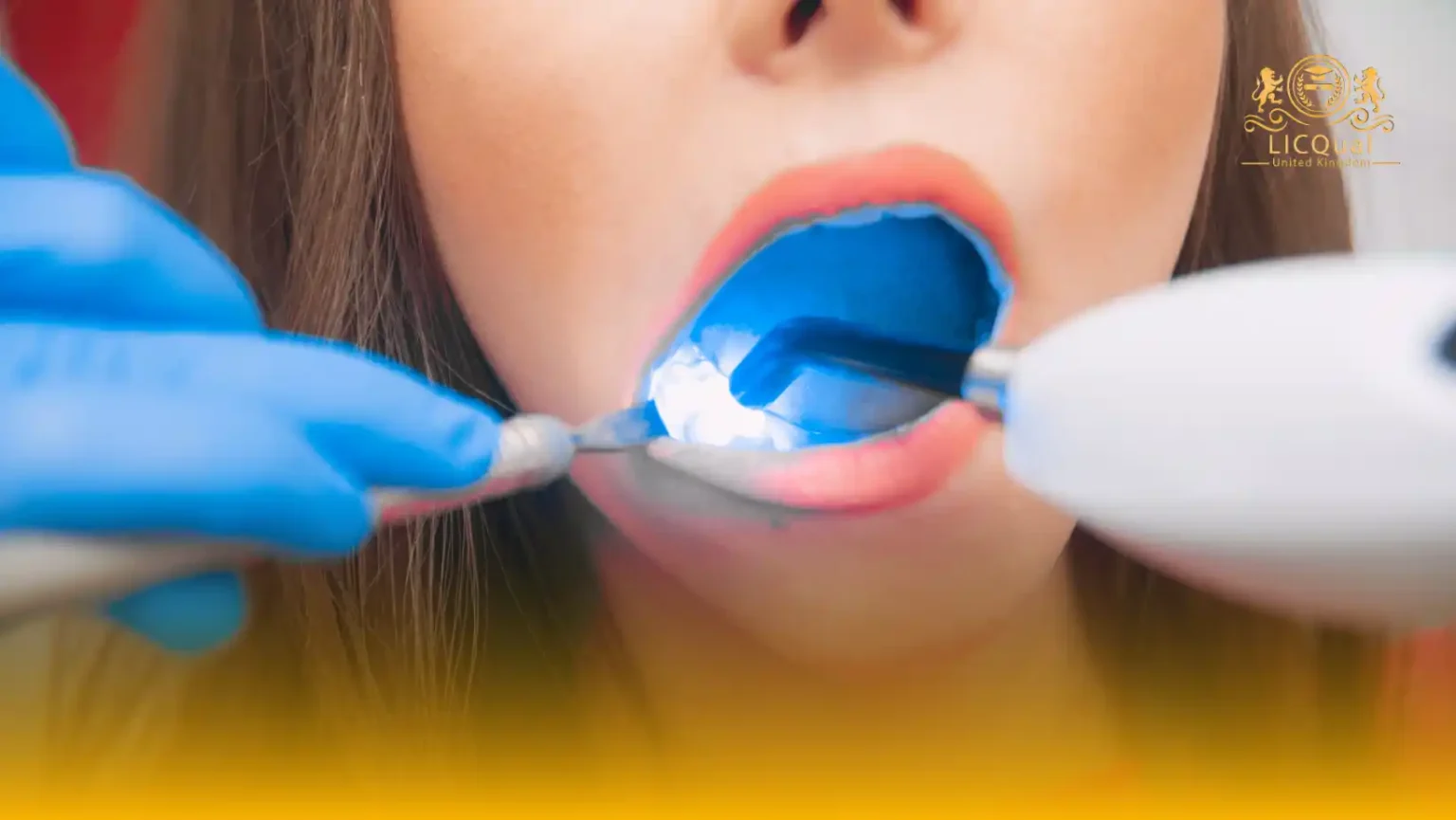
Laser Dentistry
Advancements in dental technology are transforming the way oral healthcare is delivered, and laser dentistry has become one of the most innovative developments in modern dental practice. The LICQual Level 3 Certificate in Laser Dentistry provides learners with a comprehensive introduction to the principles, applications, and benefits of laser technology in dentistry, highlighting its role in enhancing precision, efficiency, and patient care.
A central focus of this qualification is the study of how dental lasers are used across a range of clinical procedures. Learners explore topics such as laser-tissue interaction, soft tissue laser treatments, hard tissue applications, periodontal procedures, laser safety protocols, treatment planning, and the advantages of minimally invasive dental techniques. The course also examines the different types of dental lasers and their uses in contemporary oral healthcare.
Reflecting the growing adoption of advanced dental technologies, this qualification offers valuable insight into the practical and scientific aspects of laser-assisted dentistry. Learners develop a strong understanding of modern laser dental procedures, evidence-based clinical applications, and the role of laser technology in improving treatment outcomes and patient experiences.
Course Overview
Qualification Title
LICQual Level 3 Certificate in Laser Dentistry
Total Units
6
Total Credits
24
GLH
120
Qualification #
LICQ2200650
Qualification Specification
To enroll in the LICQual Level 3 Certificate in Laser Dentistry, applicants must meet the following criteria:
|
Qualification# |
Unit Title |
Credits |
GLH |
|---|---|---|---|
|
LICQ2200650-1 |
Introduction to Laser Dentistry |
4 |
20 |
|
LICQ2200650-2 |
Laser Physics and Equipment |
4 |
20 |
|
LICQ2200650-3 |
Clinical Applications of Laser Dentistry |
4 |
20 |
|
LICQ2200650-4 |
Patient Assessment and Laser Treatment Planning |
4 |
20 |
|
LICQ2200650-5 |
Safety and Infection Control in Laser Dentistry |
4 |
20 |
|
LICQ2200650-6 |
Practical Laser Dentistry Techniques |
4 |
20 |
By the end of this course, learners will be able to:
Unit 1: Introduction to Laser Dentistry
- Explain the fundamental principles and history of laser technology in dentistry.
- Identify different types of dental lasers and their specific uses.
- Describe relevant safety protocols and regulatory requirements related to laser dentistry.
- Understand the benefits and limitations of laser use in dental practice.
Unit 2: Laser Physics and Equipment
- Demonstrate knowledge of the basic physics underlying laser operation.
- Identify components and functions of laser equipment used in dentistry.
- Perform routine maintenance, calibration, and safety checks on laser devices.
- Recognize common equipment faults and appropriate troubleshooting steps.
Unit 3: Clinical Applications of Laser Dentistry
- Describe the use of lasers in soft tissue and hard tissue dental procedures.
- Apply laser technology in periodontal therapy and restorative treatments.
- Differentiate between laser wavelengths and their clinical indications.
- Evaluate clinical cases where laser treatment is appropriate and effective.
Unit 4: Patient Assessment and Laser Treatment Planning
- Conduct comprehensive patient assessments to determine suitability for laser treatment.
- Identify contraindications and potential risks associated with laser dentistry.
- Develop detailed treatment plans incorporating laser technology.
- Communicate laser treatment options, benefits, and risks effectively to patients.
Unit 5: Safety and Infection Control in Laser Dentistry
- Implement laser safety protocols to protect patients and dental staff.
- Apply infection control procedures specific to laser dentistry.
- Respond appropriately to emergencies or adverse events during laser procedures.
- Maintain compliance with health and safety legislation related to laser use.
Unit 6: Practical Laser Dentistry Techniques
- Demonstrate correct handling and operation of laser equipment in a clinical setting.
- Perform basic laser procedures on soft and hard tissues under supervision.
- Assess personal competency and safety during practical laser applications.
- Reflect on clinical practice to improve laser treatment techniques.
This qualification is particularly relevant for:
- Dental professionals interested in understanding the principles and clinical uses of laser dentistry.
- Individuals seeking knowledge of advanced dental technologies and minimally invasive treatment techniques.
- Learners aiming to explore laser-assisted dental procedures used in contemporary oral healthcare.
- Those interested in gaining insight into soft tissue and hard tissue laser applications in dentistry.
- Professionals looking to expand their understanding of dental treatment planning and laser safety protocols.
- Individuals wishing to enhance their knowledge of modern patient-centred dental care approaches.
- Learners interested in the role of laser technology in improving treatment precision and clinical efficiency.
- Those seeking a recognised qualification in an innovative and rapidly evolving area of dentistry.
- Individuals exploring developments in cosmetic, restorative, and periodontal laser treatments.
- Learners interested in understanding the future trends and technological advancements shaping modern dental practice.
- Qualified Trainers: Centres must have certified and experienced laser dentistry trainers who hold relevant professional qualifications and practical expertise in laser dental treatments.
- Laser Equipment: Access to up-to-date, well-maintained dental laser devices covering soft and hard tissue applications is essential for practical training sessions.
- Training Facilities: Centres should provide fully equipped clinical environments that meet health and safety regulations, ensuring a safe learning space for both learners and trainers.
- Health and Safety Compliance: Centres must adhere to strict laser safety protocols and infection control standards according to national and international dental regulations.
- Assessment Resources: Availability of appropriate assessment tools and facilities to conduct practical and theoretical evaluations of learners.
- Learning Materials: Provision of comprehensive course materials, including manuals, digital resources, and up-to-date literature on laser dentistry.
- Student Support: Centres should offer adequate learner support services, including guidance on course requirements, access to clinical practice, and mentoring throughout the course.
- Regulatory Accreditation: Centres must be accredited or recognized by relevant dental or educational regulatory bodies to deliver this Level 3 qualification.
Assessment and Verification
All units within this qualification are subject to internal assessment by the approved centre and external verification by LICQual. The qualification follows a criterion-referenced assessment approach, ensuring that learners meet all specified learning outcomes.
To achieve a ‘Pass’ in any unit, learners must provide valid, sufficient, and authentic evidence demonstrating their attainment of all learning outcomes and compliance with the prescribed assessment criteria. The Assessor is responsible for evaluating the evidence and determining whether the learner has successfully met the required standards.
Assessors must maintain a clear and comprehensive audit trail, documenting the basis for their assessment decisions to ensure transparency, consistency, and compliance with quality assurance requirements.