
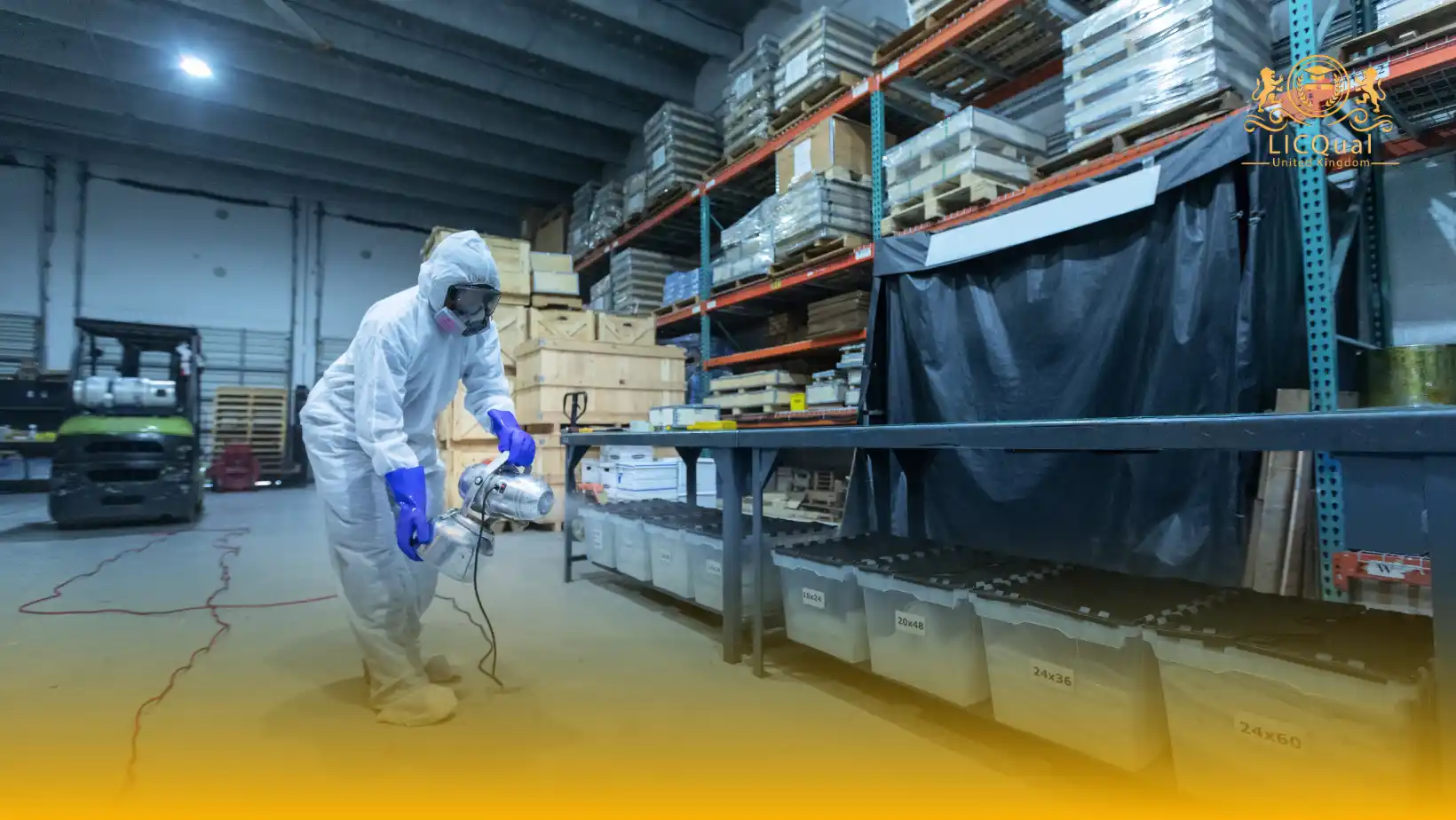
Industrial Hygiene
The LICQual Level 2 Award in Industrial Hygiene is an internationally recognized qualification that equips learners with foundational knowledge and practical skills to identify, evaluate, and control workplace environmental hazards. This course emphasizes proactive management of occupational health risks, including exposure to physical, chemical, biological, and ergonomic hazards.
Learners are introduced to key industrial hygiene concepts such as hazard recognition, risk assessment, environmental monitoring, and the implementation of effective control measures. The training covers workplace hazards including airborne contaminants, noise, vibration, heat stress, chemical exposure, and ventilation challenges. Learners also gain expertise in the proper use of personal protective equipment (PPE), engineering controls, administrative measures, and safe work practices.
Through a combination of theoretical instruction and practical applications, learners develop the competence to assess and manage workplace hazards confidently. Successful completion of the LICQual Level 2 Award in Industrial Hygiene awards learners a globally recognized certificate, validating their professional skills and supporting compliance with occupational health and safety regulations.
Course Overview
Qualification Title
LICQual Level 2 Award in Industrial Hygiene
Total Units
6
Total Credits
6
GLH
12
Qualification #
LICQ2200395
Qualification Specification
To enroll in the LICQual Level 2 Award in Industrial Hygiene, applicants must meet the following entry requirements:
- Age Requirement: Applicants must be at least 16 years old.
- Educational Requirements: Applicants should have a minimum of a high school diploma or equivalent.
- Experience: Applicants are recommended to have basic experience in industrial, laboratory, or workplace health and safety environments.
- English Language Proficiency: Applicants must possess functional English reading, writing, and speaking skills.
|
Qualification# |
Unit Title |
Credits |
GLH |
|---|---|---|---|
|
LICQ2200395-1 LICQ2200395-2 |
Introduction to Industrial Hygiene Classification of Occupational Hazards |
1 1 |
2 2 |
|
LICQ2200395-3 |
Hazard Identification and Risk Assessment |
1 |
2 |
|
LICQ2200395-4 |
Environmental Monitoring and Sampling Techniques |
1 |
2 |
|
LICQ2200395-5 |
Control Measures in Industrial Hygiene |
1 |
2 |
|
LICQ2200395-6 |
Health Surveillance, Legal Compliance, and Reporting |
1 |
2 |
By the end of this course, learners will be able to:
Study Unit 1: Introduction to Industrial Hygiene
By the end of this unit, learners will be able to:
- Explain the definition and scope of industrial hygiene and its role in occupational health.
- Understand the core responsibilities of an industrial hygienist in different industries.
- Describe the importance of hazard anticipation, recognition, evaluation, and control in maintaining workplace safety.
Study Unit 2: Classification of Occupational Hazards
By the end of this unit, learners will be able to:
- Identify the four main types of occupational hazards: chemical, physical, biological, and ergonomic.
- Explain how different types of hazards impact worker health and safety.
- Recognize industry-specific examples of hazards and how they are classified.
Study Unit 3: Hazard Identification and Risk Assessment
By the end of this unit, learners will be able to:
- Conduct basic workplace hazard identification and risk assessments.
- Apply tools such as Job Hazard Analysis (JHA) and risk matrices in evaluating risks.
- Prioritize hazards based on severity and likelihood to implement appropriate control measures.
Study Unit 4: Environmental Monitoring and Sampling Techniques
By the end of this unit, learners will be able to:
- Understand the purpose and methods of environmental monitoring in industrial settings.
- Demonstrate knowledge of air sampling, noise measurement, and biological monitoring techniques.
- Use monitoring results to evaluate employee exposure levels and recommend improvements.
Study Unit 5: Control Measures in Industrial Hygiene
By the end of this unit, learners will be able to:
- Apply the hierarchy of controls to reduce or eliminate workplace hazards.
- Select appropriate control measures, including engineering solutions and PPE.
- Evaluate the effectiveness of control strategies based on hazard type and work conditions.
Study Unit 6: Health Surveillance, Legal Compliance, and Reporting
By the end of this unit, learners will be able to:
- Understand the importance of health surveillance in detecting work-related illnesses early.
- Explain the legal responsibilities of employers and workers regarding industrial hygiene.
- Maintain accurate records and follow proper reporting procedures in line with regulatory requirements.
This diploma is ideal for:
- Environmental health professionals seeking to enhance their knowledge of workplace hygiene practices
- Maintenance and facility personnel involved in implementing safety protocols and environmental monitoring
- Laboratory staff and technicians handling hazardous substances or operating in controlled environments
- Compliance officers and auditors responsible for ensuring adherence to occupational health regulations
- Individuals pursuing a career in occupational health, safety, or industrial hygiene
- Organizations aiming to upskill their workforce in line with international occupational safety standards
- Employees involved in health surveillance programs or workplace risk assessments
Assessment and Verification
All units within this qualification are subject to internal assessment by the approved centre and external verification by LICQual. The qualification follows a criterion-referenced assessment approach, ensuring that learners meet all specified learning outcomes.
To achieve a ‘Pass’ in any unit, learners must provide valid, sufficient, and authentic evidence demonstrating their attainment of all learning outcomes and compliance with the prescribed assessment criteria. The Assessor is responsible for evaluating the evidence and determining whether the learner has successfully met the required standards.
Assessors must maintain a clear and comprehensive audit trail, documenting the basis for their assessment decisions to ensure transparency, consistency, and compliance with quality assurance requirements.