
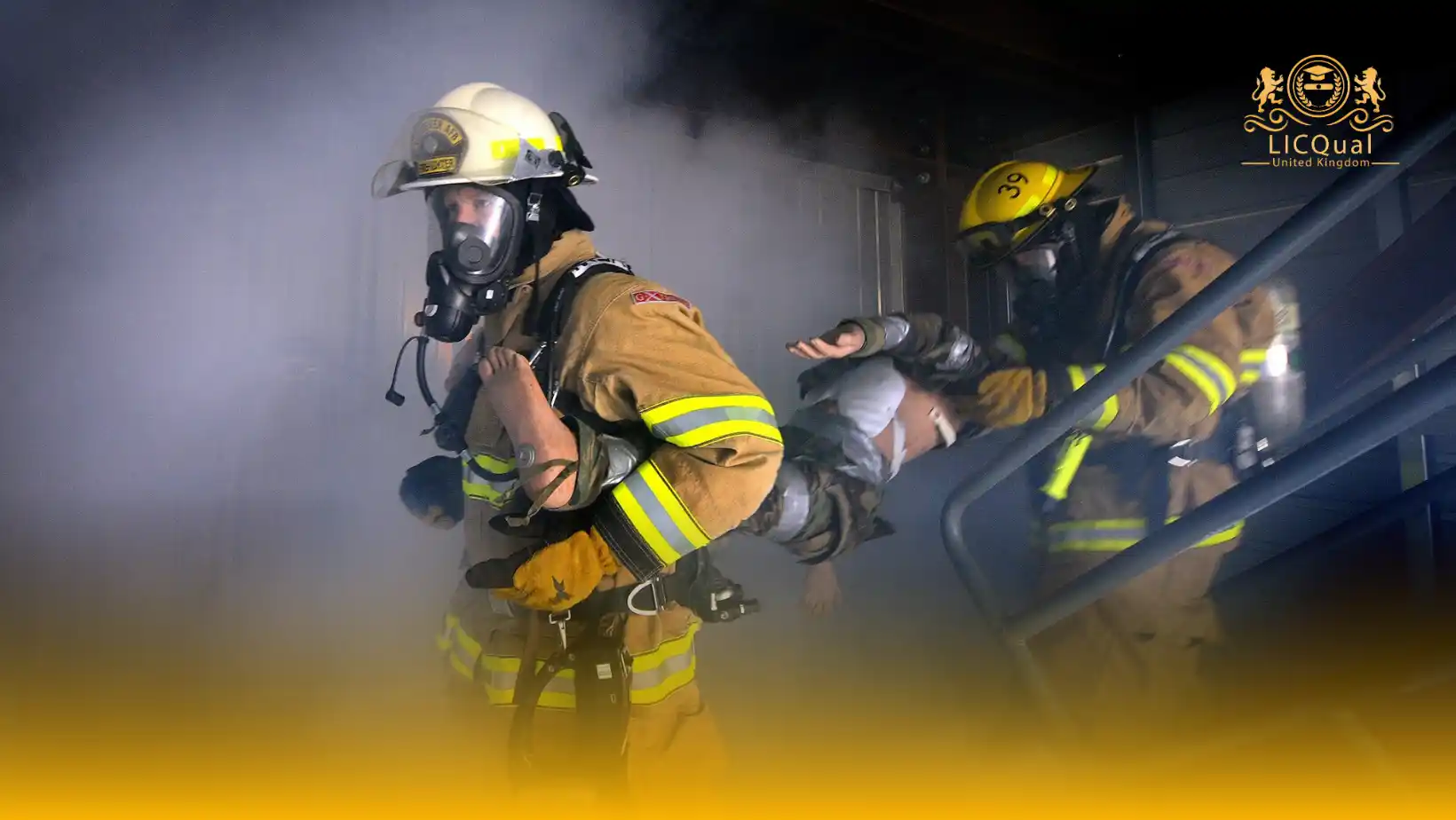
Fire Watcher
The LICQual Level 2 Award in Fire Watcher is a vital qualification for learners working in high-risk environments where fire safety is essential. This course equips learners with the knowledge and practical skills needed to monitor fire hazards and maintain a safe working environment in construction sites, industrial settings, and confined spaces.
Learners gain the expertise to identify potential fire risks, implement preventive measures, and respond effectively in emergency situations. The course covers fire prevention strategies, the role and responsibilities of a Fire Watcher, fire risk assessments, emergency procedures, and proper use of fire safety equipment.
With a focus on both practical application and theoretical understanding, learners develop the confidence to safeguard personnel and assets from fire hazards. Emphasizing communication and teamwork, this course prepares learners to report hazards effectively and collaborate with others to reduce risks, making it an essential qualification for advancing careers in fire safety and emergency preparedness.
Course Overview
Qualification Title
LICQual Level 2 Award in Fire Watcher
Total Units
6
Total Credits
6
GLH
12
Qualification #
LICQ2200411
Qualification Specification
To enroll in the LICQual Level 2 Award in Fire Watcher applicants must meet the following criteria:
|
Qualification# |
Unit Title |
Credits |
GLH |
|---|---|---|---|
|
LICQ2200411-1 |
Introduction to Fire Safety and Hazard Identification |
1 |
2 |
|
LICQ2200411-2 |
Roles and Responsibilities of a Fire Watcher |
1 |
2 |
|
LICQ2200411-3 |
Fire Risk Assessment and Prevention Measures |
1 |
2 |
|
LICQ2200411-4 |
Emergency Response and Fire Fighting Procedures |
1 |
2 |
|
LICQ2200411-5 |
Fire Safety Equipment and Usage |
1 |
2 |
|
LICQ2200411-6 |
Communication and Reporting in Fire Safety |
1 |
2 |
By the end of this course, applicants will be able to:
Introduction to Fire Safety and Hazard Identification
- Learners will understand the basic principles of fire safety in workplace environments.
- Learners will identify common fire hazards and their potential causes.
- Learners will recognize the importance of maintaining a safe working environment.
- Learners will be able to explain key fire safety terminology and concepts.
Roles and Responsibilities of a Fire Watcher
- Learners will understand the duties and responsibilities of a Fire Watcher in high-risk environments.
- Learners will recognize the importance of vigilance and proactive monitoring to prevent fire incidents.
- Learners will identify the legal and organizational responsibilities associated with the Fire Watcher role.
- Learners will develop awareness of how their role supports overall workplace safety.
Fire Risk Assessment and Prevention Measures
- Learners will conduct basic fire risk assessments to identify potential hazards.
- Learners will understand strategies to minimize fire risks in various work environments.
- Learners will implement practical fire prevention measures effectively.
- Learners will learn to prioritize risks and take preventive action to protect personnel and assets.
Emergency Response and Fire Fighting Procedures
- Learners will understand how to respond promptly and safely during a fire emergency.
- Learners will apply evacuation procedures and emergency protocols in different scenarios.
- Learners will gain knowledge of basic fire fighting techniques appropriate for the workplace.
- Learners will be able to coordinate with emergency teams to ensure effective response.
Fire Safety Equipment and Usage
- Learners will identify different types of fire safety equipment and their purposes.
- Learners will demonstrate correct handling and use of fire extinguishers and alarms.
- Learners will understand maintenance requirements to ensure equipment readiness.
- Learners will learn to select appropriate equipment based on fire type and hazard.
Communication and Reporting in Fire Safety
- Learners will develop effective communication skills for reporting fire hazards.
- Learners will understand the procedures for documenting and escalating fire safety issues.
- Learners will learn how to collaborate with team members to implement safety measures.
- Learners will recognize the importance of clear and timely reporting in preventing incidents.
This diploma is ideal for:
- Individuals working in industries where fire risks are prevalent, such as construction, oil and gas, and manufacturing.
- Safety professionals who want to enhance their qualifications and expertise in fire safety monitoring.
- Workers with basic safety knowledge looking to specialize in fire safety and fire prevention.
- Supervisors and managers who oversee teams in high-risk environments and need to ensure compliance with fire safety regulations.
- Those interested in taking on the role of a Fire Watcher and looking to obtain a formal, accredited qualification.
- People looking to pursue a career in fire safety, particularly in hazardous work environments.
- Employers who want to ensure their staff are fully trained to handle fire hazards and respond effectively in case of emergencies.
Assessment and Verification
All units within this qualification are subject to internal assessment by the approved centre and external verification by LICQual. The qualification follows a criterion-referenced assessment approach, ensuring that applicants meet all specified learning outcomes.
To achieve a ‘Pass’ in any unit, applicants must provide valid, sufficient, and authentic evidence demonstrating their attainment of all learning outcomes and compliance with the prescribed assessment criteria. The Assessor is responsible for evaluating the evidence and determining whether the applicants has successfully met the required standards.
Assessors must maintain a clear and comprehensive audit trail, documenting the basis for their assessment decisions to ensure transparency, consistency, and compliance with quality assurance requirements.