
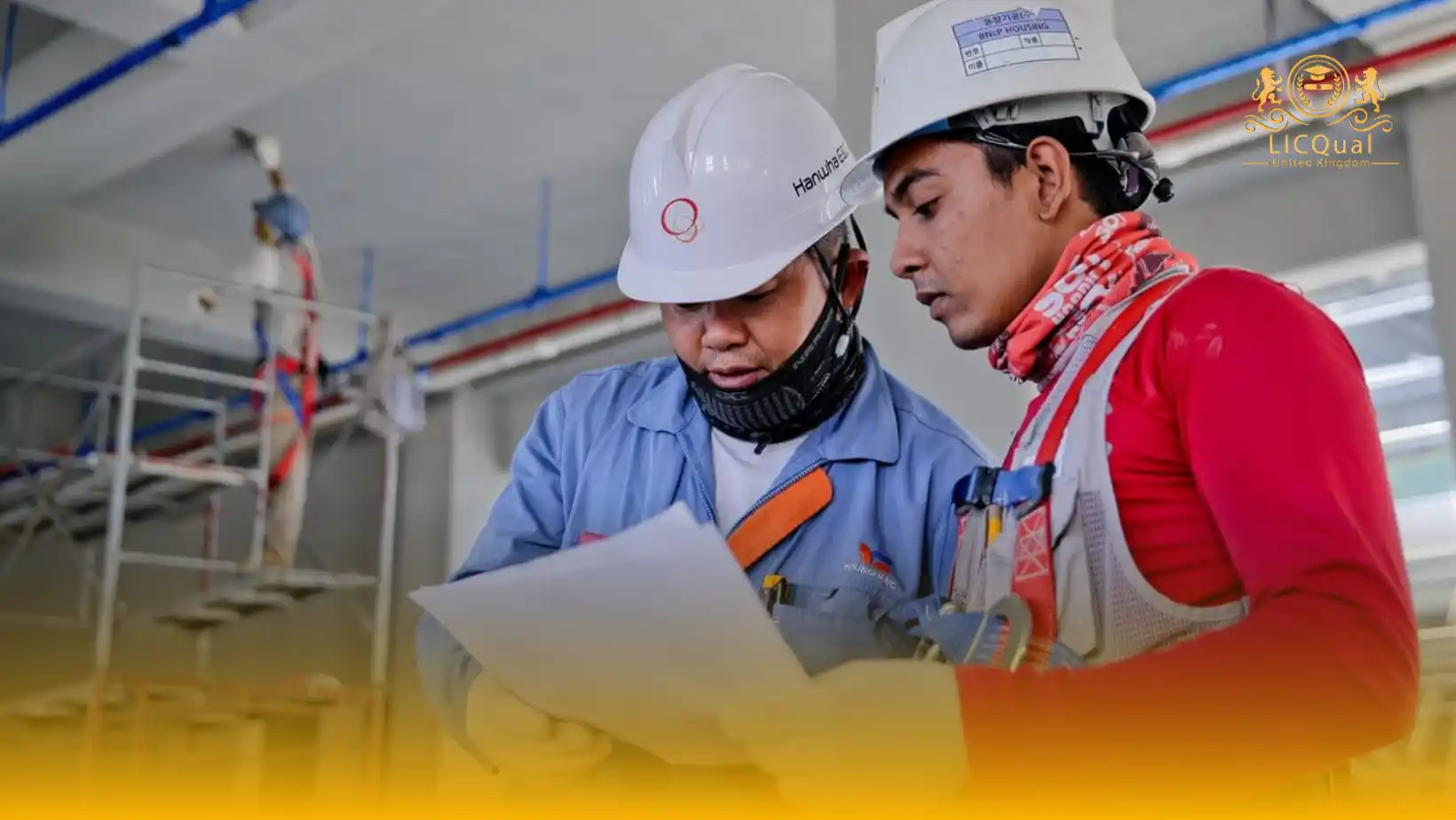
Occupational Health and Safety
Welcome to the LICQual Level 1 Introductory Certificate in Occupational Health and Safety, designed to provide the learner with essential knowledge and practical skills in occupational health and safety (OHS). This course equips the learner to understand workplace hazards, risk assessment processes, and compliance with health and safety regulations, laying a strong foundation for safe and effective workplace practices.
The learner gains insight into key OHS principles, including hazard identification, risk management, and relevant health and safety legislation. Emphasis is placed on practical application, allowing the learner to engage in scenarios, case studies, and exercises that reinforce learning and develop real-world skills.
Through this course, the learner builds competence in maintaining safe working environments and contributes effectively to organizational safety culture. By completing the LICQual Level 1 Introductory Certificate in Occupational Health and Safety, the learner is prepared for further OHS certifications and career growth, gaining the confidence and capability to promote health and safety standards across diverse workplaces.
Course Overview
Qualification Title
LICQual Level 1 Introductory Certificate in Occupational Health and Safety
Total Units
6
Total Credits
12
GLH
36
Qualification #
LICQ2200027
Qualification Specification
To enroll in the LICQual Level 1 Introductory Certificate in Occupational Health and Safety ,applicants must meet the following criteria:
|
Qualification# |
Unit Title |
Credits |
GLH |
|---|---|---|---|
|
LICQ2200027-1 |
Introduction to Occupational Health and Safety (OHS) |
2 |
6 |
|
LICQ2200027-2 |
Identifying Hazards in the Workplace |
2 |
6 |
|
LICQ2200027-3 |
Risk Assessment and Control Measures |
2 |
6 |
|
LICQ2200027-4 |
Health and Safety Legislation and Regulations |
2 |
6 |
|
LICQ2200027-5 |
Promoting Workplace Health and Wellbeing |
2 |
6 |
|
LICQ2200027-6 |
Emergency Procedures and First Aid |
2 |
6 |
By the end of this course, learners will be able to:
Introduction to Occupational Health and Safety (OHS)
- Demonstrate an understanding of the key principles and concepts of occupational health and safety.
- Explain the importance of OHS in reducing workplace accidents and promoting a safe working environment.
- Identify the roles and responsibilities of employers and employees in ensuring workplace safety.
- Recognize how OHS policies and practices contribute to overall organizational success and employee wellbeing.
Identifying Hazards in the Workplace
- Identify common types of workplace hazards, including physical, chemical, biological, ergonomic, and psychosocial hazards.
- Describe the process of hazard identification in various workplace settings.
- Recognize potential risks and hazards in the workplace and suggest initial actions for mitigating them.
- Understand the importance of proactive hazard identification in preventing accidents and injuries.
Risk Assessment and Control Measures
- Explain the process of conducting a risk assessment to evaluate workplace hazards and risks.
- Understand the concepts of likelihood, severity, and risk in relation to workplace safety.
- Identify and apply control measures in line with the hierarchy of controls to manage workplace risks.
- Demonstrate the ability to recommend and implement control measures based on the results of risk assessments.
Health and Safety Legislation and Regulations
- Understand key national and international health and safety regulations and how they impact the workplace.
- Explain the legal responsibilities of employers and employees in relation to health and safety.
- Identify key health and safety laws that govern the workplace and how compliance is monitored and enforced.
- Demonstrate an understanding of how non-compliance with health and safety legislation can affect an organization.
Promoting Workplace Health and Wellbeing
- Explain the importance of promoting both physical and mental health in the workplace.
- Identify strategies for fostering employee health and wellbeing, including stress management and promoting a work-life balance.
- Understand the role of OHS professionals in developing and implementing health and wellbeing programs.
- Recognize the link between workplace health and wellbeing and increased productivity, morale, and reduced absenteeism.
Emergency Procedures and First Aid
- Demonstrate an understanding of emergency response procedures, including fire safety, evacuation plans, and first aid protocols.
- Identify the steps to take in response to various workplace emergencies, ensuring the safety of all employees.
- Explain the basic principles of first aid and how to administer essential first aid care in case of workplace injuries.
- Understand the importance of emergency planning and preparedness in maintaining a safe and responsive workplace environment.
This diploma is ideal for:
Assessment and Verification
All units within this qualification are subject to internal assessment by the approved centre and external verification by LICQual. The qualification follows a criterion-referenced assessment approach, ensuring that learners meet all specified learning outcomes.
To achieve a ‘Pass’ in any unit, learners must provide valid, sufficient, and authentic evidence demonstrating their attainment of all learning outcomes and compliance with the prescribed assessment criteria. The Assessor is responsible for evaluating the evidence and determining whether the learner has successfully met the required standards.
Assessors must maintain a clear and comprehensive audit trail, documenting the basis for their assessment decisions to ensure transparency, consistency, and compliance with quality assurance requirements.