
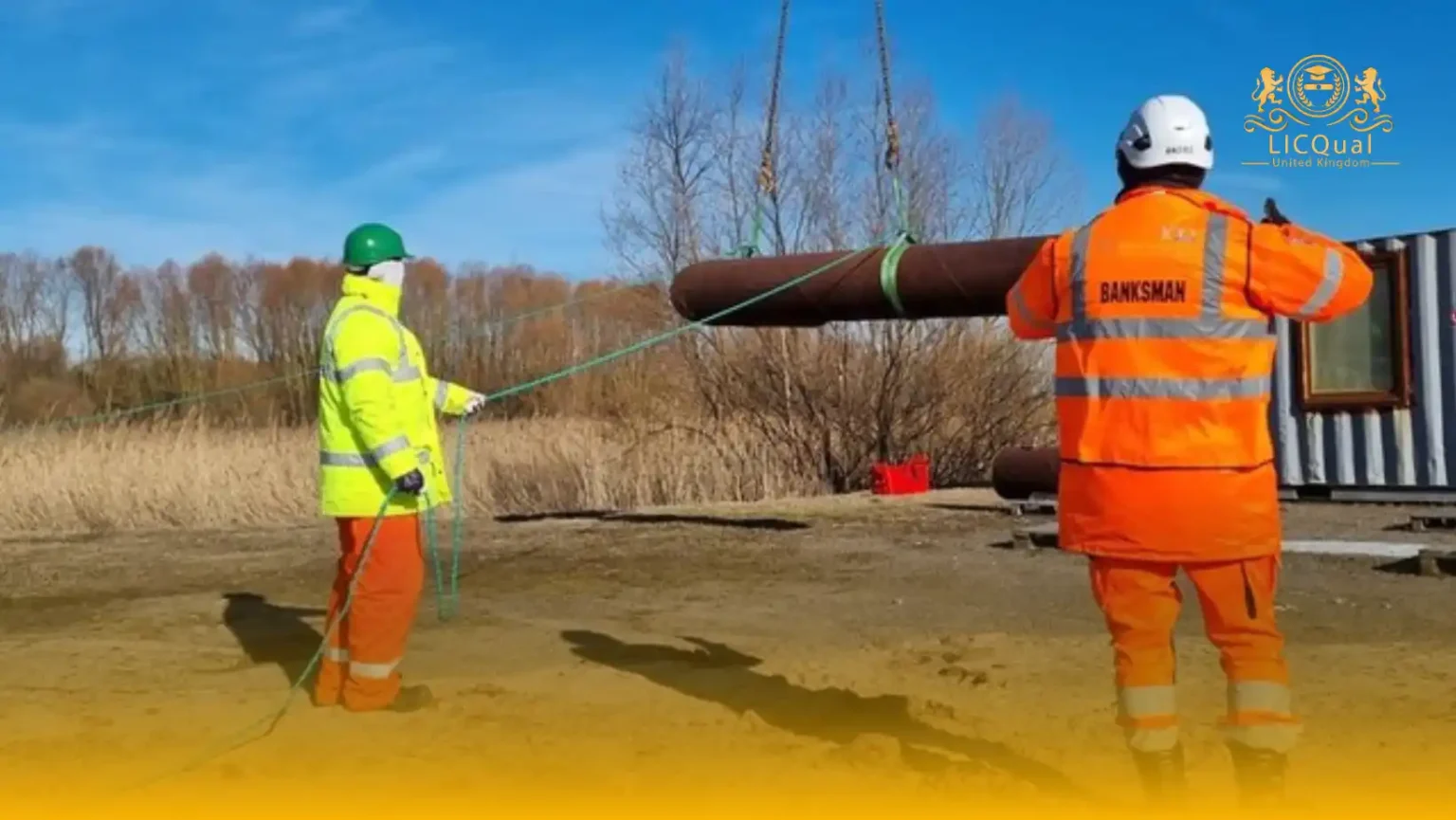
Certificate in Banksman
The LICQual Level 1 Certificate in Banksman is a foundational qualification designed to equip learners with essential knowledge and practical skills in site safety, vehicle marshalling, and plant operations. This course provides learners with a clear understanding of the Banksman role in maintaining safe working environments across construction and industrial sites. Learners will gain hands-on experience in controlling vehicle and machinery movements, applying health and safety regulations, and using effective communication methods to prevent accidents.
The curriculum covers key areas including hazard awareness, emergency procedures, site safety responsibilities, and operational coordination. Learners will develop the ability to identify risks, follow safety instructions, and support efficient site operations in line with industry standards.
Upon completion, learners will possess the core competencies required to perform Banksman duties safely and effectively. The LICQual Level 1 Certificate in Banksman establishes a strong professional foundation and supports progression to higher-level Banksman qualifications and broader site safety roles.
Course Overview
Qualification Title
LICQual Level 1 Certificate in Banksman
Total Units
6
Total Credits
12
GLH
36
Qualification #
LICQ2200198
Qualification Specification
To enroll in theLICQual Level 1 Certificate in Banksman, applicants must meet the following criteria:
|
Qualification# |
Unit Title |
Credits |
GLH |
|---|---|---|---|
|
LICQ2200198-1 |
Introduction to Banksman and Site Procedures |
2 |
6 |
|
LICQ2200198-2 |
Basic Health and Safety and Legal Requirements |
2 |
6 |
|
LICQ2200198-3 |
Communication Skills in Construction |
2 |
6 |
|
LICQ2200198-4 |
Vehicle and Equipment Safety in Construction |
2 |
6 |
|
LICQ2200198-5 |
Identification and Control of Hazards |
2 |
6 |
|
LICQ2200198-6 |
Emergency Procedures and Basic First Aid |
2 |
6 |
By the end of this course, learners will be able to:
Introduction to Banksman and Site Procedures
- Understand the key role and responsibilities of a Banksman on construction and industrial sites.
- Demonstrate an understanding of site procedures related to vehicle and plant movements.
- Recognize the importance of the Banksman in maintaining site safety and ensuring smooth operational flow.
Basic Health and Safety and Legal Requirements
- Identify basic health and safety regulations relevant to Banksman roles in construction environments.
- Understand key legal requirements and industry standards related to workplace safety.
- Explain how a Banksman contributes to legal compliance and site safety.
Communication Skills in Construction
- Use effective communication skills to direct plant, vehicles, and site personnel safely.
- Demonstrate the correct use of hand signals and verbal instructions for vehicle marshalling.
- Understand the importance of clear communication in preventing accidents and ensuring smooth operations on site.
Vehicle and Equipment Safety in Construction
- Recognize the safety requirements for operating vehicles and machinery on construction sites.
- Identify potential hazards associated with vehicle and equipment operations.
- Understand the Banksman’s role in ensuring that vehicles and equipment are operated safely, minimizing risks to personnel and property.
Identification and Control of Hazards
- Identify common hazards found on construction sites related to vehicles, plant, and general operations.
- Understand how to assess risks associated with these hazards and implement control measures to reduce or eliminate them.
- Recognize the importance of hazard awareness and proactive risk management in ensuring a safe work environment.
Emergency Procedures and Basic First Aid
- Understand emergency response protocols and the Banksman’s role in responding to accidents or hazardous situations.
- Demonstrate basic first aid skills, including how to assist injured personnel before medical help arrives.
- Know the emergency contact procedures and how to safely evacuate a site if necessary.
This diploma is ideal for:
Assessment and Verification
All units within this qualification are subject to internal assessment by the approved centre and external verification by LICQual. The qualification follows a criterion-referenced assessment approach, ensuring that learners meet all specified learning outcomes.
To achieve a ‘Pass’ in any unit, learners must provide valid, sufficient, and authentic evidence demonstrating their attainment of all learning outcomes and compliance with the prescribed assessment criteria. The Assessor is responsible for evaluating the evidence and determining whether the learner has successfully met the required standards.
Assessors must maintain a clear and comprehensive audit trail, documenting the basis for their assessment decisions to ensure transparency, consistency, and compliance with quality assurance requirements.