
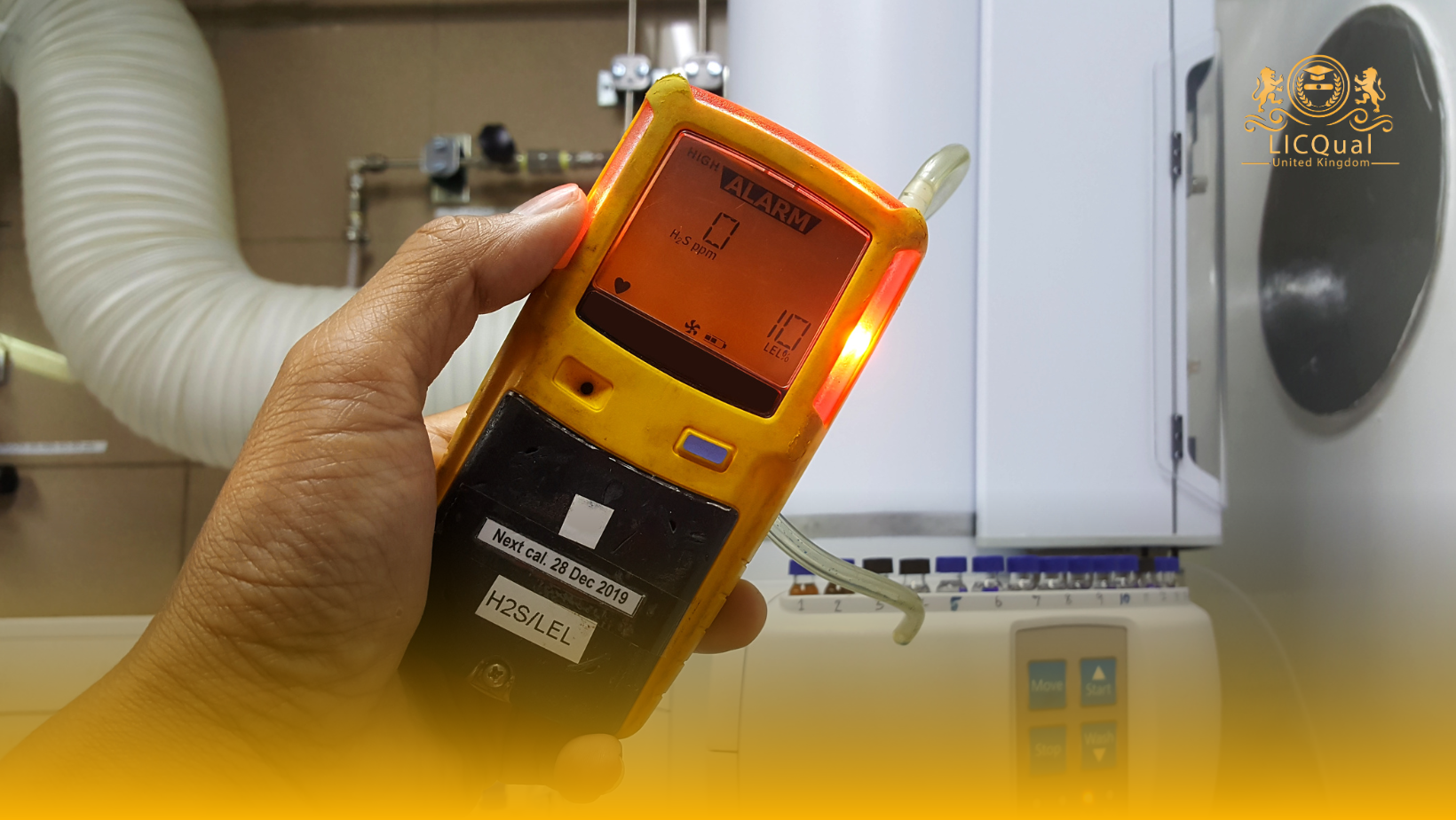
Award in H2S Safety
The LICQual Level 1 Award in H2S Safety is a foundational qualification designed to provide learners with essential knowledge of hydrogen sulfide (H2S) hazards and safe working practices in high-risk environments. The course introduces the properties of H2S gas, its potential health effects, and the importance of detection, monitoring, and emergency response procedures. Learners develop an understanding of how H2S exposure can affect safety and why strict control measures are required in industries where this gas is present.
H2S safety is particularly significant across sectors such as oil and gas, petrochemical plants, drilling operations, and wastewater treatment facilities. Learners gain awareness of workplace risks associated with toxic gases and the role of safety protocols in preventing incidents and supporting regulatory compliance. This area is critical for maintaining safe operations and protecting lives in hazardous working environments.
Through the LICQual Level 1 Award in H2S Safety, learners develop knowledge of hazard identification, personal protective equipment, gas detection systems, and emergency response actions. The qualification also builds learners’ confidence in recognising warning signs and supporting safe working conditions in environments where H2S hazards may be present.
Course Overview
Qualification Title
LICQual Level 1 Award in H2S Safety
Total Units
6
Total Credits
6
GLH
12
Qualification #
LICQ2200444
Qualification Specification
To enroll in the LICQual Level 1 Award in H2S Safety applicants must meet the following criteria:
|
Qualification# |
Unit Title |
Credits |
GLH |
|---|---|---|---|
|
LICQ2200444-1 |
Introduction to H2S and Its Properties |
1 |
2 |
|
LICQ2200444-2 |
Health Hazards and Symptoms of H2S Exposure |
1 |
2 |
|
LICQ2200444-3 |
Basic Detection and Monitoring Methods |
1 |
2 |
|
LICQ2200444-4 |
Personal Protective Equipment (PPE) Basics |
1 |
2 |
|
LICQ2200444-5 |
Evacuation Procedures and Emergency Response |
1 |
2 |
|
LICQ2200444-6 |
Safety Signs, Labels, and General Precautions |
1 |
2 |
By the end of this course,applicants will be able to:
1. Introduction to H2S and Its Properties
- Explain the physical and chemical properties of Hydrogen Sulfide (H2S) and its sources in industrial environments.
- Describe the characteristics of H2S including its smell, flammability, and density.
- Identify common locations and processes where H2S may be generated or released.
- Understand the significance of H2S properties in the context of workplace safety and risk management.
2. Health Hazards and Symptoms of H2S Exposure
- Recognize the short-term and long-term health effects of H2S exposure on the human body.
- Identify symptoms of low, moderate, and high-level exposure to H2S gas.
- Understand the progression of symptoms from mild irritation to respiratory failure.
- Explain first aid and immediate response measures in the event of H2S exposure.
3. Basic Detection and Monitoring Methods
- Understand the importance of gas detection systems in controlling H2S hazards.
- Identify different types of detection equipment used for monitoring H2S levels.
- Describe how fixed and portable detectors function and where they are deployed.
- Interpret readings from monitoring devices and understand threshold limits.
4. Personal Protective Equipment (PPE) Basics
- Identify various types of PPE used in H2S-prone environments, including respirators and gas masks.
- Demonstrate basic knowledge of PPE selection based on exposure level and job role.
- Understand the correct usage, limitations, and maintenance of PPE.
- Explain the importance of fit-testing and regular inspection of protective equipment.
5. Evacuation Procedures and Emergency Response
- Explain standard evacuation procedures in response to H2S gas leaks.
- Identify the roles and responsibilities of personnel during an emergency situation.
- Describe how to use emergency escape breathing devices (EEBDs) and follow alarm protocols.
- Understand the importance of muster points, communication protocols, and accountability systems.
6. Safety Signs, Labels, and General Precautions
- Interpret safety signs, labels, and color codes relevant to H2S risk zones.
- Identify the purpose and placement of hazard signage in work environments.
- Explain how visual warnings contribute to awareness and compliance with safety protocols.
- Apply general safety precautions and housekeeping practices to minimize H2S risks.
This diploma is ideal for:
- Individuals entering industries where Hydrogen Sulfide (H2S) exposure is a potential risk
- Workers in oil and gas, petrochemical, wastewater treatment, mining, and construction sectors
- Health and safety officers seeking foundational knowledge in H2S hazard management
- Site supervisors and team leaders responsible for ensuring safe work environments
- New employees requiring induction-level H2S safety training
- Contractors and temporary staff working in H2S-prone locations
- Anyone seeking to improve personal safety awareness in hazardous gas environments
Assessment and Verification
All units within this qualification are subject to internal assessment by the approved centre and external verification by LICQual. The qualification follows a criterion-referenced assessment approach, ensuring that learners meet all specified learning outcomes.
To achieve a ‘Pass’ in any unit, learners must provide valid, sufficient, and authentic evidence demonstrating their attainment of all learning outcomes and compliance with the prescribed assessment criteria. The Assessor is responsible for evaluating the evidence and determining whether the learner has successfully met the required standards.
Assessors must maintain a clear and comprehensive audit trail, documenting the basis for their assessment decisions to ensure transparency, consistency, and compliance with quality assurance requirements.