
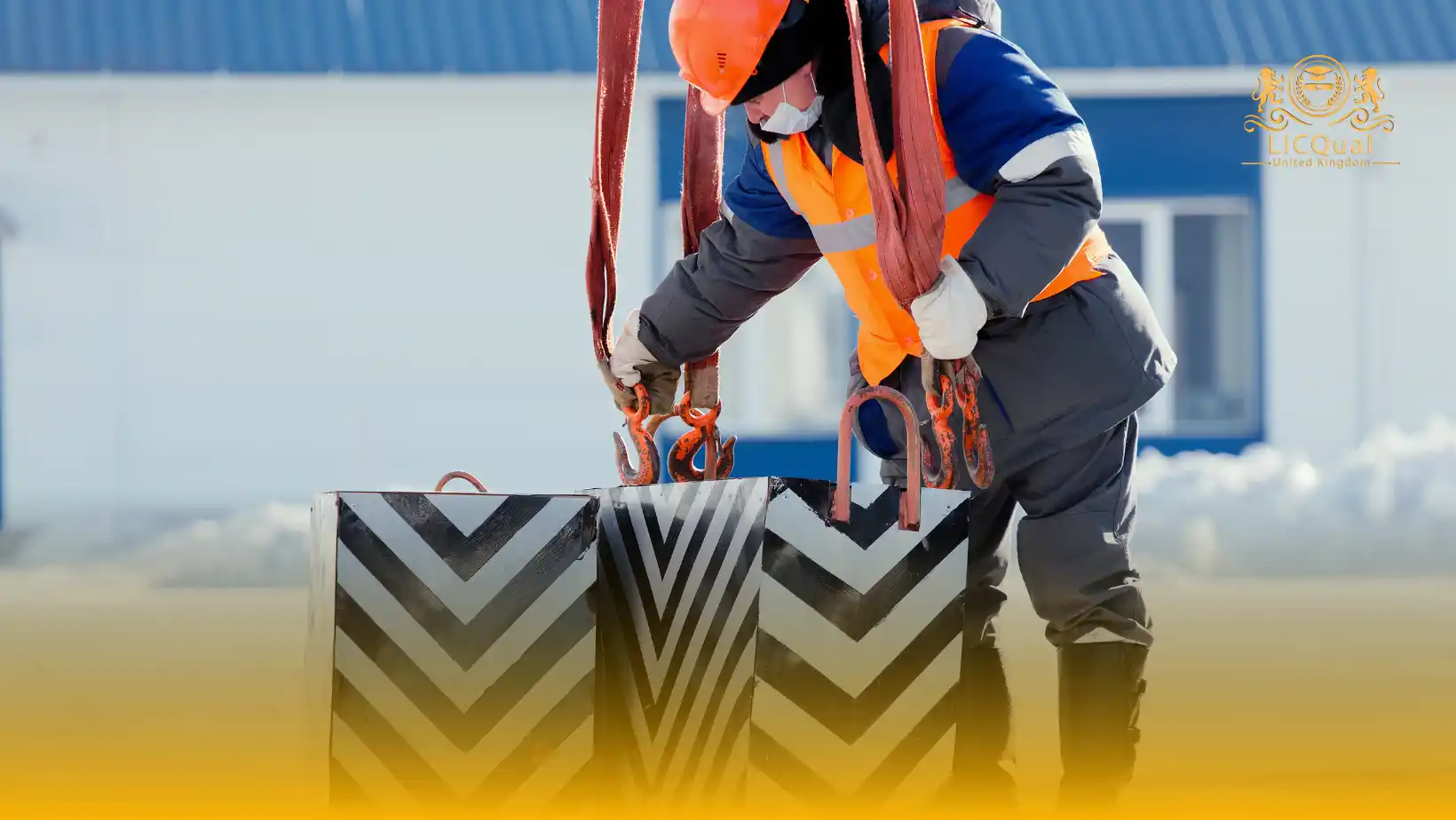
Banksman, Slinger & Rigger
The LICQual Combined Level 3 Certificate in Banksman, Slinger & Rigger provides learners with comprehensive training in the critical areas of lifting operations. This course equips learners with essential skills and knowledge in safety management, risk assessment, advanced slinging techniques, and legal compliance, ensuring they can perform complex lifting tasks efficiently and safely.
Learners will engage in both practical and theoretical modules that cover supervising lifting operations, applying advanced rigging methods, and understanding the legal frameworks governing lifting activities. The program emphasizes developing competence in communication, coordination, and operational planning required for effective lifting management.
Upon completion, learners will hold an industry-recognized qualification demonstrating their proficiency in overseeing lifting operations, ensuring compliance with health and safety standards, and managing risk effectively. This certification empowers learners to confidently apply their expertise in construction, engineering, and other industries involving lifting, establishing themselves as skilled professionals in the field of banksman, slinger, and rigger operations.
Course Overview
Qualification Title
LICQual Combined Level 3 Certificate in Banksman, Slinger & Rigger
Total Units
6
Total Credits
24
GLH
120
Qualification #
LICQ2200209
Qualification Specification
To enroll in theLICQual Combined Level 3 Certificate in Banksman, Slinger & Rigger, pplicants must meet the following criteria:
|
Qualification# |
Unit Title |
Credits |
GLH |
|---|---|---|---|
|
LICQ2200209-1 |
Advanced Health & Safety in Lifting Operations |
4 |
20 |
|
LICQ2200209-2 |
Complex Risk Assessment and Management |
4 |
20 |
|
LICQ2200209-3 |
Supervisory Roles and Responsibilities |
4 |
20 |
|
LICQ2200209-4 |
Emergency Response Procedures for Lifting Operations |
4 |
20 |
|
LICQ2200209-5 |
Lifting Equipment Inspection & Maintenance |
4 |
20 |
|
LICQ2200209-6 |
Lifting Plans, Risk Assessments, and Method Statements |
4 |
20 |
By the end of this course, learners will be able to:
Advanced Health & Safety in Lifting Operations
- Demonstrate an in-depth understanding of advanced health and safety protocols for lifting operations.
- Identify and mitigate health and safety risks associated with lifting tasks and equipment.
- Implement best practices to ensure the protection of workers and equipment in lifting environments.
- Evaluate the effectiveness of health and safety measures and suggest improvements.
Complex Risk Assessment and Management
- Conduct detailed risk assessments for complex lifting operations, identifying potential hazards.
- Apply advanced risk management techniques to mitigate and control risks effectively.
- Create risk management plans that align with industry standards and regulatory requirements.
- Regularly review and update risk assessments to address new or evolving risks in lifting operations.
Supervisory Roles and Responsibilities
- Understand the key responsibilities and skills required for supervising lifting operations.
- Demonstrate leadership in ensuring compliance with safety standards and operational procedures.
- Coordinate and manage lifting teams, ensuring clear communication and effective teamwork.
- Resolve issues and conflicts that arise during lifting operations to maintain a safe working environment.
Emergency Response Procedures for Lifting Operations
- Develop and implement emergency response procedures for various lifting-related incidents.
- Train lifting teams to react quickly and effectively in case of accidents or emergencies.
- Identify and manage potential emergency scenarios, ensuring minimal risk to personnel and equipment.
- Evaluate the effectiveness of emergency procedures through regular drills and simulations.
Lifting Equipment Inspection & Maintenance
- Understand the importance of regular inspection and maintenance for lifting equipment.
- Perform detailed inspections to identify faults or damage in lifting gear and equipment.
- Create maintenance schedules and plans to ensure the continued safety and functionality of lifting equipment.
- Adhere to regulatory standards and industry best practices for the inspection and maintenance of lifting machinery.
Lifting Plans, Risk Assessments, and Method Statements
- Develop detailed lifting plans, ensuring they address all potential risks and hazards.
- Produce accurate and comprehensive risk assessments and method statements for lifting operations.
- Integrate lifting plans and risk assessments to ensure safe and efficient lifting procedures.
- Review and update lifting plans and method statements in response to changes in operational or environmental conditions.
This diploma is ideal for:
Assessment and Verification
All units within this qualification are subject to internal assessment by the approved centre and external verification by LICQual. The qualification follows a criterion-referenced assessment approach, ensuring that learners meet all specified learning outcomes.
To achieve a ‘Pass’ in any unit, learners must provide valid, sufficient, and authentic evidence demonstrating their attainment of all learning outcomes and compliance with the prescribed assessment criteria. The Assessor is responsible for evaluating the evidence and determining whether the learner has successfully met the required standards.
Assessors must maintain a clear and comprehensive audit trail, documenting the basis for their assessment decisions to ensure transparency, consistency, and compliance with quality assurance requirements.