
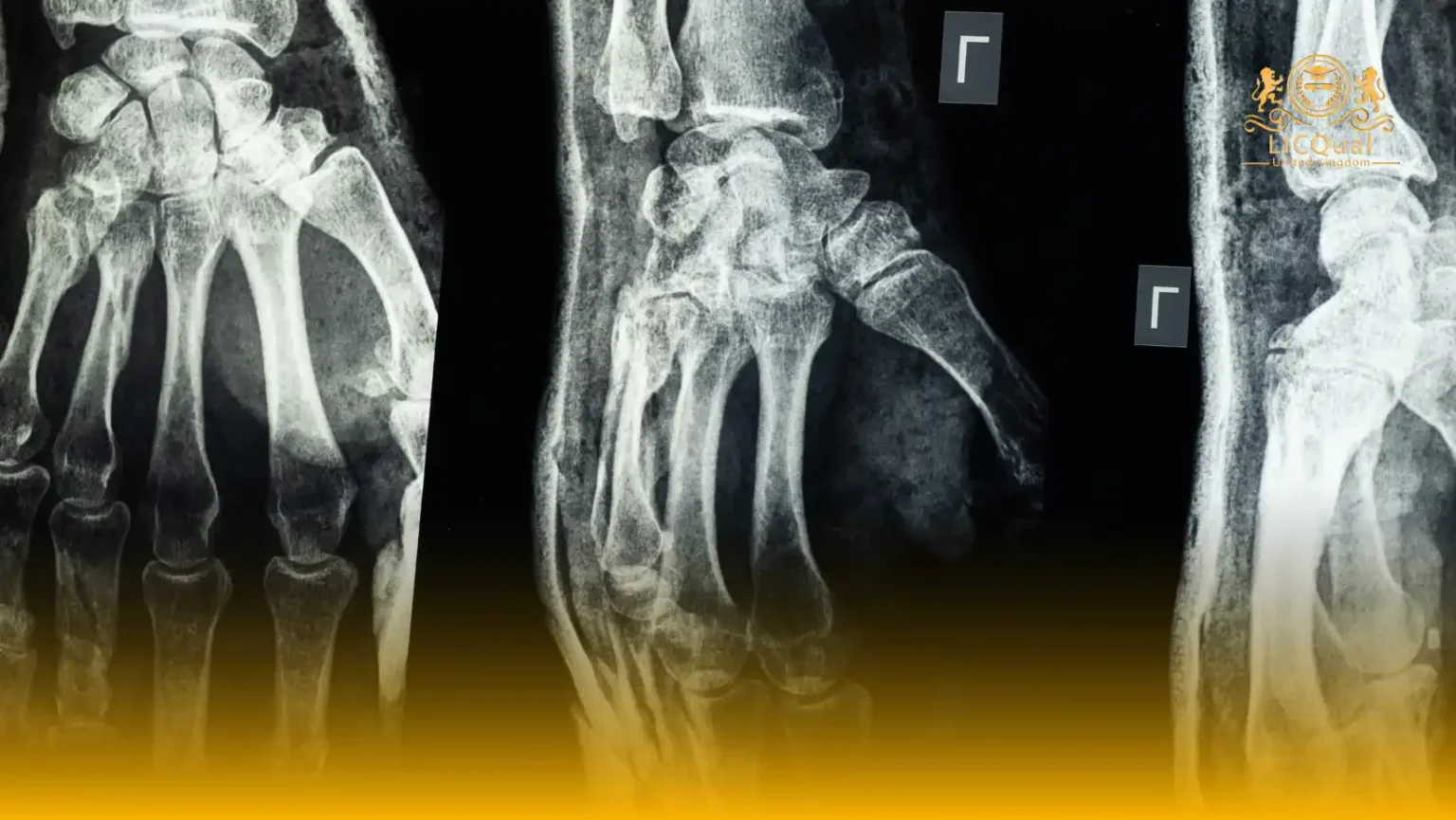
Postgraduate Diploma in Radiology
The LICQual Level 7 Postgraduate Diploma in Radiology (PgDRD) is an advanced qualification designed to develop expert-level knowledge and clinical proficiency in medical imaging and diagnostic radiology. This field focuses on the use of imaging technologies such as X-rays, CT scans, MRI, and ultrasound to assist in the accurate diagnosis, monitoring, and management of a wide range of medical conditions. It plays a critical role in modern healthcare by supporting physicians in making informed clinical decisions and improving patient outcomes.
Through this course, learners gain in-depth understanding of imaging principles, radiographic anatomy, image interpretation, radiation safety, and diagnostic procedures. The program also enhances knowledge of advanced imaging techniques, quality assurance in radiology, patient care considerations, and the ethical and regulatory aspects of radiological practice. Learners develop strong analytical and interpretive skills essential for working with complex diagnostic data.
Upon completion, learners are prepared to contribute effectively within radiology departments, diagnostic centers, and healthcare institutions. This qualification strengthens clinical reasoning, technical expertise, and professional confidence, enabling progression into advanced radiology roles, leadership positions, and specialist areas within medical imaging and diagnostic healthcare services.
Course Overview
Qualification Title
LICQual Level 7 Postgraduate Diploma in Radiology (PgDRD)
Total Units
6
Total Credits
120
GLH
600
Qualification #
LICQ2200960
Qualification Specification
To enroll in the LICQual Level 7 Postgraduate Diploma in Radiology (PgDRD), applicants must meet the following criteria:
|
Qualification# |
Unit Title |
Credits |
GLH |
|---|---|---|---|
|
LICQ2200960-1 |
Advanced Radiological Imaging Techniques |
20 |
100 |
|
LICQ2200960-2 |
Diagnostic Interpretation and Reporting |
20 |
100 |
|
LICQ2200960-3 |
Radiology Safety and Risk Management |
20 |
100 |
|
LICQ2200960-4 |
Advanced Pathophysiology and Radiological Correlation |
20 |
100 |
|
LICQ2200960-5 |
Professional Practice, Ethics, and Governance in Radiology |
20 |
100 |
|
LICQ2200960-6 |
Research, Innovation, and Leadership in Radiology |
20 |
100 |
By the end of this course, learners will be able to:
Unit 1: Advanced Radiological Imaging Techniques
By the end of this unit, learners will be able to:
- Critically evaluate advanced imaging modalities, including CT, MRI, PET, and ultrasound.
- Apply advanced imaging techniques to complex clinical scenarios.
- Assess the appropriateness and effectiveness of imaging protocols for patient diagnosis and care.
- Integrate theoretical knowledge with practical application in clinical radiology.
Unit 2: Diagnostic Interpretation and Reporting
By the end of this unit, learners will be able to:
- Accurately interpret diagnostic images across a range of imaging modalities.
- Produce clear, precise, and evidence-based radiological reports.
- Integrate imaging findings into clinical decision-making and multidisciplinary discussions.
- Demonstrate critical thinking in evaluating complex cases.
Unit 3: Radiology Safety and Risk Management
By the end of this unit, learners will be able to:
- Apply radiological safety protocols to protect patients and healthcare staff.
- Identify and manage potential risks associated with diagnostic imaging procedures.
- Evaluate safety standards and guidelines in clinical practice.
- Promote a culture of safety and compliance within radiology departments.
Unit 4: Advanced Pathophysiology and Radiological Correlation
By the end of this unit, learners will be able to:
- Analyse complex disease processes and their radiological manifestations.
- Correlate clinical and pathological information with imaging findings.
- Formulate diagnostic strategies based on integrated radiological and clinical knowledge.
- Critically appraise case studies to inform evidence-based radiology practice.
Unit 5: Professional Practice, Ethics, and Governance in Radiology
By the end of this unit, learners will be able to:
- Apply ethical and legal principles to radiological practice.
- Demonstrate professional accountability and reflective practice.
- Evaluate governance frameworks and policies affecting radiology services.
- Promote adherence to international standards and best practices in radiology.
Unit 6: Research, Innovation, and Leadership in Radiology
By the end of this unit, learners will be able to:
- Design and conduct advanced research projects in radiology.
- Critically appraise radiological literature to inform practice.
- Demonstrate leadership and innovation in clinical imaging services.
- Implement strategies for service improvement, professional development, and evidence-based practice.
This advanced postgraduate diploma is ideal for healthcare professionals looking to enhance their expertise and career prospects in radiology. The course is particularly suitable for:
- Radiographers and Imaging Specialists seeking to develop advanced technical skills and improve diagnostic accuracy.
- Clinical Practitioners in Radiology Departments aiming to expand their professional knowledge and apply evidence-based imaging practices.
- Healthcare Professionals in Medical Imaging who wish to advance to senior or leadership roles within radiology services.
- Healthcare Managers and Team Leaders responsible for overseeing imaging services, compliance, and clinical governance.
- Experienced Professionals in Radiology or Diagnostic Imaging looking to strengthen Continuing Professional Development (CPD) and maintain adherence to international standards.
- Researchers and Academics in Medical Imaging interested in developing advanced research skills and contributing to innovation in radiology practice.
This course is designed for motivated learners committed to achieving excellence in radiology, improving patient outcomes, and advancing their professional careers in medical imaging.
To ensure high-quality delivery and learner success, centres offering this Level 7 postgraduate diploma must meet the following requirements:
- Qualified and Competent Staff: Centres must employ educators, trainers, and assessors who are highly qualified in radiology or related medical imaging fields, with relevant professional experience and expertise.
- Comprehensive Learning Resources: Centres must provide learners with access to all essential learning materials, including textbooks, journals, case studies, imaging software, and digital resources aligned with Level 7 academic standards.
- Clinical and Practical Facilities: Centres should ensure access to appropriate clinical environments, imaging equipment, and simulation tools that enable learners to practise advanced radiology techniques and diagnostic procedures.
- Assessment and Support Systems: Centres must have robust procedures for learner assessment, feedback, and academic support to facilitate successful completion of the diploma.
- CPD and Professional Development Opportunities: Centres should encourage and support learners in Continuing Professional Development (CPD) activities to enhance clinical expertise and career progression.
- Compliance with Quality Standards: Centres must adhere to national and international standards for postgraduate education, ensuring a structured, outcome-focused learning experience.
- Technology and Accessibility: Centres should provide access to reliable technology platforms for online learning, research, and communication to support flexible and inclusive learning.
Meeting these centre requirements ensures learners receive a professional, engaging, and comprehensive educational experience, preparing them to excel in advanced radiology practice and leadership roles.
Assessment and Verification
All units within this qualification are subject to internal assessment by the approved centre and external verification by LICQual. The qualification follows a criterion-referenced assessment approach, ensuring that learners meet all specified learning outcomes.
To achieve a ‘Pass’ in any unit, learners must provide valid, sufficient, and authentic evidence demonstrating their attainment of all learning outcomes and compliance with the prescribed assessment criteria. The Assessor is responsible for evaluating the evidence and determining whether the learner has successfully met the required standards.
Assessors must maintain a clear and comprehensive audit trail, documenting the basis for their assessment decisions to ensure transparency, consistency, and compliance with quality assurance requirements.