
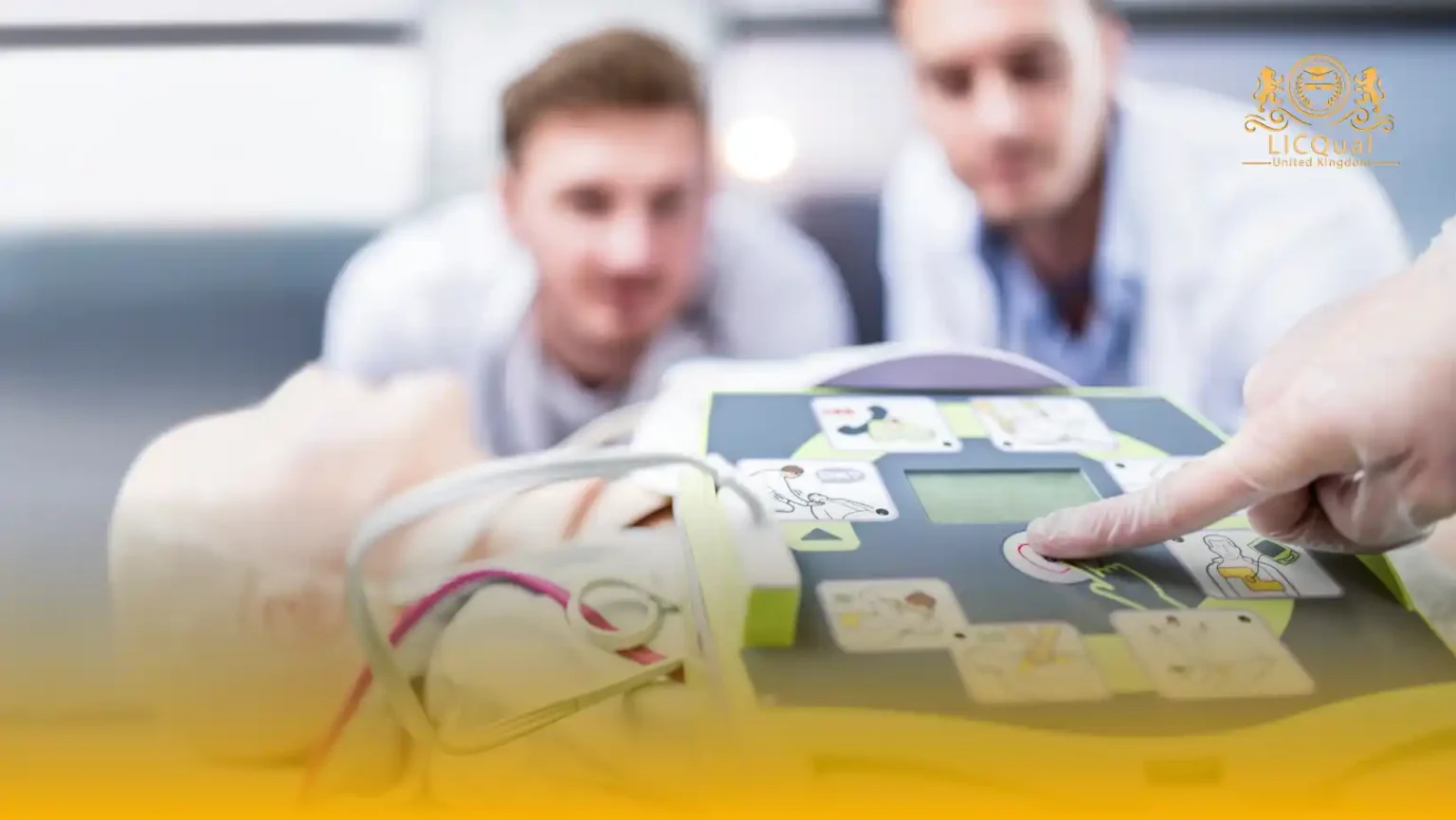
Automated External Defibrillator
The LICQual Level 3 Award in Automated External Defibrillator (AED) Programme is a specialised qualification designed to equip learners with the knowledge and practical skills required to operate an AED effectively during cardiac emergencies. This field is a critical component of emergency first aid and life support, focusing on rapid intervention in cases of sudden cardiac arrest, where immediate action can significantly improve survival outcomes.
Learners will gain a clear understanding of how AED devices function, how to assess a casualty, perform CPR in conjunction with defibrillation, and follow safe operational procedures. The course also covers emergency response protocols, safety considerations, and the importance of timely decision-making in life-threatening situations.
The organisational scope of this qualification is highly relevant across workplaces, healthcare settings, public spaces, and community environments where emergency preparedness is essential. Completing this award enhances professional capability, builds confidence in emergency response, and provides recognised certification, enabling learners to contribute effectively to saving lives and strengthening safety standards within any organisation.
Course Overview
Qualification Title
LICQual Level 3 Award in Automated External Defibrillator (AED) Programme
Total Units
6
Total Credits
6
GLH
12
Qualification #
LICQ2200605
Qualification Specification
To enroll in theLICQual Level 3 Award in Automated External Defibrillator (AED) Programme, applicants must meet the following criteria:
|
Qualification# |
Unit Title |
Credits |
GLH |
|---|---|---|---|
|
LICQ2200605-1 |
Introduction to Automated External Defibrillators (AEDs) |
1 |
6 |
|
LICQ2200605-2 |
Recognition of Cardiac Arrest and Emergency Response |
1 |
6 |
|
LICQ2200605-3 |
Cardiopulmonary Resuscitation (CPR) Basics |
1 |
6 |
|
LICQ2200605-4 |
Safe Operation of AED Devices |
1 |
6 |
|
LICQ2200605-5 |
Maintenance and Troubleshooting of AED Equipment |
1 |
6 |
|
LICQ2200605-6 |
Communication, Legal and Ethical Responsibilities |
1 |
6 |
By the end of this course, learners will be able to:
Introduction to Automated External Defibrillators (AEDs)
- Explain the purpose and function of AEDs in emergency cardiac care.
- Describe the importance of early defibrillation in improving survival rates during cardiac arrest.
Recognition of Cardiac Arrest and Emergency Response
- Identify the signs and symptoms of cardiac arrest accurately.
- Demonstrate the correct procedure to activate the emergency medical response system promptly.
Cardiopulmonary Resuscitation (CPR) Basics
- Perform effective CPR on adults and children following established guidelines.
- Integrate CPR procedures with AED use during cardiac arrest scenarios.
Safe Operation of AED Devices
- Demonstrate the safe and correct step-by-step use of an AED device.
- Identify safety precautions necessary during AED application to protect the casualty and rescuer.
Maintenance and Troubleshooting of AED Equipment
- Conduct routine maintenance checks on AED devices according to manufacturer recommendations.
- Identify common AED faults and apply basic troubleshooting techniques.
Communication, Legal and Ethical Responsibilities
- Communicate clearly and effectively with emergency services and bystanders during an emergency.
- Explain legal and ethical responsibilities related to AED use, including consent and confidentiality.
- Accurately document the use of AEDs and details of incidents.
This course is ideal for:
- Workplace First Aiders:
Employees designated to provide emergency first aid in the workplace. - Healthcare Professionals:
Nurses, medical assistants, care workers, and others requiring AED certification. - Community Volunteers:
Individuals involved in community emergency response teams or public safety roles. - Sports Coaches and Trainers:
Professionals responsible for the health and safety of athletes and participants. - School Staff and Educators:
Teachers and support staff seeking skills to respond to cardiac emergencies. - Public Service Workers:
Firefighters, police officers, lifeguards, and other emergency responders. - Anyone Interested in Life-Saving Skills:
Individuals wishing to gain confidence and competence in AED use and cardiac emergency response.
Assessment and Verification
All units within this qualification are subject to internal assessment by the approved centre and external verification by LICQual. The qualification follows a criterion-referenced assessment approach, ensuring that learners meet all specified learning outcomes.
To achieve a ‘Pass’ in any unit, learners must provide valid, sufficient, and authentic evidence demonstrating their attainment of all learning outcomes and compliance with the prescribed assessment criteria. The Assessor is responsible for evaluating the evidence and determining whether the learner has successfully met the required standards.
Assessors must maintain a clear and comprehensive audit trail, documenting the basis for their assessment decisions to ensure transparency, consistency, and compliance with quality assurance requirements.