
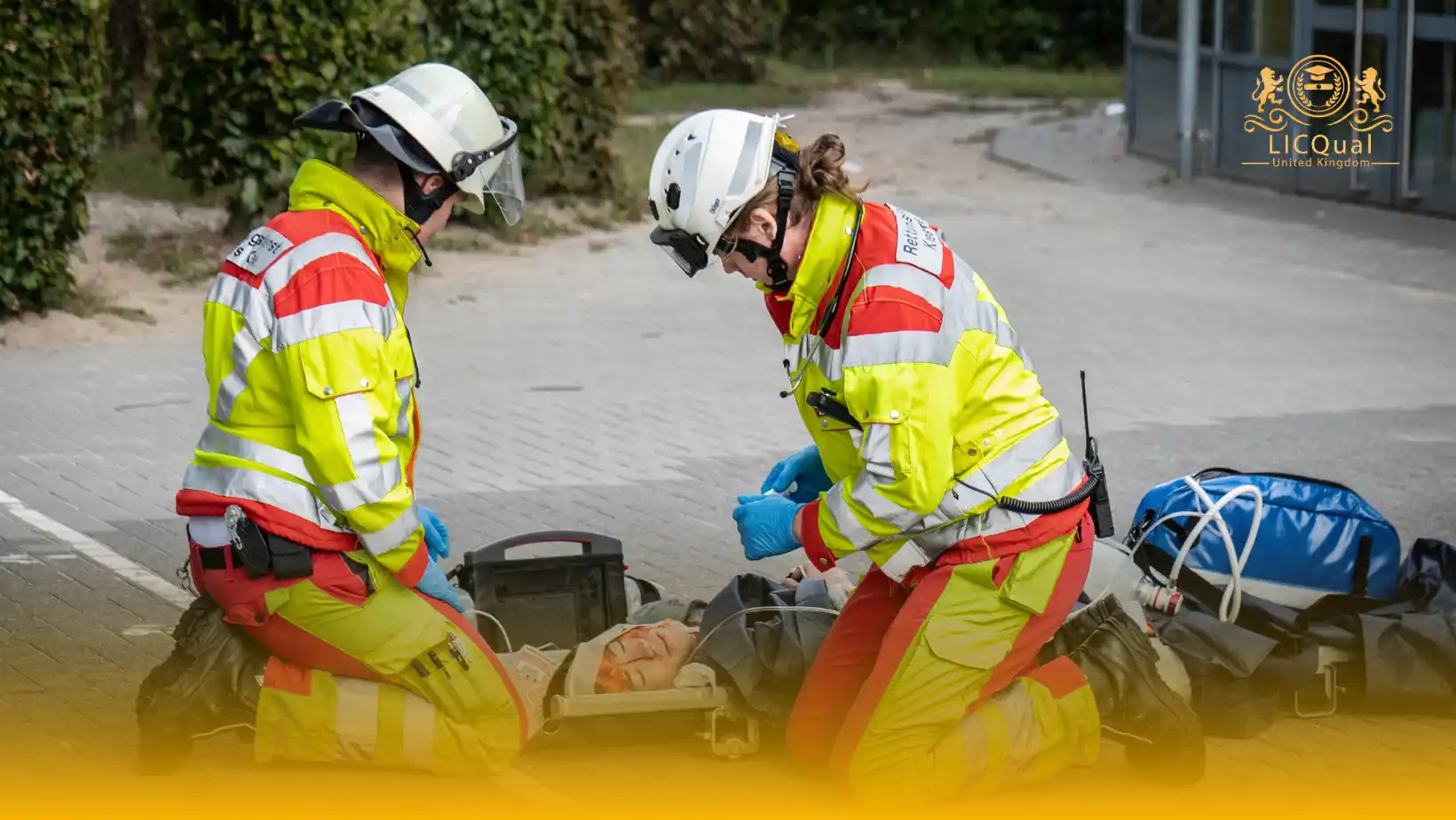
Emergency Outdoor First Aid
The LICQual Level 3 Award in Emergency Outdoor First Aid (EOFA) is a specialised qualification designed to provide learners with the knowledge and practical skills required to respond effectively to emergencies in outdoor and remote environments. The qualification focuses on managing injuries and medical incidents where immediate professional medical assistance may not be readily available, making rapid assessment and appropriate intervention essential.
Learners develop practical competencies for managing a range of outdoor emergencies, including fractures, bleeding, burns, hypothermia, dehydration, and environmental hazards. The course also covers casualty assessment, scene management, risk evaluation, and emergency response planning in challenging outdoor conditions, supporting learners in responding effectively to emergency situations.
The qualification is relevant to sectors including outdoor education, adventure tourism, sports, expeditions, and remote work environments, where effective safety management is essential. On completion, the LICQual Level 3 Award in Emergency Outdoor First Aid (EOFA) supports career opportunities, builds confidence in emergency decision-making, and strengthens practical lifesaving abilities, enabling learners to contribute effectively to safety and preparedness in outdoor settings.
Course Overview
Qualification Title
LICQual Level 3 Award in Emergency Outdoor First Aid (EOFA)
Total Units
6
Total Credits
6
GLH
12
Qualification #
LICQ2200603
Qualification Specification
To enroll in the LICQual Level 3 Award in Emergency Outdoor First Aid (EOFA), applicants must meet the following criteria:
|
Qualification# |
Unit Title |
Credits |
GLH |
|---|---|---|---|
|
LICQ2200603-1 |
Principles and Role of Outdoor First Aid |
1 |
2 |
|
LICQ2200603-2 |
Assessing the Outdoor Emergency Scene |
1 |
2 |
|
LICQ2200603-3 |
Managing Unconscious Casualties and Recovery Position |
1 |
2 |
|
LICQ2200603-4 |
Cardiopulmonary Resuscitation (CPR) and AED Use |
1 |
2 |
|
LICQ2200603-5 |
Managing Outdoor Injuries and Medical Emergencies |
1 |
2 |
|
LICQ2200603-6 |
Communication, Incident Reporting, and Legal Considerations |
1 |
2 |
By the end of this course, learners will be able to:
Principles and Role of Outdoor First Aid
- Explain the role and responsibilities of an outdoor first aider.
- Describe the importance and scope of providing first aid in remote and outdoor environments.
Assessing the Outdoor Emergency Scene
- Demonstrate how to safely assess an emergency scene in outdoor or remote settings.
- Prioritize care and determine when to seek professional medical assistance.
Managing Unconscious Casualties and Recovery Position
- Recognize signs and symptoms of unconsciousness in casualties.
- Correctly place adults and children in the recovery position in outdoor environments.
- Monitor casualty condition until emergency help arrives.
Cardiopulmonary Resuscitation (CPR) and AED Use
- Perform effective CPR on adults and children using appropriate techniques.
- Demonstrate the correct use of Automated External Defibrillators (AEDs) in outdoor emergencies.
Managing Outdoor Injuries and Medical Emergencies
- Identify and provide first aid for fractures, bleeding, burns, hypothermia, and dehydration.
- Manage animal bites, stings, and other environmental hazards confidently.
- Explain when to escalate care and seek advanced medical support.
Communication, Incident Reporting, and Legal Considerations
- Communicate clearly and effectively with emergency services and others involved.
- Accurately record details of incidents and first aid administered.
- Explain legal and ethical responsibilities, including consent and safeguarding in outdoor settings.
This course is ideal for:
- Outdoor Professionals:
Adventure guides, park rangers, forestry workers, and outdoor instructors who operate in remote or challenging environments. - Outdoor Enthusiasts:
Hikers, campers, climbers, and anyone who spends significant time in the outdoors seeking to enhance their emergency preparedness. - Remote Workers:
Employees working in isolated locations such as construction sites, farms, or offshore environments. - Sports and Activity Leaders:
Coaches, trainers, and leaders of outdoor sports and recreational activities requiring tailored first aid skills. - Emergency Responders and Volunteers:
Individuals involved in search and rescue, community emergency response teams, or volunteering in outdoor settings. - Healthcare and Safety Professionals:
Those seeking additional qualification in outdoor and wilderness first aid to complement their healthcare or safety roles. - Anyone Interested in Outdoor Safety:
Individuals wanting confidence and skills to respond effectively to emergencies in outdoor or remote settings.
Assessment and Verification
All units within this qualification are subject to internal assessment by the approved centre and external verification by LICQual. The qualification follows a criterion-referenced assessment approach, ensuring that learners meet all specified learning outcomes.
To achieve a ‘Pass’ in any unit, learners must provide valid, sufficient, and authentic evidence demonstrating their attainment of all learning outcomes and compliance with the prescribed assessment criteria. The Assessor is responsible for evaluating the evidence and determining whether the learner has successfully met the required standards.
Assessors must maintain a clear and comprehensive audit trail, documenting the basis for their assessment decisions to ensure transparency, consistency, and compliance with quality assurance requirements.