
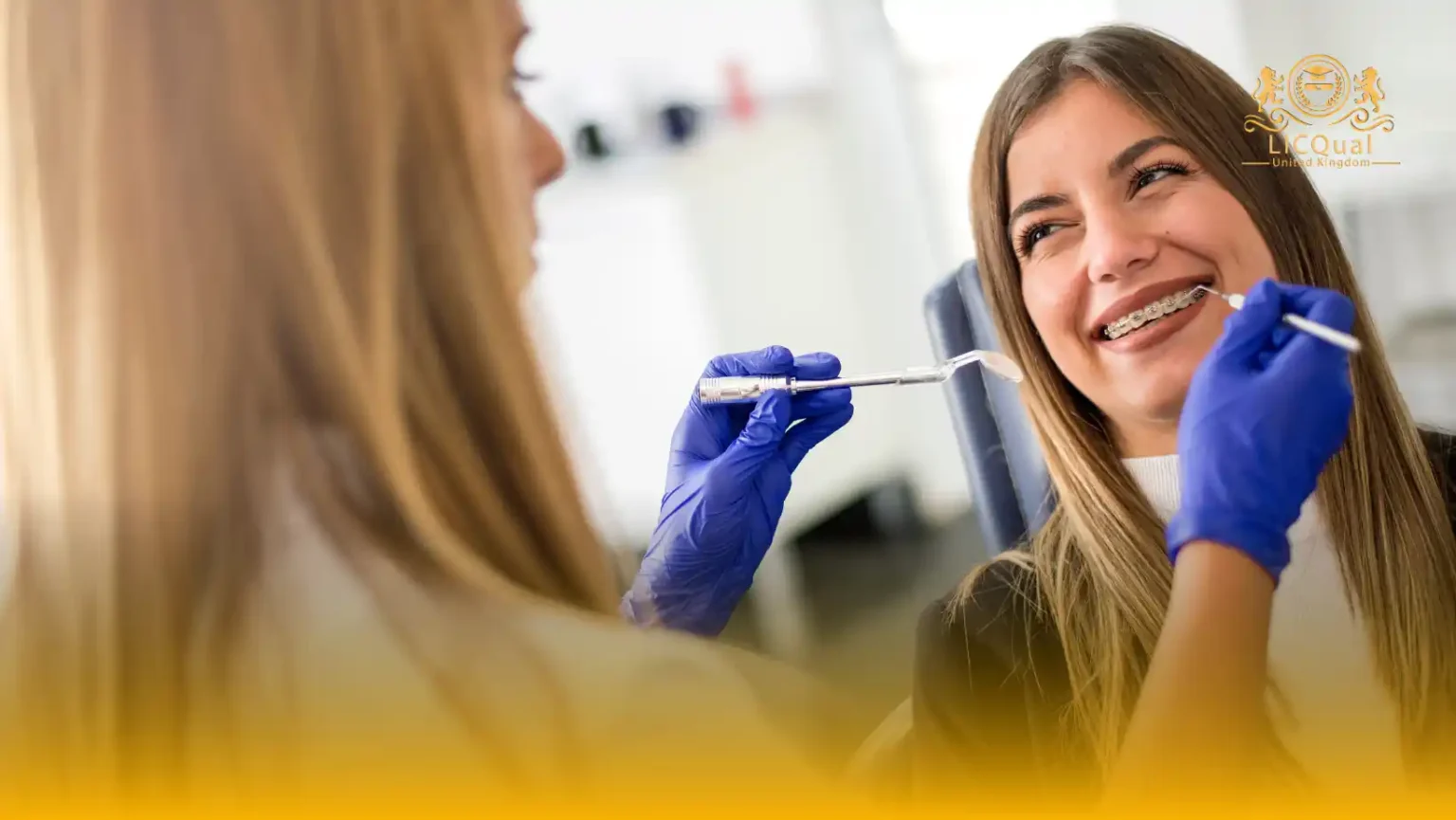
Diploma in Orthodontics
The LICQual Level 3 Diploma in Orthodontics is a structured qualification designed to help learners understand the core principles and practices of orthodontic care within a healthcare and dental support environment. This course provides clear knowledge of how orthodontic treatments are planned, supported, and carried out, focusing on essential areas such as dental anatomy, alignment procedures, patient care, and the importance of maintaining oral health standards.
This diploma focuses on developing practical understanding and applied knowledge rather than advanced clinical expertise. Learners gain insight into how orthodontic teams work in clinical settings, including communication with patients, maintaining hygiene standards, and supporting safe dental procedures. The course content is written in a simple and easy-to-follow format, allowing learners to build confidence in orthodontic concepts step by step.
The LICQual Level 3 Diploma in Orthodontics helps learners build a strong foundation in dental healthcare knowledge, offering a clear understanding of orthodontic support systems. It provides structured learning that strengthens awareness of professional dental practices within a regulated healthcare environment.
Course Overview
Qualification Title
LICQual Level 3 Diploma in Orthodontics
Total Units
6
Total Credits
60
GLH
240
Qualification #
LICQ2200652
Qualification Specification
To enroll in the LICQual Level 3 Diploma in Orthodontics, applicants must meet the following criteria:
|
Qualification# |
Unit Title |
Credits |
GLH |
|---|---|---|---|
|
LICQ2200652-1 |
Principles and Foundations of Orthodontics |
10 |
40 |
|
LICQ2200652-2 |
Orthodontic Diagnosis and Treatment Planning |
10 |
40 |
|
LICQ2200652-3 |
Orthodontic Appliances and Their Applications |
10 |
40 |
|
LICQ2200652-4 |
Clinical Procedures in Orthodontic Practice |
10 |
40 |
|
LICQ2200652-5 |
Patient Management, Ethics, and Communication |
10 |
40 |
|
LICQ2200652-6 |
Continuing Professional Development and Evidence-Based Practice in Orthodontics |
10 |
40 |
By the end of this course, learners will be able to:
1. Principles and Foundations of Orthodontics
By the end of this unit, learners will be able to:
1.1 Explain the history and scope of orthodontics within dental practice.
1.2 Describe craniofacial anatomy and dental structures relevant to orthodontics.
1.3 Analyse the stages of jaw growth and facial development.
1.4 Explain the principles of occlusion and malocclusion classification.
1.5 Describe the biological basis of tooth movement and the role of periodontal tissues.
2. Orthodontic Diagnosis and Treatment Planning
By the end of this unit, learners will be able to:
2.1 Conduct comprehensive patient assessments and case histories.
2.2 Identify appropriate diagnostic tools and techniques for orthodontic evaluation.
2.3 Interpret cephalometric radiographs and other orthodontic records.
2.4 Formulate treatment objectives based on clinical and radiographic findings.
2.5 Develop individualised orthodontic treatment plans to meet patient needs.
3. Orthodontic Appliances and Their Applications
By the end of this unit, learners will be able to:
3.1 Identify various types of orthodontic appliances, including removable, fixed, and functional.
3.2 Explain the design, function, and clinical indications of different appliances.
3.3 Outline the process of appliance fabrication and customisation.
3.4 Demonstrate correct appliance handling and maintenance.
3.5 Evaluate appliance suitability based on patient-specific requirements.
4. Clinical Procedures in Orthodontic Practice
By the end of this unit, learners will be able to:
4.1 Prepare the clinical environment for orthodontic procedures in compliance with safety standards.
4.2 Fit, activate, and adjust orthodontic appliances effectively.
4.3 Implement retention methods to maintain treatment outcomes.
4.4 Apply infection prevention and control protocols in clinical practice.
4.5 Manage treatment-related complications and adjustments.
5. Patient Management, Ethics, and Communication
By the end of this unit, learners will be able to:
5.1 Communicate effectively with patients to ensure understanding and compliance.
5.2 Manage patient expectations and address concerns professionally.
5.3 Apply ethical principles in all aspects of orthodontic care.
5.4 Maintain patient confidentiality in line with legal requirements.
5.5 Demonstrate professionalism when dealing with challenging patient situations.
6. Continuing Professional Development and Evidence-Based Practice in Orthodontics
By the end of this unit, learners will be able to:
6.1 Evaluate orthodontic literature for relevance and scientific validity.
6.2 Integrate evidence-based practices into clinical decision-making.
6.3 Maintain accurate CPD records in line with professional standards.
6.4 Plan and implement ongoing professional learning activities.
6.5 Reflect on personal clinical performance to identify areas for improvement.
This course is designed for learners who want to build strong foundational knowledge of orthodontics within a healthcare and dental support environment. It is suitable for individuals who are interested in developing an understanding of orthodontic care and its practical applications in real clinical settings.
- Learners who want to gain structured knowledge of orthodontics and dental care practices
- Individuals interested in starting a career in the healthcare or dental support sector
- Dental assistants or healthcare support staff who want to enhance their orthodontic understanding
- Learners working in related healthcare environments who wish to expand their professional knowledge
- School leavers or beginners aiming to enter the dental or healthcare field with a recognised qualification
- Individuals seeking to understand how orthodontic procedures are supported within clinical environments
This course focuses on developing core understanding of orthodontics and is suitable for anyone looking to build knowledge of dental healthcare systems in a simple and professional way.
Training centres delivering the LICQual Level 3 Diploma in Orthodontics must meet specific requirements to ensure the highest standards of education, learner support, and assessment integrity. These include:
- Qualified and Experienced Trainers
Centres must employ trainers, assessors, and internal quality assurers with recognised dental qualifications, relevant orthodontic experience, and proven teaching and assessment competence. - Appropriate Training Facilities
Centres must provide well-equipped training environments, including clinical spaces, orthodontic equipment, and simulation resources that meet professional standards. - Access to Learning Materials
Centres must supply up-to-date learning resources, reference materials, and evidence-based literature to support both theoretical and practical learning. - Assessment Resources
Centres must have systems in place to conduct fair, valid, and reliable assessments, including access to patients or simulated cases for practical evaluation. - Compliance with Quality Assurance Standards
Centres must follow LICQual’s policies and procedures for internal quality assurance, record keeping, and learner progress tracking. - Support Services for Learners
Centres should provide appropriate guidance, feedback, and academic support throughout the course, ensuring learners can achieve the required competencies. - Health, Safety, and Legal Compliance
All training and clinical activities must comply with applicable health, safety, and infection control regulations, as well as relevant legal and ethical requirements for dental practice.
Meeting these requirements ensures that centres deliver a professional, compliant, and high-quality orthodontic training experience that supports learner success.
Assessment and Verification
All units within this qualification are subject to internal assessment by the approved centre and external verification by LICQual. The qualification follows a criterion-referenced assessment approach, ensuring that learners meet all specified learning outcomes.
To achieve a ‘Pass’ in any unit, learners must provide valid, sufficient, and authentic evidence demonstrating their attainment of all learning outcomes and compliance with the prescribed assessment criteria. The Assessor is responsible for evaluating the evidence and determining whether the learner has successfully met the required standards.
Assessors must maintain a clear and comprehensive audit trail, documenting the basis for their assessment decisions to ensure transparency, consistency, and compliance with quality assurance requirements.