
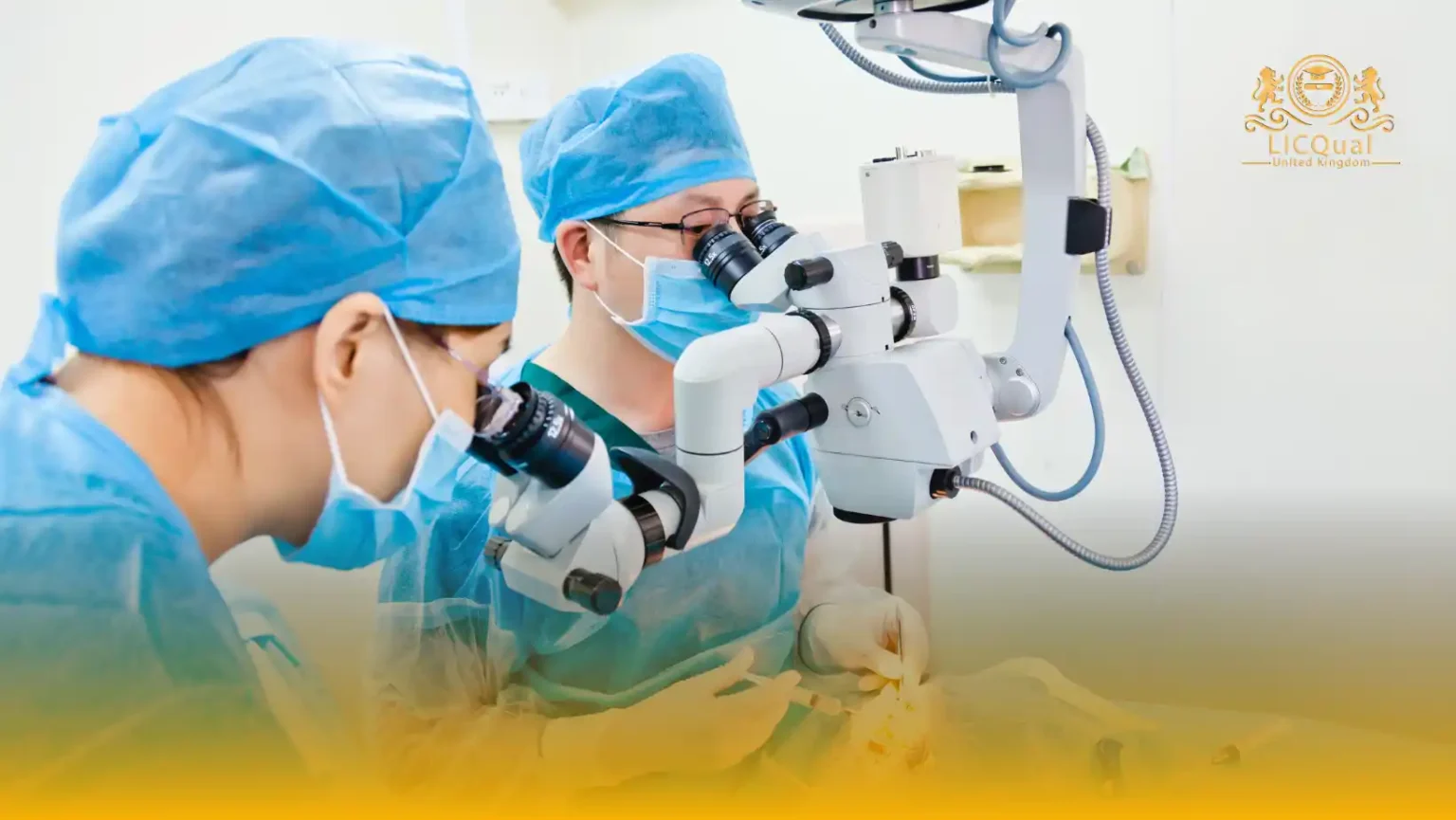
Take your surgical career to the next level with the LICQual Level 6 Diploma in Cardiothoracic Surgery (Dip CTS). This Level 6 Cardiothoracic Surgery Diploma is designed for surgeons, doctors, and healthcare professionals who want to deepen their expertise in cardiac and thoracic surgical procedures. Whether you are already practicing in hospitals or specialized clinics, this course equips you with advanced knowledge and practical skills to manage complex cardiothoracic cases effectively.
The Advanced Diploma in Cardiothoracic Surgery provides a comprehensive understanding of cardiac anatomy, thoracic interventions, perioperative care, and evidence-based surgical techniques. Delivered online, the Cardiothoracic Surgery Diploma online UK allows you to study flexibly, combining theoretical insights with practical applications while balancing professional commitments.
Through this postgraduate Cardiothoracic Surgery Level 6 course, you will explore topics such as minimally invasive procedures, cardiopulmonary bypass techniques, postoperative management, patient safety, and surgical innovations. The curriculum is designed to ensure you gain real-world skills that can be applied immediately in clinical practice, enhancing both your confidence and competence in the operating theater.
Upon completion, you will earn the LICQual Dip CTS certification, a recognized qualification that validates your expertise in cardiothoracic surgery and strengthens your professional credibility. This UK Level 6 Cardiothoracic Surgery course is ideal for healthcare professionals seeking career advancement, specialized practice, or leadership roles in surgical and hospital settings.
With a focus on ethical practice, patient-centered care, and evidence-based procedures, this professional diploma in cardiothoracic surgery empowers you to deliver optimal outcomes for your patients. The course is interactive, engaging, and highly practical, making it easy to translate your learning into clinical practice.
Course Overview
Qualification Title
LICQual Level 6 Diploma in Cardiothoracic Surgery (Dip CTS)
Total Units
6
Total Credits
120
GLH
480
Qualification #
LICQ2200948
Qualification Specification
To enroll in the LICQual Level 6 Diploma in Cardiothoracic Surgery (Dip CTS), applicants must meet the following criteria:
|
Qualification# |
Unit Title |
Credits |
GLH |
|---|---|---|---|
|
LICQ2200948-1 |
Foundations of Cardiothoracic Surgery |
20 |
80 |
|
LICQ2200948-2 |
Diagnostic Techniques and Preoperative Assessment |
20 |
80 |
|
LICQ2200948-3 |
Surgical Procedures in Cardiothoracic Practice |
20 |
80 |
|
LICQ2200948-4 |
Postoperative Care and Complication Management |
20 |
80 |
|
LICQ2200948-5 |
Research, Evidence-Based Practice, and Innovation |
20 |
80 |
|
LICQ2200948-6 |
Professional Practice and Continuing Development |
20 |
80 |
By the end of this course, learners will be able to:
Unit 1: Foundations of Cardiothoracic Surgery
By the end of this unit, learners will be able to:
- Critically evaluate the anatomy and physiology of the heart, lungs, and thoracic structures.
- Analyse common congenital and acquired cardiothoracic conditions.
- Demonstrate understanding of surgical principles and perioperative care in cardiothoracic practice.
- Assess ethical, legal, and professional considerations relevant to cardiothoracic surgery.
Unit 2: Diagnostic Techniques and Preoperative Assessment
By the end of this unit, learners will be able to:
- Conduct comprehensive patient assessments to determine surgical suitability.
- Apply imaging and diagnostic tools, including echocardiography, CT, and MRI, in clinical decision-making.
- Identify comorbidities and assess surgical risk factors effectively.
- Develop preoperative strategies to optimise patient outcomes and reduce complications.
Unit 3: Surgical Procedures in Cardiothoracic Practice
By the end of this unit, learners will be able to:
- Critically appraise common and complex cardiothoracic surgical procedures.
- Demonstrate knowledge of operative techniques for coronary artery disease, valve repair/replacement, and thoracic interventions.
- Evaluate the application of minimally invasive and robotic-assisted surgical approaches.
- Apply evidence-based practices to optimise surgical performance and patient outcomes.
Unit 4: Postoperative Care and Complication Management
By the end of this unit, learners will be able to:
- Develop and implement strategies for post-surgical patient monitoring and care.
- Identify and manage common postoperative complications in cardiothoracic surgery.
- Apply effective pain management, respiratory support, and rehabilitation protocols.
- Employ patient-centred approaches to support recovery and long-term health outcomes.
Unit 5: Research, Evidence-Based Practice, and Innovation
By the end of this unit, learners will be able to:
- Critically appraise contemporary research and innovations in cardiothoracic surgery.
- Design and evaluate clinical audits, surgical outcomes, and quality improvement initiatives.
- Apply evidence-based practice to enhance surgical decision-making and patient care.
- Utilise research data to inform policy, innovation, and improvements in clinical practice.
Unit 6: Professional Practice and Continuing Development
By the end of this unit, learners will be able to:
- Demonstrate knowledge of professional ethics, governance, and standards in cardiothoracic surgery.
- Apply leadership and management skills within surgical teams and clinical settings.
- Plan and engage in Continuing Professional Development (CPD) to maintain advanced professional competence.
- Implement reflective practice strategies to evaluate performance and improve patient outcomes.
The LICQual Level 6 Diploma in Cardiothoracic Surgery (Dip CTS) is designed for healthcare professionals seeking to advance their expertise in cardiac and thoracic surgical care. This course is ideal for surgeons, doctors, and allied health practitioners who want to gain practical skills, theoretical knowledge, and professional recognition in cardiothoracic surgery. Whether you aim to specialize in complex surgical procedures, enhance patient care, or progress into leadership roles, this Level 6 Cardiothoracic Surgery Diploma equips you for success.
Surgeons and Medical Practitioners
- Cardiothoracic surgeons seeking advanced knowledge in surgical techniques
- General surgeons aiming to specialize in thoracic and cardiac procedures
- Doctors managing complex cardiac and thoracic conditions
- Healthcare professionals implementing evidence-based surgical interventions
- Surgeons seeking UK Level 6 recognized qualification
- Practitioners aiming to enhance clinical expertise and patient outcomes
Hospital and Clinical Staff
- Nurses supporting cardiothoracic surgical procedures
- Operating theater staff involved in cardiac and thoracic surgery
- Anesthetists working with surgical teams in complex cases
- Clinicians providing preoperative and postoperative care
- Allied health professionals assisting in cardiac and thoracic rehabilitation
- Staff aiming to improve procedural knowledge and practical skills
Students and Graduates
- Medical students pursuing specialization in cardiothoracic surgery
- Recent graduates aiming for clinical or surgical roles
- Healthcare learners seeking postgraduate diploma for career growth
- Individuals combining theory with practical surgical applications
- Students wanting UK Level 6 recognized certification
- Graduates preparing for professional surgical careers
Career Advancers
- Professionals aiming for promotions in hospitals or surgical centers
- Surgeons seeking leadership roles or specialized positions
- Clinicians wanting to validate skills with recognized certification
- Healthcare workers targeting advanced clinical responsibilities
- Practitioners seeking career growth in cardiothoracic surgery
- Professionals aiming to improve employability and expertise
Research and Academic Professionals
- Doctors and surgeons involved in clinical research in cardiothoracic care
- Academics developing teaching programs for surgical students
- Researchers exploring innovations in cardiac and thoracic procedures
- Professionals integrating research findings into clinical practice
- Healthcare staff aiming to publish or contribute to scientific studies
- Practitioners seeking academic progression alongside clinical expertise
Clinical Practitioners
- Surgeons managing patients with cardiac and thoracic disorders
- Clinicians performing complex surgical interventions
- Professionals implementing perioperative care and recovery plans
- Healthcare workers applying evidence-based procedures in practice
- Practitioners aiming to improve confidence in handling surgical cases
- Professionals integrating modern techniques into clinical practice
To deliver the LICQual Level 6 Diploma in Cardiothoracic Surgery effectively, centres must maintain high standards of professional expertise, facilities, and learning resources. The following requirements are essential:
- Qualified and Competent Staff: Centres must employ experienced cardiothoracic surgeons, clinicians, and healthcare professionals with recognised qualifications. Staff should be capable of delivering both theoretical knowledge and practical surgical guidance.
- Comprehensive Learning Resources: Centres should provide learners with access to up-to-date textbooks, research publications, clinical guidelines, surgical case studies, and digital learning platforms to support evidence-based practice and advanced learning.
- Clinical and Surgical Facilities: Centres must ensure access to fully equipped surgical theatres, intensive care units, and clinical environments that allow learners to practice surgical techniques, patient management, and postoperative care.
- Assessment and Evaluation Systems: Centres must implement robust systems for learner assessment, practical evaluations, feedback, and progression tracking to ensure all learners achieve the required competency standards.
- Health and Safety Compliance: Centres are required to adhere to all relevant health, safety, and regulatory standards, ensuring a safe and professional learning environment for all learners.
- Support for Continuing Professional Development (CPD): Centres should actively support learners in CPD activities, reflective practice, and ongoing professional development in cardiothoracic surgery to maintain clinical competence.
Meeting these requirements ensures that learners receive a high-quality, professional, and engaging learning experience, equipping them with the knowledge, skills, and confidence to succeed in advanced clinical, surgical, and leadership roles within cardiothoracic surgery.
Assessment and Verification
All units within this qualification are subject to internal assessment by the approved centre and external verification by LICQual. The qualification follows a criterion-referenced assessment approach, ensuring that learners meet all specified learning outcomes.
To achieve a ‘Pass’ in any unit, learners must provide valid, sufficient, and authentic evidence demonstrating their attainment of all learning outcomes and compliance with the prescribed assessment criteria. The Assessor is responsible for evaluating the evidence and determining whether the learner has successfully met the required standards.
Assessors must maintain a clear and comprehensive audit trail, documenting the basis for their assessment decisions to ensure transparency, consistency, and compliance with quality assurance requirements.