
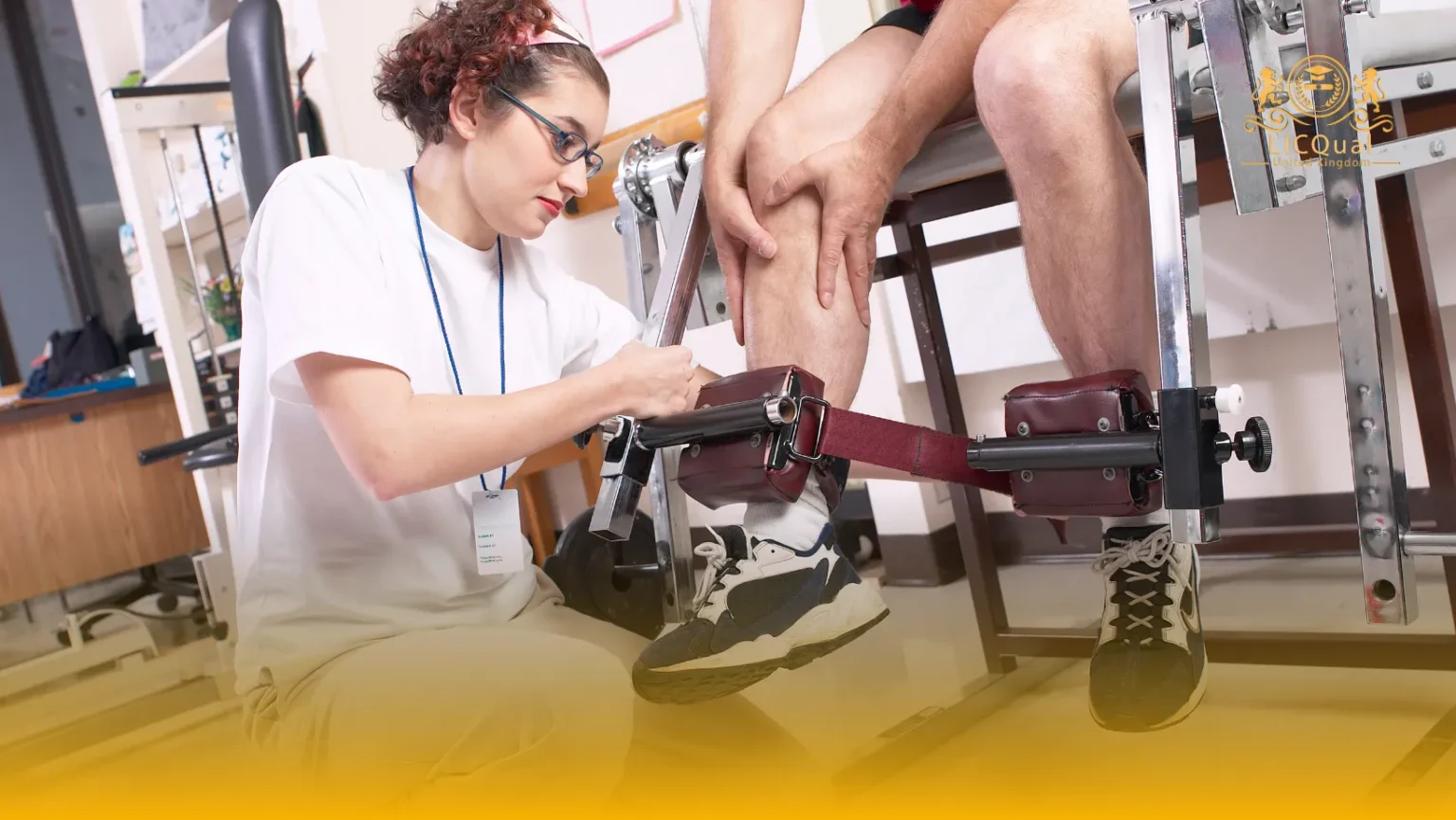
The LICQual Level 7 Postgraduate Diploma in Sports Medicine (PgDSM) is a globally recognized qualification designed for healthcare professionals, clinicians, and sports specialists seeking advanced expertise in athletic health, injury prevention, and performance optimization. This Level 7 Postgraduate Diploma in Sports Medicine UK equips learners with comprehensive knowledge and practical skills to assess, manage, and rehabilitate sports-related injuries, ensuring the highest standard of care for athletes and active populations.
Through this professional diploma in sports medicine, participants explore advanced clinical practices including musculoskeletal assessment, exercise physiology, injury prevention strategies, rehabilitation techniques, and performance enhancement. The program emphasizes evidence-based practice, integrating the latest research in sports health, biomechanics, and athlete care. Whether your goal is to specialize as a sports physician, physiotherapist, or athletic healthcare practitioner, this course provides the practical skills and professional credibility to excel.
Delivered entirely online with flexible learning options, the LICQual UK Level 7 Sports Medicine Diploma allows learners to study at their own pace while balancing professional responsibilities. This sports medicine diploma online combines rigorous academic theory with clinically relevant applications, making it one of the best online diplomas in Sports Medicine UK for career progression, continuing professional development (CPD), and international recognition.
Graduates of this accredited Level 7 Postgraduate Diploma in Sports Medicine will be able to design personalized rehabilitation programs, implement injury prevention protocols, and optimize athletic performance confidently. The curriculum includes both theoretical knowledge and practical guidance on musculoskeletal injuries, exercise prescription, rehabilitation planning, and athlete-centered care, ensuring participants are fully prepared to manage complex sports medicine scenarios.
The LICQual Level 7 Postgraduate Diploma in Sports Medicine (PgDSM) combines academic rigor, practical application, and flexible online learning. With international recognition and an evidence-based curriculum, this course is ideal for healthcare professionals aiming to advance their careers, improve athlete outcomes, and become leaders in the evolving field of sports medicine.
Course Overview
Qualification Title
LICQual Level 7 Postgraduate Diploma in Sports Medicine (PgDSM)
Total Units
6
Total Credits
120
GLH
600
Qualification #
LICQ2200989
Qualification Specification
To enroll in the LICQual Level 7 Postgraduate Diploma in Sports Medicine (PgDSM), applicants must meet the following criteria:
|
Qualification# |
Unit Title |
Credits |
GLH |
|---|---|---|---|
|
LICQ2200989-1 |
Advanced Principles of Sports Medicine and Exercise Physiology |
20 |
100 |
|
LICQ2200989-2 |
Injury Assessment, Diagnosis, and Clinical Evaluation |
20 |
100 |
|
LICQ2200989-3 |
Injury Management and Rehabilitation Strategies |
20 |
100 |
|
LICQ2200989-4 |
Performance Optimisation and Athlete Conditioning |
20 |
100 |
|
LICQ2200989-5 |
Research Methods, Evidence-Based Practice, and Clinical Innovation |
20 |
100 |
|
LICQ2200989-6 |
Public Health, Injury Prevention, and Global Perspectives |
20 |
100 |
By the end of this course, learners will be able to:
Unit 1: Advanced Principles of Sports Medicine and Exercise Physiology
Learners will be able to:
- Critically analyse human anatomy, biomechanics, and exercise physiology relevant to athletic performance.
- Evaluate physiological adaptations to training, exercise, and environmental stressors.
- Apply advanced knowledge of musculoskeletal and cardiovascular systems to optimise athlete care.
- Integrate theoretical principles into clinical assessment and performance monitoring.
Unit 2: Injury Assessment, Diagnosis, and Clinical Evaluation
Learners will be able to:
- Perform comprehensive assessment and evaluation of sports-related injuries.
- Apply advanced diagnostic techniques, including musculoskeletal testing, imaging, and functional analysis.
- Interpret clinical findings to formulate accurate diagnoses.
- Develop evidence-based decision-making strategies for athlete care and rehabilitation planning.
Unit 3: Injury Management and Rehabilitation Strategies
Learners will be able to:
- Design and implement individualised treatment and rehabilitation programmes.
- Evaluate evidence-based therapeutic interventions and rehabilitation protocols.
- Monitor recovery and modify care plans to optimise functional outcomes.
- Apply multidisciplinary approaches for effective injury management and return-to-play strategies.
Unit 4: Performance Optimisation and Athlete Conditioning
Learners will be able to:
- Develop advanced strength, conditioning, and training programmes tailored to athletes’ needs.
- Critically assess nutrition, recovery, and psychological strategies for performance enhancement.
- Monitor and evaluate training effectiveness using performance metrics.
- Integrate scientific principles into athlete development and injury prevention.
Unit 5: Research Methods, Evidence-Based Practice, and Clinical Innovation
Learners will be able to:
- Critically appraise scientific literature relevant to sports medicine practice.
- Design and conduct research projects with ethical and methodological rigour.
- Apply evidence-based strategies to inform clinical decision-making and innovation.
- Translate research findings into practical improvements in athlete care and performance optimisation.
Unit 6: Public Health, Injury Prevention, and Global Perspectives
Learners will be able to:
- Evaluate injury prevention strategies and public health initiatives in sport.
- Analyse global trends, policy frameworks, and community health considerations in sports medicine.
- Develop and implement educational programmes to promote athlete health and safety.
- Critically assess the impact of environmental, social, and cultural factors on injury risk and performance.
The LICQual Level 7 Postgraduate Diploma in Sports Medicine (PgDSM) is designed for healthcare professionals, clinicians, and sports specialists looking to advance their expertise in athlete health, injury prevention, and performance optimization. This Level 7 qualification is ideal for those seeking internationally recognized credentials, practical skills in musculoskeletal assessment and rehabilitation, and professional credibility in sports medicine. Whether you work in hospitals, sports clinics, research, or private practice, this diploma equips you with the knowledge and confidence to excel in the dynamic field of sports medicine.
Sports Physicians and Clinicians
- Designed for physicians specializing in sports medicine and athlete care.
- Enhances skills in injury diagnosis and management.
- Builds expertise in performance optimization and rehabilitation.
- Strengthens evidence-based clinical decision-making.
- Provides internationally recognized credentials for career advancement.
Physiotherapists and Rehabilitation Specialists
- Tailored for physiotherapists managing sports injuries and athlete recovery.
- Improves musculoskeletal assessment and exercise prescription skills.
- Enhances rehabilitation planning and injury prevention strategies.
- Builds confidence in implementing advanced therapy techniques.
- Supports continuing professional development (CPD) and clinical excellence.
Nurses and Allied Health Professionals
- Suitable for nurses, sports therapists, and allied health staff in athletic care.
- Enhances patient monitoring and rehabilitation support skills.
- Builds knowledge of injury prevention protocols and clinical best practices.
- Develops understanding of ethical, legal, and professional standards.
- Supports career growth in sports medicine and athletic healthcare.
Medical Students and Postgraduate Trainees
- Ideal for graduates pursuing specialization in sports medicine.
- Provides foundational knowledge in athlete care and injury management.
- Enhances clinical reasoning, exercise physiology, and rehabilitation skills.
- Prepares learners for postgraduate training or advanced practice.
- Offers internationally recognized certification to boost career prospects.
Sports Clinic and Hospital Practitioners
- Designed for clinicians working in sports clinics or hospitals.
- Enhances patient assessment and rehabilitation planning expertise.
- Builds proficiency in injury management, musculoskeletal care, and performance evaluation.
- Encourages application of best practices in clinical settings.
- Supports professional credibility and career progression in sports medicine.
Coaches and Athletic Trainers
- Tailored for coaches and trainers involved in athlete health and performance.
- Improves knowledge of injury prevention and safe training practices.
- Enhances skills in monitoring athlete recovery and performance metrics.
- Supports evidence-based decision-making in training programs.
- Builds credibility and recognition in sports health and performance optimization.
International Healthcare Professionals
- Perfect for global learners seeking UK-recognized sports medicine training.
- Offers flexible online learning to balance study and professional commitments.
- Equips learners with skills applicable in international sports and clinical settings.
- Builds credibility in global sports medicine and athletic health networks.
- Supports career growth and professional advancement worldwide.
Centres delivering the LICQual Level 7 Postgraduate Diploma in Sports Medicine (PgDSM) must meet the highest international standards to ensure high-quality training and successful learner outcomes. Essential requirements include:
- Qualified and Experienced Faculty: Trainers, assessors, and academic staff must hold relevant postgraduate qualifications and have substantial clinical experience in sports medicine, rehabilitation, or allied healthcare.
- Comprehensive Learning Resources: Access to up-to-date textbooks, journals, case studies, e-learning platforms, and digital tools to support advanced theoretical and practical learning.
- Clinical and Practical Facilities: Provision of laboratories, training facilities, and clinical practice environments that allow learners to apply theoretical knowledge in real-world or simulated scenarios.
- Robust Assessment and Quality Assurance: Centres must implement structured assessment processes, internal verification, and quality assurance measures to maintain academic standards.
- Technology and E-Learning Infrastructure: Reliable digital platforms and virtual learning tools to facilitate blended and flexible learning.
- Learner Support Services: Academic guidance, mentoring, and CPD support should be provided to ensure learners achieve their full potential.
- Compliance with LICQual Standards: Centres must adhere to LICQual regulations and deliver programmes in accordance with international Level 7 postgraduate benchmarks.
- Commitment to Innovation and Research: Centres should encourage the integration of research, evidence-based practice, and innovative approaches in sports medicine.
Assessment and Verification
All units within this qualification are subject to internal assessment by the approved centre and external verification by LICQual. The qualification follows a criterion-referenced assessment approach, ensuring that learners meet all specified learning outcomes.
To achieve a ‘Pass’ in any unit, learners must provide valid, sufficient, and authentic evidence demonstrating their attainment of all learning outcomes and compliance with the prescribed assessment criteria. The Assessor is responsible for evaluating the evidence and determining whether the learner has successfully met the required standards.
Assessors must maintain a clear and comprehensive audit trail, documenting the basis for their assessment decisions to ensure transparency, consistency, and compliance with quality assurance requirements.