
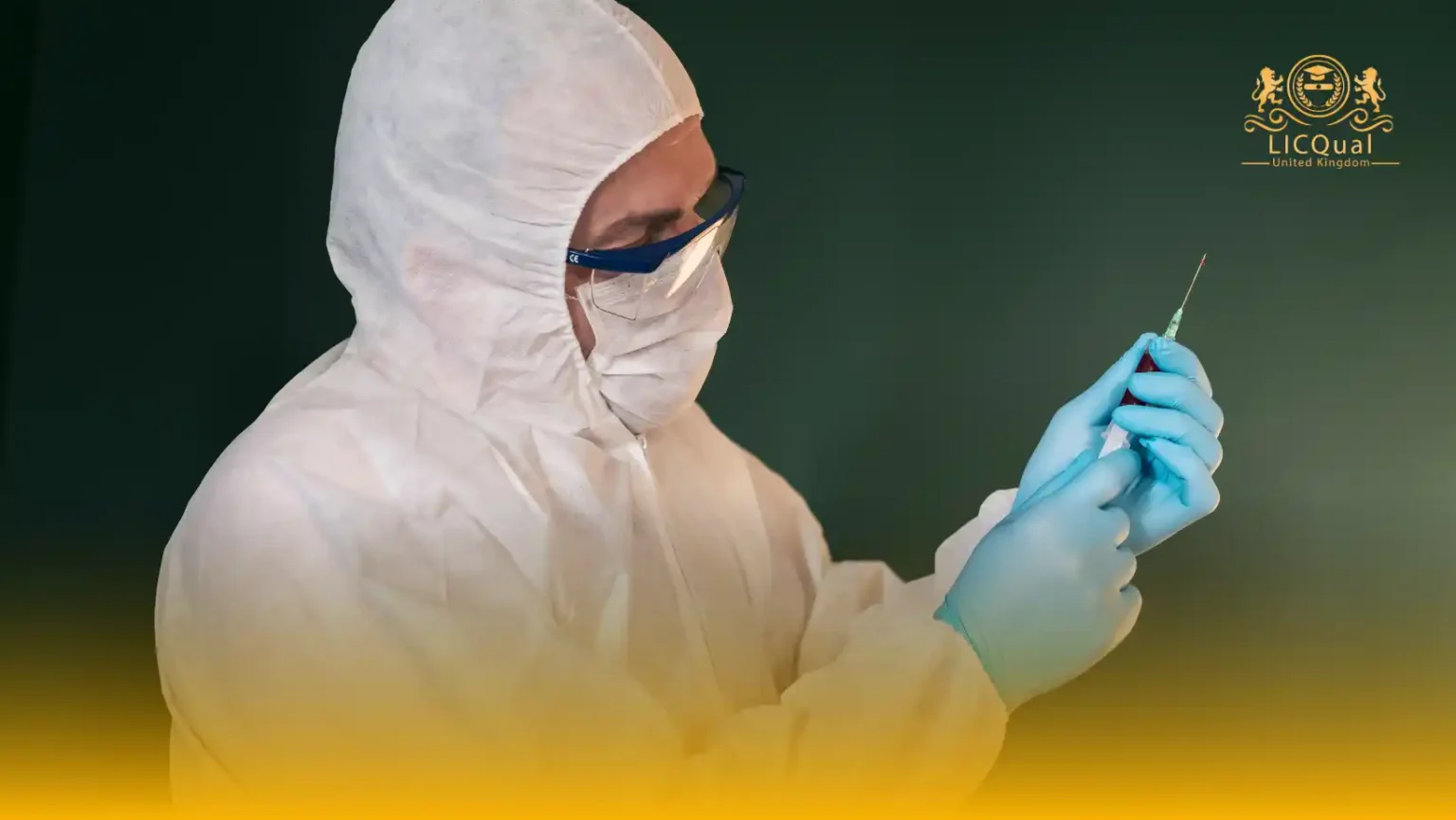
The LICQual Level 6 Diploma in Infectious Disease Medicine (Dip IDM) is an internationally accredited qualification designed for healthcare professionals who want to specialize in the prevention, diagnosis, and management of infectious diseases. This program provides advanced knowledge and practical skills to address global health challenges, making it one of the most relevant qualifications in modern medicine.
This Infectious Disease Diploma UK combines academic rigor with practical application, ensuring learners gain confidence in managing outbreaks, controlling infections, and applying evidence‑based strategies in clinical practice. The Level 6 Diploma in Infectious Disease Medicine online offers flexible study options, making it ideal for busy professionals who want to balance career growth with advanced learning. With CPD accreditation and international recognition, the qualification meets global standards and is highly valued by hospitals, research institutions, and public health organizations.
The LICQual Diploma in Infectious Disease Medicine emphasizes real‑world application, equipping learners with expertise in epidemiology, microbiology, immunology, and public health policy. By completing this advanced diploma, professionals strengthen their ability to design effective interventions, manage infectious disease programs, and contribute to healthcare leadership at both national and international levels.
This internationally accredited Infectious Disease qualification is suitable for doctors, nurses, and healthcare practitioners aiming to work in hospitals, laboratories, NGOs, and government health departments. It prepares learners to take on leadership roles, contribute to policy development, and deliver patient‑centered care that aligns with best practices in infectious disease medicine.
Course Overview
Qualification Title
LICQual Level 6 Diploma in Infectious Disease Medicine (Dip IDM)
Total Units
6
Total Credits
120
GLH
480
Qualification #
LICQ2200925
Qualification Specification
To enroll in the LICQual Level 6 Diploma in Infectious Disease Medicine (Dip IDM) , applicants must meet the following criteria:
|
Qualification# |
Unit Title |
Credits |
GLH |
|---|---|---|---|
|
LICQ2200925-1 |
Principles of Infectious Diseases and Epidemiology |
20 |
80 |
|
LICQ2200925-2 |
Microbiology and Pathogenesis of Infectious Agents |
20 |
80 |
|
LICQ2200925-3 |
Clinical Management of Infectious Diseases |
20 |
80 |
|
LICQ2200925-4 |
Infection Control, Prevention, and Public Health Strategies |
20 |
80 |
|
LICQ2200925-5 |
Emerging and Re-emerging Infectious Diseases |
20 |
80 |
|
LICQ2200925-6 |
Research, Ethics, and Evidence-Based Practice in Infectious Disease Medicine |
20 |
80 |
By the end of this course, learners will be able to:
Unit 1: Principles of Infectious Diseases and Epidemiology
By the end of this unit, learners will be able to:
- Critically evaluate the principles and global impact of infectious diseases.
- Apply epidemiological methods to analyse disease patterns and outbreaks.
- Assess risk factors, surveillance data, and reporting mechanisms for infectious disease control.
- Develop strategies for prevention, containment, and public health response.
Unit 2: Microbiology and Pathogenesis of Infectious Agents
By the end of this unit, learners will be able to:
- Analyse the characteristics and pathogenic mechanisms of bacteria, viruses, fungi, and parasites.
- Evaluate host-pathogen interactions and the role of the immune system in disease progression.
- Apply microbiological knowledge to inform diagnosis, treatment, and prevention strategies.
- Critically assess laboratory techniques and diagnostic tools used in infectious disease management.
Unit 3: Clinical Management of Infectious Diseases
By the end of this unit, learners will be able to:
- Demonstrate advanced understanding of diagnosis, treatment, and patient management for infectious diseases.
- Apply principles of antimicrobial stewardship and resistance management.
- Evaluate clinical case studies to develop evidence-based management plans.
- Integrate multidisciplinary approaches in patient care to optimise outcomes.
Unit 4: Infection Control, Prevention, and Public Health Strategies
By the end of this unit, learners will be able to:
- Critically assess infection prevention and control measures in healthcare and community settings.
- Develop and implement vaccination strategies and outbreak containment plans.
- Analyse public health policies and strategies to reduce infectious disease transmission.
- Apply evidence-based guidelines to improve population health outcomes.
Unit 5: Emerging and Re-emerging Infectious Diseases
By the end of this unit, learners will be able to:
- Evaluate global trends in emerging and re-emerging infectious diseases.
- Analyse zoonotic and environmental factors influencing disease outbreaks.
- Develop preparedness and response strategies for novel infectious threats.
- Communicate risk and implement effective public health interventions.
Unit 6: Research, Ethics, and Evidence-Based Practice in Infectious Disease Medicine
By the end of this unit, learners will be able to:
- Critically appraise research methodologies relevant to infectious disease medicine.
- Apply ethical and legal principles in clinical practice and research.
- Integrate evidence-based approaches into clinical decision-making and public health strategies.
- Conduct independent research or audits to enhance patient care and disease prevention.
The LICQual Level 6 Diploma in Infectious Disease Medicine (Dip IDM) is designed for healthcare professionals who want to specialize in the prevention, diagnosis, and management of infectious diseases. This internationally accredited and CPD recognized Infectious Disease Diploma UK equips learners with advanced skills to address global health challenges, making it ideal for doctors, nurses, and practitioners seeking career advancement in infectious disease medicine.
1. Medical Graduates Seeking Specialization
- Build a strong foundation in infectious disease medicine after graduation.
- Earn a Level 6 Diploma in Infectious Disease Medicine online for flexibility.
- Gain CPD accredited certification recognized worldwide.
- Improve employability in hospitals, clinics, and research centers.
- Prepare for advanced roles in infectious disease and public health.
2. Doctors and General Practitioners
- Enhance expertise in diagnosing and managing infectious diseases.
- Strengthen skills in outbreak control and patient safety.
- Gain internationally accredited qualifications for career growth.
- Improve decision‑making in complex infectious disease cases.
- Stay updated with evolving global health standards.
3. Nurses and Allied Health Professionals
- Develop advanced skills in infection prevention and patient care.
- Learn strategies for supporting patients with infectious conditions.
- Earn UK accredited Infectious Disease diploma for career progression.
- Improve career prospects in hospitals and community health.
- Gain recognition with CPD accredited training.
4. International Healthcare Professionals
- Obtain a globally recognized Infectious Disease qualification.
- Meet international standards in healthcare delivery and policy.
- Access affordable and flexible online study options.
- Strengthen credentials for international career opportunities.
- Improve eligibility for roles in global health organizations.
5. Public Health Specialists
- Learn practical approaches to outbreak management and control.
- Strengthen knowledge in epidemiology and health promotion.
- Gain skills in designing effective public health interventions.
- Earn internationally accredited certification.
- Improve career prospects in government and NGO programs.
6. Healthcare Educators and Trainers
- Build expertise to teach infectious disease medicine effectively.
- Use internationally accredited curriculum for training.
- Improve credibility with CPD recognition.
- Stay aligned with modern healthcare practices.
- Enhance teaching effectiveness in medical education.
7. Professionals Seeking Career Advancement
- Boost career prospects with a recognized diploma.
- Gain specialized skills in infectious disease practice.
- Access flexible online learning for busy professionals.
- Strengthen qualifications for promotions and leadership roles.
- Position yourself for global healthcare opportunities.
To ensure high-quality delivery of the LICQual Level 6 Diploma in Infectious Disease Medicine, centres must meet rigorous standards in staffing, resources, and learner support. These requirements guarantee that learners receive comprehensive training aligned with international best practices in infectious disease medicine.
Essential Centre Requirements:
- Qualified and Experienced Staff
- Centres must employ instructors and assessors with recognised qualifications and extensive experience in infectious disease medicine, microbiology, epidemiology, or related healthcare fields.
- Staff should demonstrate active involvement in Continuing Professional Development (CPD) to ensure up-to-date knowledge and clinical expertise.
- Comprehensive Learning Resources
- Centres must provide learners with access to current textbooks, journals, research databases, and case studies relevant to infectious disease medicine.
- Digital learning platforms, simulation tools, and laboratory resources should be available to support both theoretical and practical learning.
- Clinical and Practical Training Facilities
- Centres should offer access to clinical environments, laboratories, or partner healthcare facilities where learners can engage in hands-on practical and case-based learning.
- Robust Assessment and Quality Assurance Systems
- Centres must implement fair, transparent, and structured assessment procedures.
- Quality assurance measures should include internal verification and compliance with international academic and professional standards.
- Learner Support and Guidance
- Centres must provide academic mentoring, counselling, and career guidance to support learner success and professional growth.
- Accessible communication channels should be in place for feedback and queries.
- Compliance and Commitment to Excellence
- Centres must adhere to LICQual policies and maintain high standards of learner welfare, safety, and ethical practice.
- A commitment to continuous improvement in training delivery and resource provision is essential.
By fulfilling these requirements, centres ensure learners achieve advanced expertise in infectious disease medicine, equipping them for leadership, clinical, and research roles in healthcare settings worldwide.
Assessment and Verification
All units within this qualification are subject to internal assessment by the approved centre and external verification by LICQual. The qualification follows a criterion-referenced assessment approach, ensuring that learners meet all specified learning outcomes.
To achieve a ‘Pass’ in any unit, learners must provide valid, sufficient, and authentic evidence demonstrating their attainment of all learning outcomes and compliance with the prescribed assessment criteria. The Assessor is responsible for evaluating the evidence and determining whether the learner has successfully met the required standards.
Assessors must maintain a clear and comprehensive audit trail, documenting the basis for their assessment decisions to ensure transparency, consistency, and compliance with quality assurance requirements.