
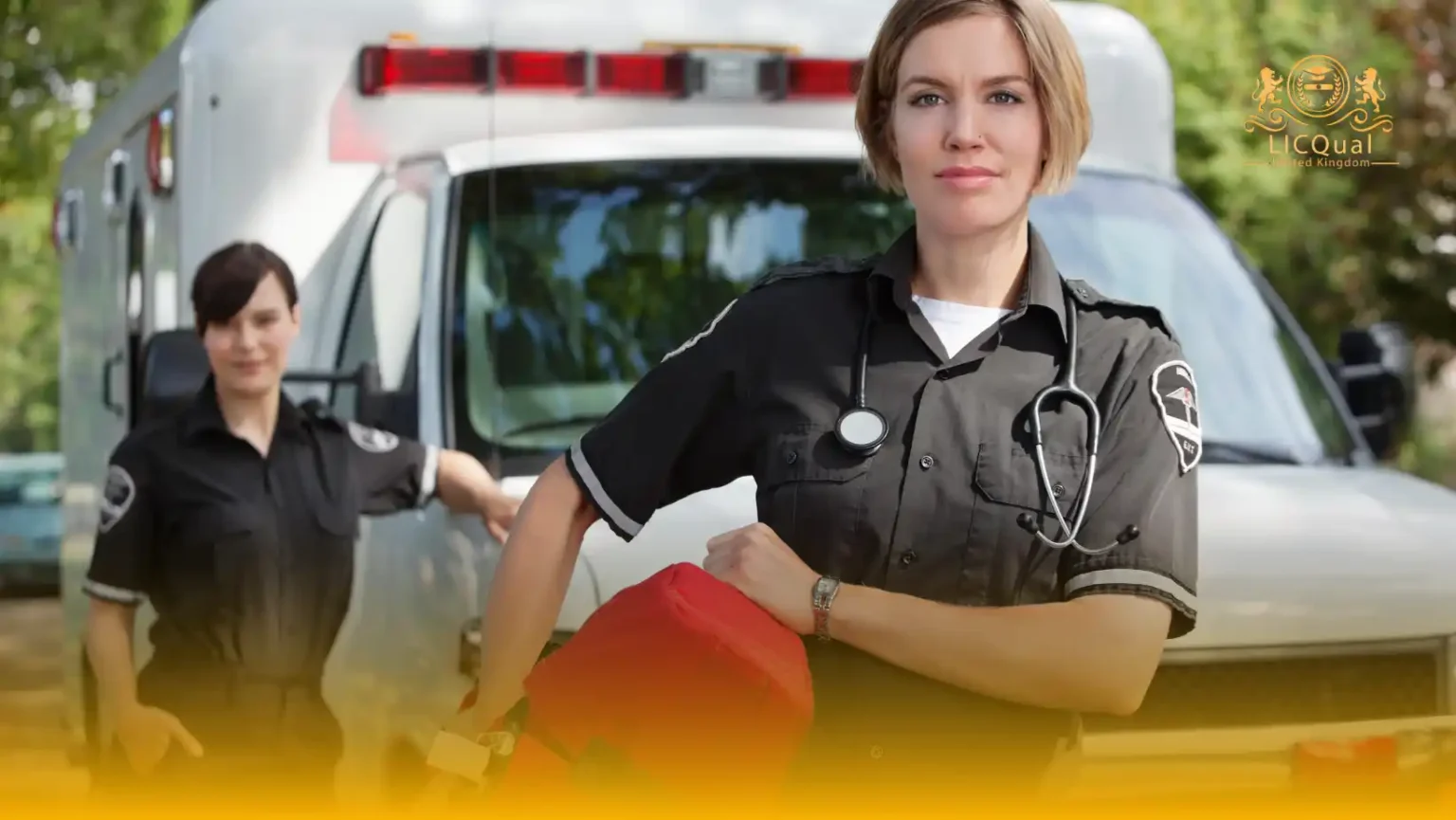
The LICQual Level 3 Diploma in Emergency Medicine (Dip EM) is a globally recognized qualification designed for healthcare professionals who want to build advanced expertise in urgent and acute care. This clinical diploma in emergency medicine provides a strong foundation in diagnosing, managing, and treating life-threatening conditions, making it an ideal choice for doctors, nurses, and allied health practitioners working in fast-paced clinical environments.
Unlike short workshops or unaccredited programs, the Level 3 Diploma in Emergency Medicine offers a structured, accredited pathway that blends academic knowledge with practical application. By completing this LICQual emergency medicine qualification, learners gain the confidence and credibility to deliver safe, effective, and evidence-based care in emergency and trauma settings.
The curriculum is comprehensive yet approachable, covering essential topics such as trauma management, cardiac and respiratory emergencies, shock and sepsis, toxicology, and ethical considerations in acute care. With a focus on real-world application, the Dip EM emergency medicine training equips learners with the skills to make rapid, accurate decisions under pressure while meeting international standards of care.
What sets this program apart is its balance of theory and practice. Learners benefit from expert-led modules, case-based learning, and interactive resources that simplify complex emergency scenarios. The accredited emergency medicine diploma is also CPD-approved, making it an excellent choice for professionals seeking continuous development, global recognition, and career advancement.
If you are searching for the best emergency medicine diploma for healthcare professionals, the LICQual Level 3 Diploma in Emergency Medicine (Dip EM) offers the perfect opportunity to enhance your career, expand your clinical expertise, and join a growing network of specialists dedicated to saving lives and improving emergency care worldwide.
Course Overview
Qualification Title
LICQual Level 3 Diploma in Emergency Medicine (Dip EM)
Total Units
6
Total Credits
60
GLH
240
Qualification #
LICQ2200876
Qualification Specification
To enroll in the LICQual Level 3 Diploma in Emergency Medicine (Dip EM), applicants must meet the following criteria:
|
Qualification# |
Unit Title |
Credits |
GLH |
|---|---|---|---|
|
LICQ2200876-1 |
Fundamentals of Emergency Medicine |
10 |
40 |
|
LICQ2200876-2 |
Clinical Assessment and Diagnostic Procedures |
10 |
40 |
|
LICQ2200876-3 |
Trauma and Acute Care Management |
10 |
40 |
|
LICQ2200876-4 |
Medical Emergencies and Special Cases |
10 |
40 |
|
LICQ2200876-5 |
Ethical, Legal, and Professional Practice in Emergency Medicine |
10 |
40 |
|
LICQ2200876-6 |
Contemporary Issues and Continuing Professional Development in Emergency Medicine |
10 |
40 |
By the end of this course, learners will be able to:
Unit 1: Fundamentals of Emergency Medicine
- Explain the role of emergency medicine in healthcare delivery.
- Apply principles of urgent and critical care effectively.
- Describe multidisciplinary team roles and responsibilities.
- Conduct patient assessment and triage in emergency settings.
- Analyse the impact of emergency interventions on patient outcomes.
Unit 2: Clinical Assessment and Diagnostic Procedures
- Perform rapid and accurate clinical assessments of emergency patients.
- Recognise critical signs, symptoms, and vital indicators.
- Utilise diagnostic tools and imaging for decision-making.
- Apply differential diagnosis and prioritisation strategies.
- Record and report clinical findings professionally.
Unit 3: Trauma and Acute Care Management
- Implement trauma care protocols and manage injuries effectively.
- Respond to acute medical emergencies, including cardiac and respiratory crises.
- Apply Basic Life Support (BLS) and Advanced Life Support (ALS) techniques.
- Stabilise patients and manage safe transfer procedures.
- Collaborate efficiently with multidisciplinary emergency teams.
Unit 4: Medical Emergencies and Special Cases
- Manage common medical emergencies across multiple systems.
- Apply specialised approaches for paediatric, geriatric, obstetric, and gynaecological emergencies.
- Respond to mental health crises in emergency settings.
- Implement evidence-based interventions for complex cases.
- Evaluate outcomes to improve emergency care practices.
Unit 5: Ethical, Legal, and Professional Practice in Emergency Medicine
- Apply ethical principles and patient-centred decision-making.
- Demonstrate knowledge of legal requirements and informed consent.
- Maintain professional accountability and adhere to clinical governance.
- Communicate effectively under pressure with patients and teams.
- Apply cultural competence and sensitivity in emergency care.
Unit 6: Contemporary Issues and Continuing Professional Development in Emergency Medicine
- Analyse emerging trends, research, and innovations in emergency medicine.
- Apply technology and telemedicine solutions in urgent care.
- Demonstrate reflective practice and lifelong learning strategies.
- Plan and engage in Continuing Professional Development (CPD) activities.
- Prepare for career progression and leadership roles in emergency services.
The LICQual Level 3 Diploma in Emergency Medicine (Dip EM) is designed for healthcare professionals, clinicians, and aspiring specialists who want to gain accredited expertise in urgent and acute care. This emergency medicine diploma for healthcare professionals is ideal for doctors, nurses, paramedics, researchers, and students who aim to strengthen their knowledge, improve patient outcomes, and advance their careers in one of the most critical areas of modern medicine.
1. Medical Doctors and Physicians
- Expand your clinical expertise with accredited emergency medicine training.
- Learn evidence-based approaches to trauma and acute care.
- Gain skills in managing cardiac, respiratory, and neurological emergencies.
- Strengthen your professional profile with a recognized qualification.
- Stay competitive in the evolving field of emergency and critical care.
2. Nurses and Allied Health Professionals
- Acquire practical skills in emergency patient care and triage.
- Support physicians in managing urgent and life-threatening conditions.
- Improve career prospects with a CPD-approved qualification.
- Gain confidence in patient communication during high-stress situations.
- Build expertise in a high-demand healthcare specialty.
3. Paramedics and First Responders
- Learn to identify and respond to emergencies effectively.
- Gain knowledge of pre-hospital trauma and acute care management.
- Strengthen decision-making skills in high-pressure environments.
- Enhance your role in emergency and disaster response.
- Earn a recognized qualification to boost professional credibility.
4. Emergency Department Staff and Technicians
- Develop advanced skills in emergency room protocols.
- Learn to manage critical patients in fast-paced environments.
- Strengthen teamwork and collaboration with multidisciplinary teams.
- Gain expertise in using emergency equipment and monitoring tools.
- Improve patient outcomes through evidence-based practices.
5. Biomedical and Clinical Researchers
- Deepen your understanding of acute care and emergency medicine.
- Contribute to research in trauma, toxicology, and critical care.
- Gain a recognized qualification to support academic publications.
- Collaborate with healthcare institutions on clinical studies.
- Advance your career in medical research and innovation.
6. Public Health and Healthcare Administrators
- Understand the global impact of emergency medicine on healthcare systems.
- Gain insights into disaster preparedness and healthcare policies.
- Support community-based emergency awareness programs.
- Strengthen institutional credibility with accredited staff.
- Promote innovation in emergency healthcare delivery.
7. Students and Aspiring Healthcare Professionals
- Build a strong foundation in emergency medicine early in your career.
- Gain a competitive edge when applying for advanced programs.
- Learn from expert-led modules designed for beginners and professionals.
- Acquire knowledge that bridges theory with clinical practice.
- Position yourself for future specialization in emergency medicine.
To ensure high-quality delivery and learner success, centres offering the LICQual Level 3 Diploma in Emergency Medicine must meet the following requirements:
- Qualified and Experienced Staff: Centres must employ trainers and assessors who are fully qualified, competent, and experienced in emergency medicine, paramedicine, or related healthcare fields. Staff should have expertise in both theoretical knowledge and practical emergency care.
- Comprehensive Learning Resources: Centres must provide all essential materials, including textbooks, clinical guidelines, case studies, and access to practical training equipment and emergency simulation tools.
- Adequate Facilities: Training environments should be safe, well-equipped, and suitable for both classroom instruction and practical emergency exercises, including simulations and clinical practice scenarios.
- Assessment and Support Systems: Centres must implement clear assessment procedures aligned with international standards and provide continuous learner support, guidance, and feedback throughout the course.
- Compliance with Legal and Professional Standards: Centres must adhere to local health and safety regulations, data protection laws, and professional standards for emergency medicine training.
- Commitment to Quality and CPD: Centres must demonstrate dedication to continuous improvement by ensuring staff participate in ongoing professional development and maintain up-to-date knowledge in emergency medicine.
By meeting these requirements, centres ensure learners receive a high-quality, professional learning experience, are fully supported in achieving their qualification, and are prepared to excel in emergency care, acute medical response, and multidisciplinary healthcare environments.
Assessment and Verification
All units within this qualification are subject to internal assessment by the approved centre and external verification by LICQual. The qualification follows a criterion-referenced assessment approach, ensuring that learners meet all specified learning outcomes.
To achieve a ‘Pass’ in any unit, learners must provide valid, sufficient, and authentic evidence demonstrating their attainment of all learning outcomes and compliance with the prescribed assessment criteria. The Assessor is responsible for evaluating the evidence and determining whether the learner has successfully met the required standards.
Assessors must maintain a clear and comprehensive audit trail, documenting the basis for their assessment decisions to ensure transparency, consistency, and compliance with quality assurance requirements.