
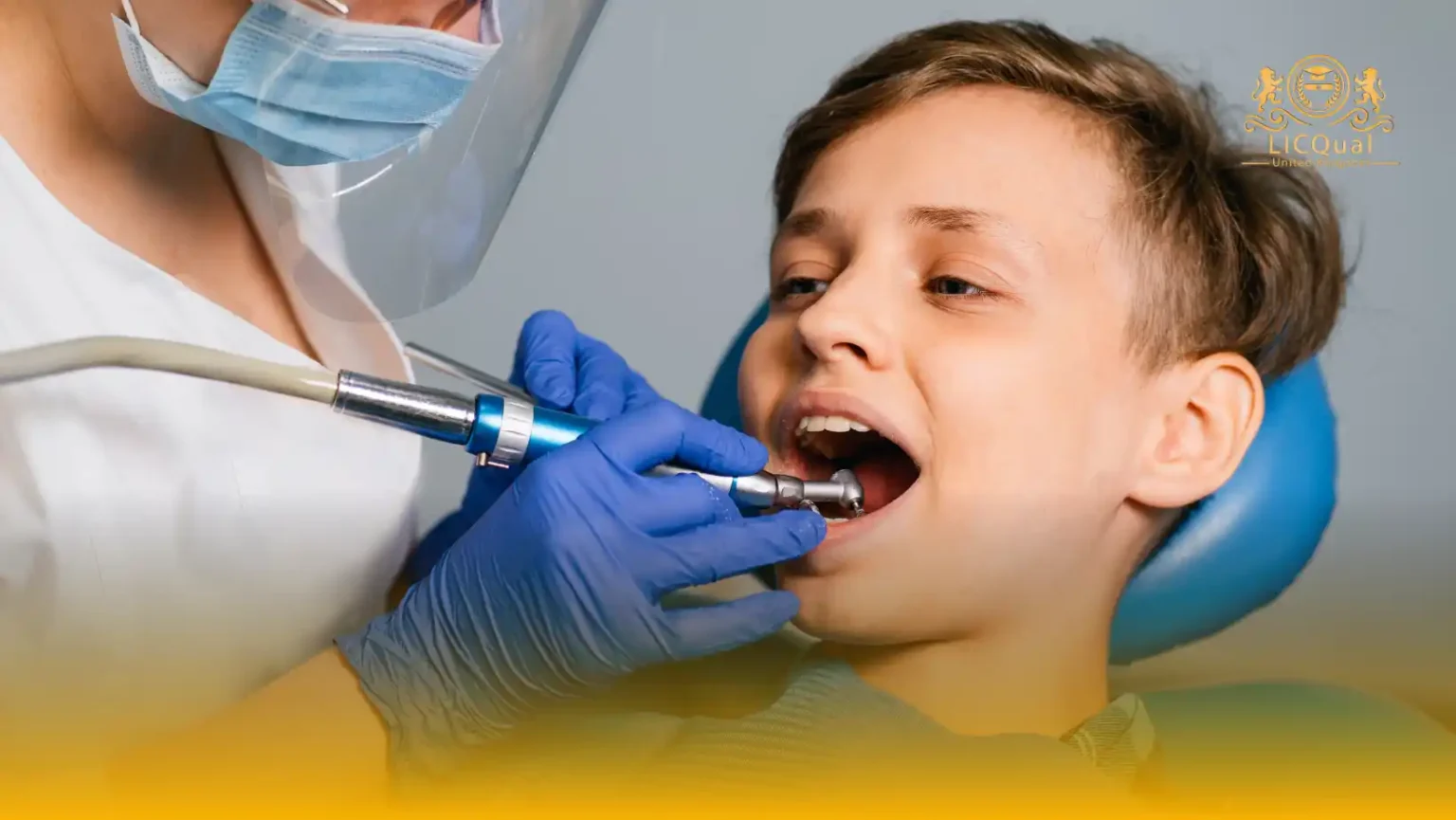
Diploma in Pediatric Dentistry
The LICQual Level 7 Postgraduate Diploma in Pediatric Dentistry (PgD Pediatric Dentistry) is an advanced professional qualification that provides learners with specialised knowledge and skills in the prevention, diagnosis, and management of oral health conditions affecting infants, children, and adolescents. As awareness of children’s oral health continues to grow worldwide, there is increasing demand for professionals who understand the unique dental, developmental, and behavioural needs of young patients.
This postgraduate diploma explores key areas of pediatric dentistry, including child oral health, preventive dental care, dental disease management, behaviour guidance, growth and development, dental trauma, and treatment planning for children. Learners will develop a comprehensive understanding of evidence-based approaches that support safe, effective, and patient-centred dental care within pediatric settings.
The qualification also examines contemporary challenges in children’s oral healthcare and the role of preventive strategies in improving long-term dental outcomes. By combining advanced clinical knowledge with modern pediatric dental practices, learners will gain industry-relevant expertise that supports professional development within pediatric dentistry, specialist dental services, community oral health programmes, and child-focused healthcare environments.
Course Overview
Qualification Title
LICQual Level 7 Postgraduate Diploma in Pediatric Dentistry (PgD Pediatric Dentistry)
Total Units
6
Total Credits
120
GLH
600
Qualification #
LICQ2200693
Qualification Specification
To enroll in the LICQual Level 7 Postgraduate Diploma in Pediatric Dentistry (PgD Pediatric Dentistry), applicants must meet the following criteria:
|
Qualification# |
Unit Title |
Credits |
GLH |
|---|---|---|---|
|
LICQ2200693-1 |
Advanced Principles of Paediatric Oral Health and Development |
20 |
100 |
|
LICQ2200693-2 |
Diagnosis and Management of Dental Diseases in Children |
20 |
100 |
|
LICQ2200693-3 |
Behaviour Management and Communication in Paediatric Dentistry |
20 |
100 |
|
LICQ2200693-4 |
Preventive and Restorative Dentistry for Paediatric Patients |
20 |
100 |
|
LICQ2200693-5 |
Dental Trauma, Emergencies, and Special Needs Care in Children |
20 |
100 |
|
LICQ2200693-6 |
Clinical Research, Evidence-Based Practice, and Professional Development in Paediatric Dentistry |
20 |
100 |
By the end of this course, learners will be able to:
1. Advanced Principles of Paediatric Oral Health and Development
- Demonstrate an in-depth understanding of the physiological and anatomical development of the paediatric oral cavity.
- Analyse the impact of growth and development stages on oral health care planning.
- Apply advanced knowledge of oral health promotion strategies specific to children.
- Evaluate genetic, nutritional, and environmental factors influencing paediatric dental health.
2. Diagnosis and Management of Dental Diseases in Children
- Identify early signs and symptoms of common and complex paediatric dental diseases.
- Utilise advanced diagnostic tools and techniques for accurate assessment.
- Develop effective, evidence-based treatment plans for a range of paediatric oral conditions.
- Apply preventive strategies to reduce disease incidence and recurrence in children.
3. Behaviour Management and Communication in Paediatric Dentistry
- Apply advanced behaviour management techniques tailored to different paediatric age groups.
- Demonstrate effective communication skills with children, parents, and guardians.
- Manage anxiety and fear in paediatric patients using appropriate psychological strategies.
- Evaluate the effectiveness of behaviour management interventions in clinical settings.
4. Preventive and Restorative Dentistry for Paediatric Patients
- Implement advanced preventive care measures to maintain and improve paediatric oral health.
- Select and apply appropriate restorative materials and techniques for children.
- Integrate minimally invasive dentistry principles into paediatric treatment plans.
- Evaluate the long-term outcomes of preventive and restorative interventions.
5. Dental Trauma, Emergencies, and Special Needs Care in Children
- Assess and manage various forms of dental trauma in paediatric patients.
- Provide immediate and effective care for dental emergencies.
- Adapt treatment plans for children with special healthcare needs.
- Collaborate with multidisciplinary teams to ensure comprehensive patient care.
6. Clinical Research, Evidence-Based Practice, and Professional Development in Paediatric Dentistry
- Critically evaluate current research and its application in paediatric dentistry.
- Apply evidence-based decision-making to clinical practice.
- Conduct independent or collaborative clinical research projects relevant to paediatric dentistry.
- Demonstrate commitment to lifelong learning and Continuing Professional Development (CPD).
This qualification is ideal for:
- Dental professionals seeking to develop advanced knowledge and expertise in pediatric dentistry.
- General Dental Practitioners who wish to enhance their understanding of children’s oral health and specialised dental care.
- Dentists interested in expanding their skills in the prevention, diagnosis, and management of pediatric dental conditions.
- Professionals involved in child-focused oral healthcare services and preventive dentistry programmes.
- Dental practitioners seeking to strengthen their knowledge of behaviour management techniques and child-centred treatment approaches.
- Individuals interested in advanced study of dental growth and development, pediatric dental trauma, and preventive oral healthcare.
- Professionals working in community dentistry, hospital dentistry, specialist dental clinics, or public health dental services.
- Those seeking to improve their understanding of evidence-based pediatric dental practices and contemporary treatment strategies.
- Learners planning to progress into specialised pediatric dentistry, advanced clinical practice, or leadership roles within dental healthcare.
- Dental professionals seeking a recognised postgraduate qualification to support career advancement and professional development.
This postgraduate diploma provides advanced knowledge of pediatric oral healthcare, preventive dentistry, treatment planning, and child-focused dental management, supporting professional growth within specialist dental and healthcare environments.
Centres delivering the LICQual Level 7 Postgraduate Diploma in Paediatric Dentistry (PgD Paediatric Dentistry) must meet the following requirements to ensure the highest standards of training, assessment, and learner support:
- Accreditation and Approval
- Must be an approved LICQual training and assessment centre with current, valid accreditation status.
- Must comply with all LICQual quality assurance policies, procedures, and assessment standards.
- Qualified and Experienced Trainers
- Trainers and assessors must hold recognised dental qualifications at Level 7 or above (or equivalent) in paediatric dentistry or a closely related specialism.
- Must have substantial clinical and teaching experience in paediatric dental practice.
- Must hold an assessor qualification or equivalent competence in assessing vocational qualifications.
- Facilities and Equipment
- Access to a fully equipped clinical skills laboratory or simulation environment for practical training.
- Availability of appropriate dental instruments, radiographic equipment, paediatric dental models, and other specialist tools required for training and assessment.
- Access to IT facilities, internet, and multimedia resources to support blended learning.
- Learning Resources
- Provision of up-to-date reference materials, dental journals, case studies, and research publications relevant to paediatric dentistry.
- Access to online learning platforms or virtual classrooms where applicable.
- Learner Support and Guidance
- Structured learner induction and ongoing academic support throughout the programme.
- Availability of academic mentors or clinical supervisors to guide learners in practical and research components.
- Assessment and Quality Assurance
- Robust systems for internal quality assurance (IQA) and external verification.
- Maintenance of accurate learner records, assessment evidence, and feedback documentation.
Assessment and Verification
All units within this qualification are subject to internal assessment by the approved centre and external verification by LICQual. The qualification follows a criterion-referenced assessment approach, ensuring that learners meet all specified learning outcomes.
To achieve a ‘Pass’ in any unit, learners must provide valid, sufficient, and authentic evidence demonstrating their attainment of all learning outcomes and compliance with the prescribed assessment criteria. The Assessor is responsible for evaluating the evidence and determining whether the learner has successfully met the required standards.
Assessors must maintain a clear and comprehensive audit trail, documenting the basis for their assessment decisions to ensure transparency, consistency, and compliance with quality assurance requirements.