
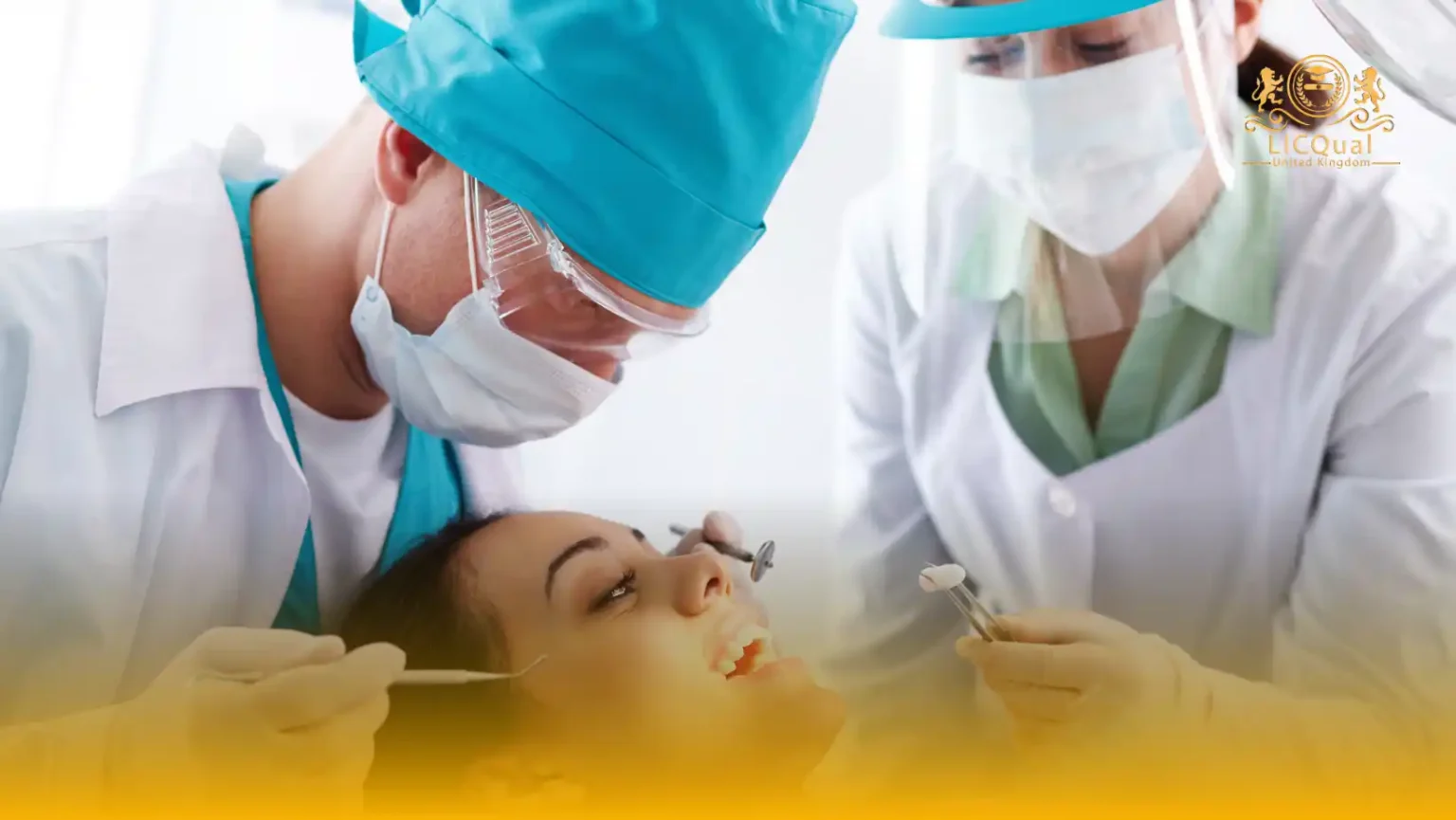
Oral and Maxillofacial Surgery
As healthcare continues to advance, specialised areas of dentistry are playing an increasingly important role in improving patient care and treatment outcomes. Oral and Maxillofacial Surgery is one of the most complex and respected fields within dental healthcare, focusing on conditions that affect the mouth, jaws, face, and surrounding structures. The LICQual Level 7 Postgraduate Diploma in Oral and Maxillofacial Surgery (PgDOMS) is designed to provide learners with advanced knowledge of this specialist area and its role in modern clinical practice.
The main focus of the programme is understanding the assessment and management of oral and facial conditions. The curriculum examines subjects such as oral surgery procedures, facial anatomy, jaw disorders, impacted teeth, oral pathology, facial injuries, treatment planning, and patient care. Particular attention is given to the principles that support safe, effective, and patient-centred surgical treatment.
By integrating theory with current industry practices, this postgraduate diploma helps learners build a deeper understanding of oral and maxillofacial surgery and its importance in modern healthcare. Learners develop advanced knowledge of surgical concepts, clinical decision-making, and treatment approaches that support oral health, facial function, and overall patient well-being.
Course Overview
Qualification Title
LICQual Level 7 Postgraduate Diploma in Oral and Maxillofacial Surgery (PgDOMS)
Total Units
6
Total Credits
120
GLH
600
Qualification #
LICQ2200690
Qualification Specification
To enroll in the LICQual Level 7 Postgraduate Diploma in Oral and Maxillofacial Surgery (PgDOMS), applicants must meet the following criteria:
|
Qualification# |
Unit Title |
Credits |
GLH |
|---|---|---|---|
|
LICQ2200690-1 |
Advanced Diagnostic Techniques in Oral and Maxillofacial Surgery |
20 |
100 |
|
LICQ2200690-2 |
Surgical Management of Oral Pathologies and Lesions |
20 |
100 |
|
LICQ2200690-3 |
Maxillofacial Trauma and Reconstructive Surgery |
20 |
100 |
|
LICQ2200690-4 |
Orthognathic Surgery and Management of Dentofacial Deformities |
20 |
100 |
|
LICQ2200690-5 |
Clinical Oral and Maxillofacial Surgery: Hands-on Practice and Case Management |
20 |
100 |
|
LICQ2200690-6 |
Professional Practice, Ethics, and Continuing Professional Development in Oral and Maxillofacial Surgery |
20 |
100 |
By the end of this course, learners will be able to:
1. Advanced Diagnostic Techniques in Oral and Maxillofacial Surgery
By the end of this unit, the learner will be able to:
- Critically evaluate clinical, radiographic, and laboratory findings for accurate diagnosis.
- Utilise advanced imaging technologies, including CBCT, CT, and MRI, in diagnostic processes.
- Interpret diagnostic data to support precise surgical treatment planning.
- Assess risk factors and patient-specific considerations for surgical intervention.
2. Surgical Management of Oral Pathologies and Lesions
By the end of this unit, the learner will be able to:
- Diagnose and classify benign and malignant oral pathologies.
- Select and perform appropriate surgical techniques for oral lesions and cystic conditions.
- Apply evidence-based approaches to minimise complications and promote healing.
- Evaluate surgical outcomes and implement post-operative care protocols.
3. Maxillofacial Trauma and Reconstructive Surgery
By the end of this unit, the learner will be able to:
- Assess and classify maxillofacial trauma cases.
- Perform surgical interventions for fractures of the facial skeleton.
- Plan and execute reconstructive procedures to restore functional and aesthetic outcomes.
- Apply multidisciplinary approaches in the management of complex trauma cases.
4. Orthognathic Surgery and Management of Dentofacial Deformities
By the end of this unit, the learner will be able to:
- Assess patients for orthognathic surgery using clinical and radiographic analysis.
- Develop comprehensive treatment plans for skeletal malocclusions and facial asymmetries.
- Execute surgical procedures for corrective jaw surgery with precision.
- Manage pre- and post-operative care to ensure optimal results.
5. Clinical Oral and Maxillofacial Surgery: Hands-on Practice and Case Management
By the end of this unit, the learner will be able to:
- Demonstrate advanced surgical skills in oral and maxillofacial procedures.
- Document and monitor clinical cases following standardised protocols.
- Apply critical thinking to solve intraoperative and postoperative challenges.
- Present detailed case studies showcasing surgical outcomes and reflective analysis.
6. Professional Practice, Ethics, and Continuing Professional Development in Oral and Maxillofacial Surgery
By the end of this unit, the learner will be able to:
- Apply ethical principles and legal requirements in surgical practice.
- Communicate effectively with patients, families, and multidisciplinary teams.
- Create a structured CPD plan to maintain and improve surgical competencies.
- Engage with current research and innovations to enhance clinical practice.
This postgraduate qualification is ideal for:
- Dental professionals looking to develop specialist expertise in oral and maxillofacial surgery and advanced surgical care.
- Dentists seeking a deeper understanding of oral surgical procedures, treatment planning, and patient management.
- Professionals interested in the diagnosis and management of conditions affecting the mouth, jaws, face, and surrounding tissues.
- Learners aiming to strengthen their knowledge of facial anatomy, oral pathology, and maxillofacial disorders.
- Dental practitioners seeking advanced insight into impacted teeth management, jaw-related conditions, and oral surgical techniques.
- Professionals interested in modern approaches to facial trauma management, reconstructive procedures, and oral healthcare.
- Individuals looking to enhance their clinical decision-making skills in complex oral and maxillofacial cases.
- Practitioners wishing to stay up to date with current research, evidence-based practices, and developments in oral surgery.
- Professionals seeking to broaden their expertise in patient-centred surgical care and advanced treatment strategies.
- Learners seeking a recognised postgraduate qualification in Oral and Maxillofacial Surgery to support professional growth, specialist knowledge, and career advancement in advanced dental practice.
Centres delivering the LICQual Level 7 Postgraduate Diploma in Oral and Maxillofacial Surgery (PgDOMS) must meet strict quality standards to ensure learners receive high-level, professional training and support. The following requirements must be fulfilled:
- Qualified and Experienced Staff
- Trainers, assessors, and mentors must hold relevant academic and professional qualifications in oral and maxillofacial surgery or related specialities.
- Staff should possess extensive clinical experience and current knowledge of best practices, surgical techniques, and industry standards.
- Appropriate Clinical Facilities
- Access to fully equipped surgical training facilities, simulation labs, or approved hospital settings.
- Availability of essential surgical instruments, diagnostic tools, imaging equipment, and sterilisation systems.
- Learning and Teaching Resources
- Comprehensive learning materials, including textbooks, journals, case studies, and access to online research databases.
- Multimedia and visual aids for demonstrating complex surgical techniques.
- Assessment and Quality Assurance Systems
- Structured assessment methods, including practical evaluations, case-based discussions, and written assignments.
- Robust internal quality assurance (IQA) procedures to maintain assessment reliability and compliance.
- Learner Support Services
- Academic guidance, mentorship, and career development support.
- Access to welfare and pastoral services to support learner well-being.
- Compliance with Health and Safety Standards
- Adherence to local regulatory requirements for infection control, surgical safety, and patient confidentiality.
- Technological Capabilities
- Facilities for online learning, virtual demonstrations, and remote assessments where applicable.
These requirements ensure that centres maintain excellence in delivering advanced postgraduate surgical training, enabling learners to achieve professional success in oral and maxillofacial surgery.
Assessment and Verification
All units within this qualification are subject to internal assessment by the approved centre and external verification by LICQual. The qualification follows a criterion-referenced assessment approach, ensuring that learners meet all specified learning outcomes.
To achieve a ‘Pass’ in any unit, learners must provide valid, sufficient, and authentic evidence demonstrating their attainment of all learning outcomes and compliance with the prescribed assessment criteria. The Assessor is responsible for evaluating the evidence and determining whether the learner has successfully met the required standards.
Assessors must maintain a clear and comprehensive audit trail, documenting the basis for their assessment decisions to ensure transparency, consistency, and compliance with quality assurance requirements.