
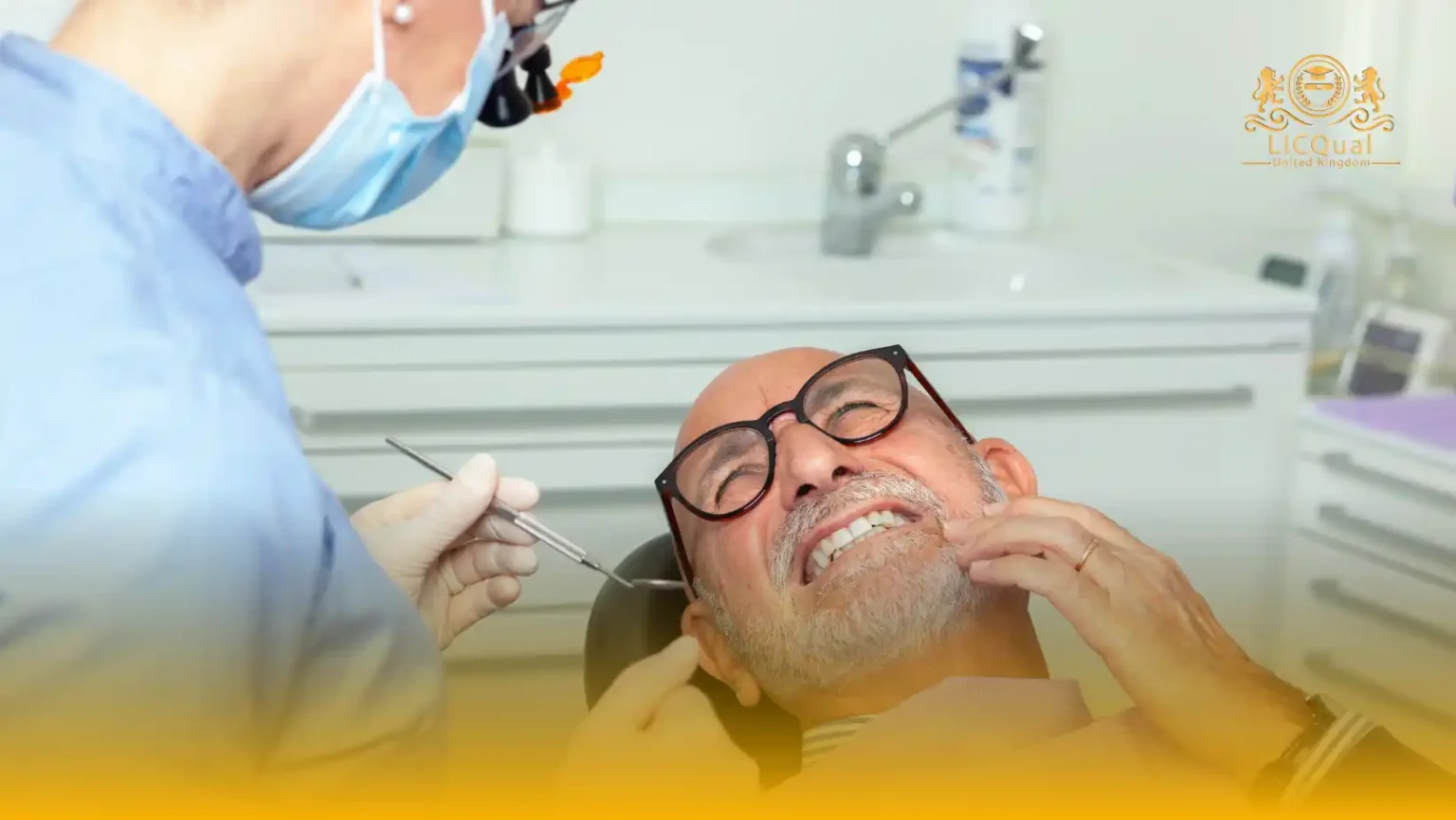
Oral Medicine
Many health conditions first show signs inside the mouth, making oral medicine an important link between dentistry and general healthcare. The LICQual Level 3 Diploma in Oral Medicine is designed to provide learners with an advanced understanding of the diagnosis, assessment, and management of diseases and disorders affecting the oral and maxillofacial region. This qualification explores the vital role oral medicine plays in identifying conditions that can impact both oral and overall health.
The curriculum examines a wide range of oral health conditions, including oral mucosal diseases, salivary gland disorders, oral infections, facial pain syndromes, autoimmune conditions, and oral manifestations of systemic diseases. Particular attention is given to clinical assessment methods, diagnostic procedures, patient evaluation, and evidence-based approaches used in the management of complex oral health concerns.
Supported by contemporary research and modern healthcare practices, this diploma offers valuable insight into one of the most significant areas of dental science. Learners develop specialist knowledge of oral disease recognition, diagnostic decision-making, and patient-centred care, helping to support early intervention, effective management, and improved oral health outcomes.
Course Overview
Qualification Title
LICQual Level 3 Diploma in Oral Medicine
Total Units
6
Total Credits
60
GLH
240
Qualification #
LICQ2200662
Qualification Specification
To enroll in the LICQual Level 3 Diploma in Oral Medicine, applicants must meet the following criteria:
|
Qualification# |
Unit Title |
Credits |
GLH |
|---|---|---|---|
|
LICQ2200662-1 |
Principles and Foundations of Oral Medicine |
10 |
40 |
|
LICQ2200662-2 |
Oral Pathology and Common Oral Diseases |
10 |
40 |
|
LICQ2200662-3 |
Diagnostic Methods in Oral Medicine |
10 |
40 |
|
LICQ2200662-4 |
Systemic Conditions and Oral Manifestations |
10 |
40 |
|
LICQ2200662-5 |
Therapeutics and Management in Oral Medicine |
10 |
40 |
|
LICQ2200662-6 |
Clinical Application and Case-Based Learning |
10 |
40 |
By the end of the LICQual Level 3 Diploma in Oral Medicine, learners will be able to:
Unit 1: Principles and Foundations of Oral Medicine
- Understand the scope, principles, and role of oral medicine in clinical and dental practice.
- Explain the relationship between oral medicine and systemic health.
- Recognise the importance of early diagnosis and patient-centred care.
- Apply ethical and professional standards in oral medicine practice.
- Demonstrate awareness of multidisciplinary collaboration in managing oral conditions.
Unit 2: Oral Pathology and Common Oral Diseases
- Identify common oral mucosal diseases, lesions, and infections.
- Differentiate between benign, pre-malignant, and malignant oral pathologies.
- Describe the progression, causes, and risk factors of oral diseases.
- Recognise signs and symptoms of common oral health disorders.
- Apply knowledge of oral pathology to support accurate diagnosis and treatment planning.
Unit 3: Diagnostic Methods in Oral Medicine
- Conduct effective patient history-taking and clinical examinations.
- Apply diagnostic tools such as biopsy, laboratory tests, and imaging in oral medicine.
- Interpret clinical findings to support accurate diagnosis.
- Evaluate the role of radiographic and histopathological investigations in oral medicine.
- Develop diagnostic reasoning skills for oral and systemic conditions.
Unit 4: Systemic Conditions and Oral Manifestations
- Explain how systemic diseases impact oral health and patient outcomes.
- Identify oral manifestations of conditions such as diabetes, cardiovascular disease, and autoimmune disorders.
- Recognise the role of oral health in detecting systemic diseases.
- Apply knowledge of systemic and oral interactions in clinical assessments.
- Communicate findings effectively within inter-professional healthcare teams.
Unit 5: Therapeutics and Management in Oral Medicine
- Understand pharmacological treatment options for oral medicine conditions.
- Apply non-pharmacological management strategies, including patient counselling and preventive care.
- Demonstrate knowledge of pain management, infection control, and therapeutic interventions.
- Develop safe and effective treatment plans for patients with oral conditions.
- Evaluate the effectiveness of different management approaches in oral medicine.
Unit 6: Clinical Application and Case-Based Learning
- Apply theoretical knowledge to clinical and case-based scenarios.
- Analyse patient cases to develop accurate diagnoses and treatment plans.
- Demonstrate critical thinking and clinical reasoning skills.
- Collaborate with other dental and healthcare professionals in managing oral conditions.
- Reflect on clinical practice to improve professional competency and patient care.
This qualification is ideal for:
- Dental professionals looking to expand their expertise in oral medicine, oral disease diagnosis, and patient assessment.
- Individuals interested in understanding the clinical management of oral mucosal diseases, oral infections, and salivary gland disorders.
- Learners seeking in-depth knowledge of oral pathology, facial pain conditions, and oral manifestations of systemic diseases.
- Professionals wishing to strengthen their understanding of evidence-based approaches to oral healthcare and disease management.
- Individuals interested in developing expertise in oral health assessment, diagnostic procedures, and clinical decision-making.
- Learners aiming to explore the connection between oral health, general health, and multidisciplinary patient care.
- Those seeking knowledge of chronic oral conditions, autoimmune disorders, and complex oral health presentations.
- Professionals interested in improving their ability to recognise, evaluate, and manage a wide range of oral health conditions.
- Individuals looking to enhance their understanding of patient-centred oral healthcare and preventive oral medicine strategies.
- Learners seeking a recognised qualification in oral medicine with a focus on diagnosis, disease prevention, oral health management, and contemporary dental practice.
Centres wishing to deliver the LICQual Level 3 Diploma in Oral Medicine must meet the following requirements to ensure high-quality training and learner success:
- Accredited Facility
- Operate within a registered and accredited dental or healthcare training centre.
- Comply with national and international healthcare and education standards.
- Qualified and Competent Staff
- Employ experienced dental professionals with expertise in oral medicine.
- Ensure trainers are capable of delivering both theoretical and clinical learning.
- Clinical and Learning Resources
- Provide access to clinical environments suitable for oral medicine training.
- Offer relevant diagnostic tools, case studies, and oral health resources.
- Maintain up-to-date learning materials, including textbooks and digital resources.
- Safe and Supportive Learning Environment
- Implement strict health and safety policies and infection control protocols.
- Ensure a professional and ethical training environment for learners.
- Assessment and Quality Assurance
- Conduct assessments in line with LICQual standards.
- Maintain robust internal quality assurance systems to monitor learner progress.
- Supervised Practical Training
- Provide structured case-based and clinical learning opportunities.
- Ensure learners gain hands-on experience under professional supervision.
- Administrative and Learner Support
- Manage enrolment, records, and certification efficiently.
- Offer guidance and support throughout the learner’s training journey.
Assessment and Verification
All units within this qualification are subject to internal assessment by the approved centre and external verification by LICQual. The qualification follows a criterion-referenced assessment approach, ensuring that learners meet all specified learning outcomes.
To achieve a ‘Pass’ in any unit, learners must provide valid, sufficient, and authentic evidence demonstrating their attainment of all learning outcomes and compliance with the prescribed assessment criteria. The Assessor is responsible for evaluating the evidence and determining whether the learner has successfully met the required standards.
Assessors must maintain a clear and comprehensive audit trail, documenting the basis for their assessment decisions to ensure transparency, consistency, and compliance with quality assurance requirements.