
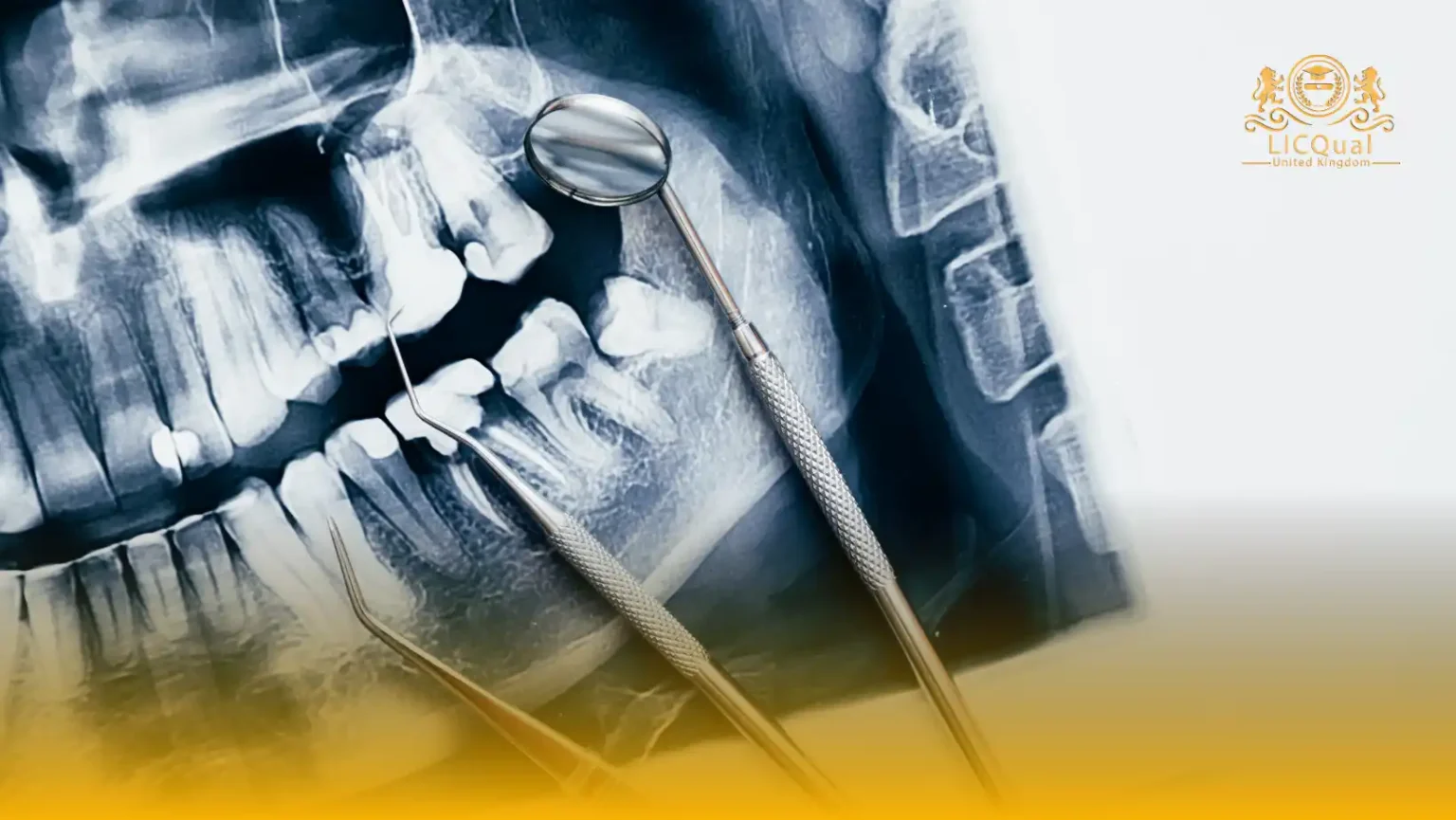
Dental Radiology
Accurate diagnosis is one of the most important parts of modern dental care, and dental radiology plays a key role in helping dental professionals see what cannot be identified during a routine oral examination. The LICQual Level 3 Diploma in Dental Radiology provides learners with a detailed understanding of dental imaging techniques and how radiographic technology is used to support effective diagnosis, treatment planning, and patient care.
A major focus of the programme is understanding how different types of dental images are captured, processed, and interpreted. Learners study topics such as dental X-rays, digital imaging systems, panoramic radiography, CBCT imaging, radiation protection, image quality, oral anatomy, and the identification of common dental conditions through radiographic examination. The course also highlights the importance of safe and responsible use of radiology in dental practice.
As dental technology continues to advance, diagnostic imaging remains an essential part of high-quality oral healthcare. By combining practical knowledge with current industry practices, this diploma helps learners develop a strong understanding of dental radiology and its role in supporting accurate diagnosis, informed clinical decisions, and improved patient outcomes.
Course Overview
Qualification Title
LICQual Level 3 Diploma in Dental Radiology
Total Units
6
Total Credits
60
GLH
240
Qualification #
LICQ2200661
Qualification Specification
To enroll in the LICQual Level 3 Diploma in Dental Radiology, applicants must meet the following criteria:
|
Qualification# |
Unit Title |
Credits |
GLH |
|---|---|---|---|
|
LICQ2200661-1 |
Principles of Dental Radiology |
10 |
40 |
|
LICQ2200661-2 |
Dental Anatomy and Radiographic Interpretation |
10 |
40 |
|
LICQ2200661-3 |
Radiation Protection and Safety |
10 |
40 |
|
LICQ2200661-4 |
Intraoral and Extraoral Imaging Techniques |
10 |
40 |
|
LICQ2200661-5 |
Radiographic Equipment and Quality Assurance |
10 |
40 |
|
LICQ2200661-6 |
Clinical Application and Case Studies |
10 |
40 |
By the end of this course, learners will be able to:
Unit 1: Principles of Dental Radiology
- Understand the fundamental principles of dental radiography.
- Explain the physics of X-ray production and imaging.
- Recognise the different types of dental radiographic techniques.
- Apply knowledge of radiation interaction with tissues in a dental context.
- Demonstrate awareness of professional and ethical responsibilities in radiology practice.
Unit 2: Dental Anatomy and Radiographic Interpretation
- Identify normal dental and craniofacial anatomy on radiographs.
- Differentiate between normal anatomical variations and pathological findings.
- Interpret common dental radiographs accurately to support clinical decision-making.
- Recognise radiographic signs of dental diseases and abnormalities.
- Apply anatomical knowledge to enhance the quality of radiographic imaging.
Unit 3: Radiation Protection and Safety
- Explain the principles of radiation protection for patients and practitioners.
- Understand and apply legal and regulatory requirements (e.g., IRMER standards).
- Identify potential hazards and minimise radiation exposure during dental imaging.
- Demonstrate correct use of protective equipment and safety procedures.
- Implement safe working practices in a dental radiology environment.
Unit 4: Intraoral and Extraoral Imaging Techniques
- Perform intraoral imaging techniques: periapical, bitewing, and occlusal radiographs.
- Conduct extraoral imaging procedures: panoramic, cephalometric, and CBCT scans.
- Select appropriate imaging techniques based on patient needs and clinical indications.
- Apply correct positioning, angulation, and exposure settings for high-quality images.
- Evaluate images for diagnostic clarity and accuracy.
Unit 5: Radiographic Equipment and Quality Assurance
- Operate dental radiography equipment safely and effectively.
- Perform routine checks and maintenance on imaging equipment.
- Implement quality assurance procedures to ensure consistent image quality.
- Identify common equipment faults and apply troubleshooting techniques.
- Maintain accurate records for equipment performance and patient safety compliance.
Unit 6: Clinical Application and Case Studies
- Integrate radiographic knowledge into patient diagnosis and treatment planning.
- Analyse case studies to apply theory to practical scenarios.
- Make informed clinical decisions based on radiographic evidence.
- Communicate findings effectively to colleagues and patients.
- Reflect on clinical practice to enhance professional competency and patient care.
This qualification is ideal for:
- Dental professionals looking to enhance their understanding of dental radiology and diagnostic imaging techniques.
- Individuals interested in learning how dental X-rays and advanced imaging systems support accurate diagnosis and treatment planning.
- Learners seeking in-depth knowledge of digital dental radiography, panoramic imaging, and CBCT technology.
- Professionals wishing to strengthen their expertise in radiographic interpretation and the identification of oral health conditions.
- Individuals interested in understanding radiation safety, radiological protection, and best practices in dental imaging.
- Learners aiming to explore the role of diagnostic imaging in preventive, restorative, and surgical dental procedures.
- Those seeking knowledge of oral anatomy and pathology as viewed through radiographic examination.
- Professionals interested in keeping up with advancements in dental imaging technology and evidence-based diagnostic methods.
- Individuals looking to improve their understanding of clinical decision-making through accurate radiographic assessment.
- Learners seeking a recognised qualification in dental radiology with a focus on diagnostic excellence, patient safety, and modern dental healthcare.
To deliver the LICQual Level 3 Diploma in Dental Radiology, training centres must meet the following standards to ensure high-quality education and learner success:
- Accredited Dental Facility: The centre must operate within a fully registered and accredited dental clinic or educational facility compliant with UK healthcare and dental regulations.
- Qualified and Competent Staff: Trainers must be experienced dental professionals with expertise in radiology, including practising dental radiographers or implantologists, capable of delivering both theoretical and practical instruction.
- Clinical Equipment and Resources:
- Access to fully equipped dental surgery rooms and radiography units.
- Availability of intraoral and extraoral imaging equipment, including CBCT and panoramic machines.
- Sterilisation and safety equipment to maintain a compliant clinical environment.
- Safe Learning Environment: Centres must implement health and safety policies, infection control protocols, and emergency procedures to protect learners and patients.
- Assessment and Quality Assurance:
- Ability to conduct both theoretical and practical assessments in accordance with LICQual standards.
- Structured internal quality assurance processes to monitor learner progress.
- Learning Materials and Resources: Access to up-to-date textbooks, digital resources, and case studies to support learning.
- Supervised Practical Training: Capability to provide learners with hands-on experience under professional supervision to develop practical radiography skills.
- Administrative Support: Efficient enrolment, scheduling, and certification processes aligned with LICQual requirements.
Assessment and Verification
All units within this qualification are subject to internal assessment by the approved centre and external verification by LICQual. The qualification follows a criterion-referenced assessment approach, ensuring that learners meet all specified learning outcomes.
To achieve a ‘Pass’ in any unit, learners must provide valid, sufficient, and authentic evidence demonstrating their attainment of all learning outcomes and compliance with the prescribed assessment criteria. The Assessor is responsible for evaluating the evidence and determining whether the learner has successfully met the required standards.
Assessors must maintain a clear and comprehensive audit trail, documenting the basis for their assessment decisions to ensure transparency, consistency, and compliance with quality assurance requirements.