
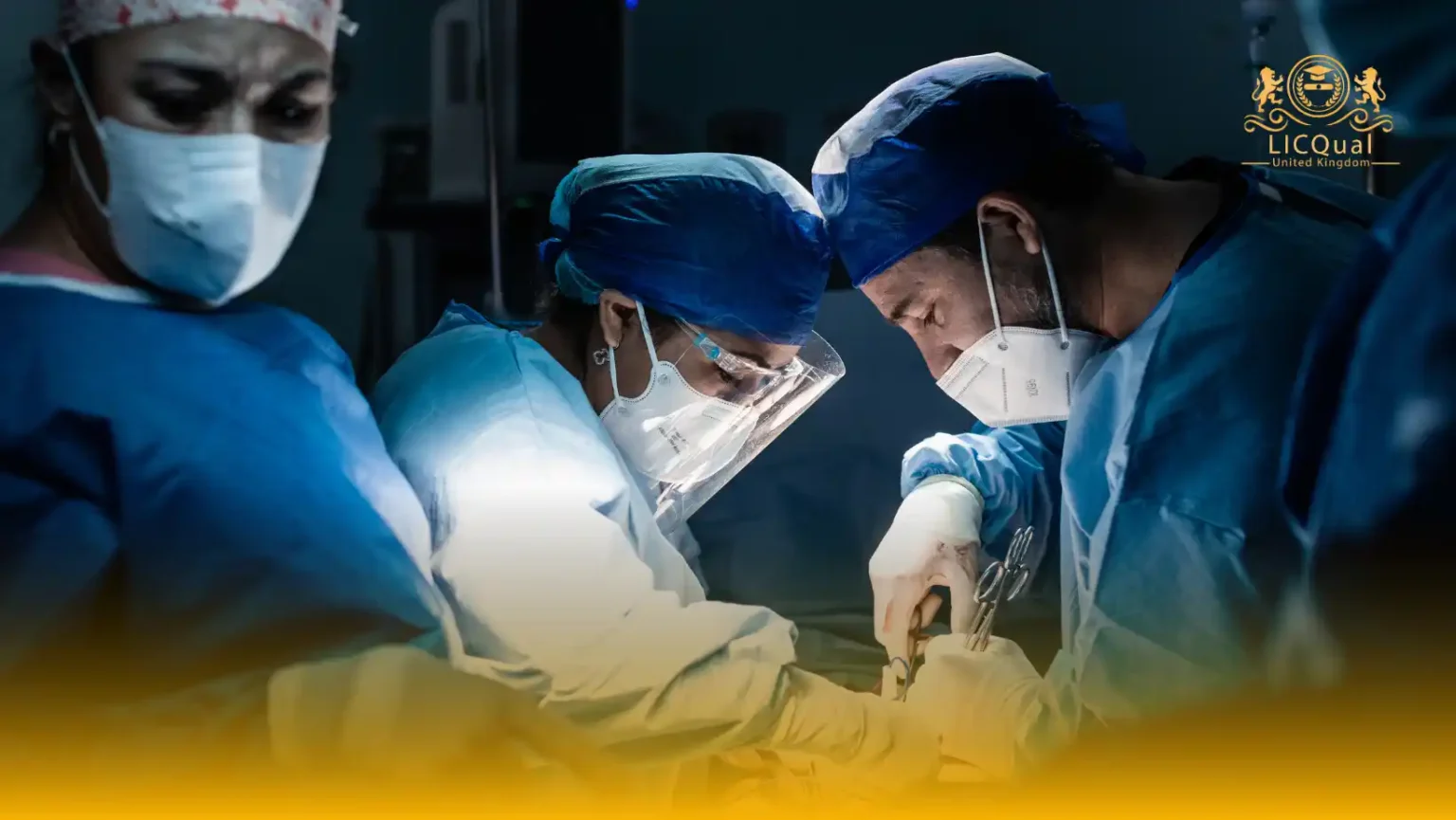
Oral and Maxillofacial Surgery
Oral and maxillofacial surgery is a specialised field that combines dentistry, medicine, and surgical science to diagnose and manage conditions affecting the mouth, jaws, face, and related structures. The LICQual Level 3 Diploma in Oral and Maxillofacial Surgery provides learners with a comprehensive understanding of this advanced discipline, exploring the principles, procedures, and clinical considerations involved in surgical oral healthcare.
Central to this qualification is the study of oral surgical procedures, facial anatomy, dentoalveolar surgery, impacted teeth management, maxillofacial trauma, oral pathology, surgical treatment planning, and patient care principles. Learners examine how surgical interventions are used to address a variety of oral and facial conditions while gaining insight into diagnostic processes, risk assessment, and post-operative management.
Reflecting current developments in dental and surgical practice, this diploma offers valuable knowledge of contemporary oral and maxillofacial surgery concepts and techniques. Learners develop a strong understanding of the role of surgical dentistry in restoring oral function, supporting facial health, and improving patient outcomes through evidence-based clinical approaches.
Course Overview
Qualification Title
LICQual Level 3 Diploma in Oral and Maxillofacial Surgery
Total Units
6
Total Credits
60
GLH
240
Qualification #
LICQ2200654
Qualification Specification
To enroll in the LICQual Level 3 Diploma in Periodontology, applicants must meet the following criteria:
|
Qualification# |
Unit Title |
Credits |
GLH |
|---|---|---|---|
|
LICQ2200654-1 |
Principles and Foundations of Oral and Maxillofacial Surgery |
10 |
40 |
|
LICQ2200654-2 |
Diagnostic Techniques and Treatment Planning in Oral and Maxillofacial Surgery |
10 |
40 |
|
LICQ2200654-3 |
Dentoalveolar and Pre-Prosthetic Surgical Procedures |
10 |
40 |
|
LICQ2200654-4 |
Management of Maxillofacial Trauma and Reconstructive Surgery |
10 |
40 |
|
LICQ2200654-5 |
Oral Pathology and Management of Oral Lesions |
10 |
40 |
|
LICQ2200654-6 |
Post-Operative Care, Complication Management, and Continuing Professional Development |
10 |
40 |
By the end of this course, learners will be able to:
Principles and Foundations of Oral and Maxillofacial Surgery
- Understand the fundamental principles, history, and scope of oral and maxillofacial surgery
- Explain the anatomy, physiology, and pathology relevant to surgical interventions in the oral and maxillofacial region
- Recognize ethical, legal, and professional responsibilities of oral and maxillofacial surgeons
- Demonstrate knowledge of infection control, patient safety, and surgical asepsis
- Evaluate indications and contraindications for common oral surgical procedures
Diagnostic Techniques and Treatment Planning in Oral and Maxillofacial Surgery
- Apply clinical examination methods to identify oral and maxillofacial conditions
- Interpret radiographic and other diagnostic imaging techniques relevant to oral surgery
- Formulate accurate diagnoses based on clinical and diagnostic data
- Develop comprehensive and evidence-based treatment plans
- Evaluate patient risk factors and create strategies for minimizing surgical complications
Dentoalveolar and Pre-Prosthetic Surgical Procedures
- Perform routine dentoalveolar surgical procedures safely and effectively
- Prepare the oral cavity for prosthetic rehabilitation using appropriate surgical techniques
- Manage soft and hard tissue modifications to optimize oral function and aesthetics
- Assess surgical outcomes and make necessary adjustments to ensure successful patient recovery
- Demonstrate competence in using surgical instruments and materials for these procedures
Management of Maxillofacial Trauma and Reconstructive Surgery
- Identify and classify various types of maxillofacial injuries
- Plan and perform emergency and elective management of facial trauma
- Apply reconstructive surgical techniques to restore function and aesthetics
- Integrate multi-disciplinary approaches for complex maxillofacial trauma cases
- Evaluate patient outcomes and implement long-term rehabilitation strategies
Oral Pathology and Management of Oral Lesions
- Identify and classify common oral lesions and pathologies
- Apply appropriate diagnostic and investigative techniques for oral diseases
- Formulate evidence-based management plans for benign and malignant oral conditions
- Recognize systemic conditions with oral manifestations and their clinical implications
- Monitor and follow up patients to ensure effective treatment outcomes
Post-Operative Care, Complication Management, and Continuing Professional Development
- Implement effective post-operative care protocols for oral and maxillofacial surgery patients
- Identify, prevent, and manage common post-surgical complications
- Communicate effectively with patients regarding recovery expectations and care instructions
- Demonstrate reflective practice to improve clinical skills and patient outcomes
- Engage in continuous professional development (CPD) to maintain competence and stay updated with advances in oral and maxillofacial surgery
This qualification is ideal for:
- Dental professionals seeking to expand their understanding of oral and maxillofacial surgery principles and procedures.
- Individuals interested in developing knowledge of surgical dentistry and facial anatomy.
- Learners wishing to explore dentoalveolar surgery, impacted teeth management, and oral surgical techniques.
- Professionals looking to strengthen their understanding of oral pathology, surgical diagnosis, and treatment planning.
- Individuals seeking insight into maxillofacial trauma management and reconstructive treatment concepts.
- Learners interested in the clinical assessment and management of oral and facial conditions.
- Those aiming to develop knowledge of patient care, surgical risk assessment, and post-operative management in oral surgery settings.
- Professionals wishing to understand contemporary developments in oral and maxillofacial surgical practice.
- Individuals interested in the relationship between oral health, facial structures, and surgical interventions.
- Learners seeking a recognised qualification in a specialised and highly respected area of dentistry and healthcare.
To deliver this diploma successfully, training centers should meet the following standards:
- Accredited Training Facility: The center must be licensed and accredited to offer professional dental or surgical courses in compliance with local regulations.
- Qualified Instructors: Trainers should have recognized qualifications in oral and maxillofacial surgery, dentistry, or related medical fields, with relevant clinical experience.
- Clinical Training Resources: Access to dental surgery labs, clinical simulation equipment, and operating rooms for hands-on practice and practical assessments.
- Learning Materials and Resources: Provision of updated textbooks, surgical instruments, case studies, e-learning platforms, and other educational resources to support theoretical and practical learning.
- Health and Safety Compliance: Adherence to infection control protocols, patient safety guidelines, and clinical health regulations for practical training sessions.
- Assessment and Examination Facilities: Availability of secure facilities to conduct practical and written assessments, as well as the ability to track learner progress effectively.
- Student Support Services: Provision of mentoring, guidance, and support to help learners complete the course successfully, including access to career guidance and CPD opportunities.
- Continuing Professional Development (CPD) Integration: The center should facilitate ongoing professional development and encourage learners to stay updated with advances in oral and maxillofacial surgery.
Meeting these requirements ensures the center can provide high-quality, internationally recognized training in oral and maxillofacial surgery.
Assessment and Verification
All units within this qualification are subject to internal assessment by the approved centre and external verification by LICQual. The qualification follows a criterion-referenced assessment approach, ensuring that learners meet all specified learning outcomes.
To achieve a ‘Pass’ in any unit, learners must provide valid, sufficient, and authentic evidence demonstrating their attainment of all learning outcomes and compliance with the prescribed assessment criteria. The Assessor is responsible for evaluating the evidence and determining whether the learner has successfully met the required standards.
Assessors must maintain a clear and comprehensive audit trail, documenting the basis for their assessment decisions to ensure transparency, consistency, and compliance with quality assurance requirements.