
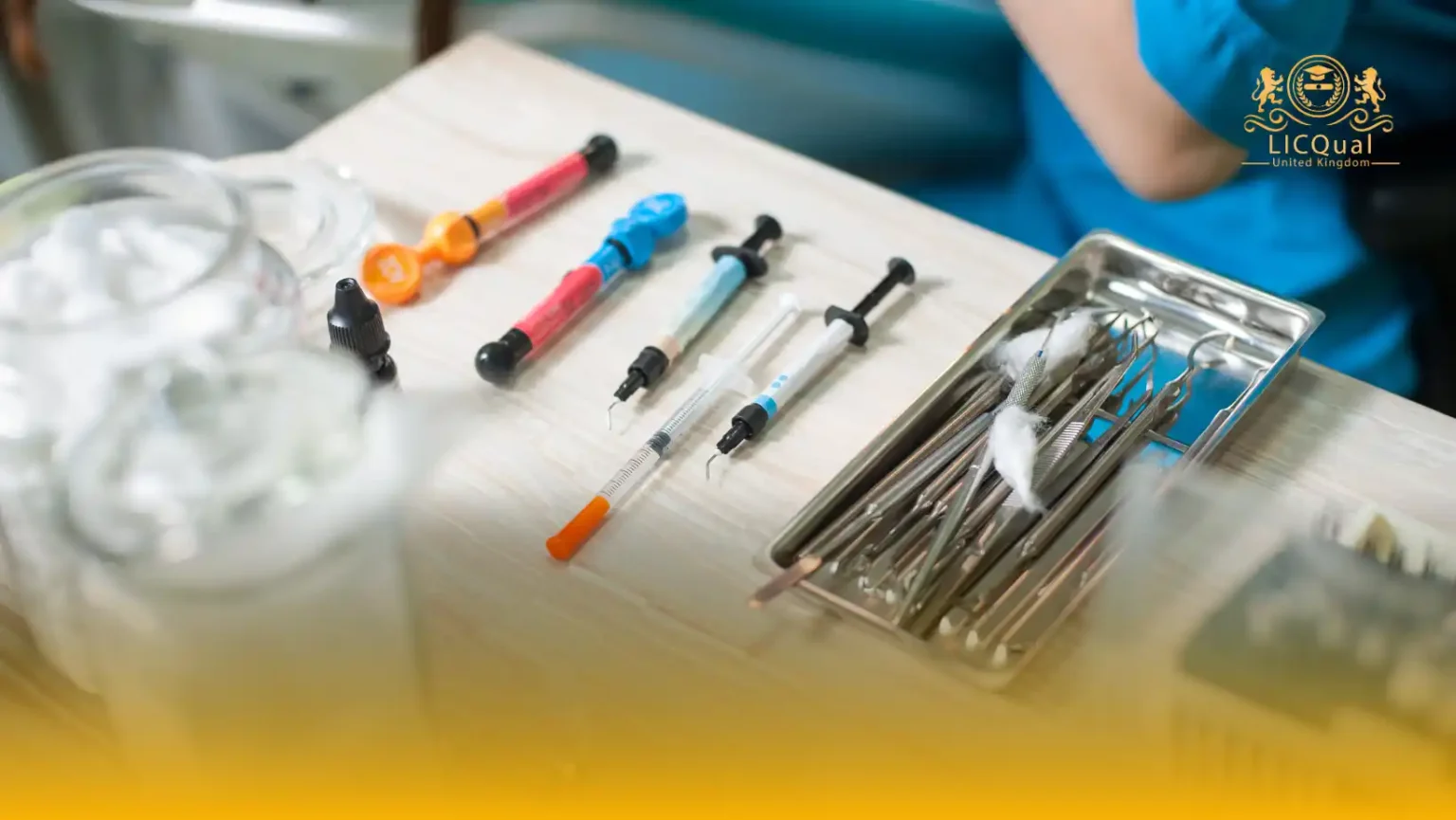
Dental Materials
Every successful dental procedure relies on the quality and performance of the materials used. The LICQual Level 3 Certificate in Dental Materials is designed to provide learners with a detailed understanding of the substances, technologies, and innovations that support modern dental practice. This qualification explores the science behind dental materials and their role in delivering safe, functional, and aesthetically pleasing treatment outcomes.
Throughout the course, learners investigate a wide range of materials used in restorative, preventive, cosmetic, and prosthetic dentistry. Key topics include dental composites, ceramics, impression materials, bonding agents, dental metals, polymers, and emerging biomaterials. The programme also examines material testing, physical and chemical properties, clinical applications, and factors that influence durability and patient satisfaction.
By combining material science with practical dental applications, this qualification offers valuable insight into how modern dentistry achieves precision, reliability, and long-term treatment success. Learners develop a strong foundation in dental material selection, performance evaluation, and the technological advancements shaping contemporary oral healthcare.
Course Overview
Qualification Title
LICQual Level 3 Certificate in Dental Materials
Total Units
6
Total Credits
24
GLH
120
Qualification #
LICQ2200647
Qualification Specification
To enroll in the LICQual Level 3 Certificate in Dental Materials, applicants must meet the following criteria:
|
Qualification# |
Unit Title |
Credits |
GLH |
|---|---|---|---|
|
LICQ2200647-1 |
Introduction to Dental Materials |
4 |
20 |
|
LICQ2200647-2 |
Physical and Chemical Properties of Dental Materials |
4 |
20 |
|
LICQ2200647-3 |
Handling and Manipulation of Dental Materials |
4 |
20 |
|
LICQ2200647-4 |
Composite and Resin-Based Materials |
4 |
20 |
|
LICQ2200647-5 |
Metals, Alloys, and Ceramic Materials |
4 |
20 |
|
LICQ2200647-6 |
Safety, Quality Control, and Regulations |
4 |
20 |
By the end of this course, learners will be able to:
Unit 1: Introduction to Dental Materials
- Understand the classifications and general properties of dental materials.
- Recognise the roles and applications of various dental materials in clinical practice.
- Explain the importance of material selection in dental treatments.
Unit 2: Physical and Chemical Properties of Dental Materials
- Describe the key physical and chemical characteristics of dental materials.
- Understand how these properties affect the performance and durability of materials.
- Apply knowledge of material behaviour to clinical decision-making.
Unit 3: Handling and Manipulation of Dental Materials
- Demonstrate proper techniques for preparing and manipulating dental materials.
- Understand factors affecting material handling and clinical outcomes.
- Follow best practices to ensure safety and effectiveness during material use.
Unit 4: Composite and Resin-Based Materials
- Explain the composition and properties of composite and resin-based dental materials.
- Understand clinical indications and application methods for these materials.
- Assess the advantages and limitations of composites in restorative dentistry.
Unit 5: Metals, Alloys, and Ceramic Materials
- Identify common metals, alloys, and ceramics used in dental procedures.
- Understand their physical properties and clinical uses.
- Evaluate the suitability of these materials for different dental restorations.
Unit 6: Safety, Quality Control, and Regulations
- Understand safety protocols related to the handling and disposal of dental materials.
- Describe quality control measures to ensure material standards.
- Recognise relevant regulatory requirements and professional guidelines.
This qualification is ideal for:
- Dental professionals involved in restorative, prosthetic, or general dental procedures where material selection directly affects treatment quality and durability.
- Individuals working in dental environments who want a deeper understanding of how different materials behave under clinical conditions.
- Dental assistants and support staff who handle, prepare, or manage dental materials during everyday clinical workflows.
- Professionals engaged in dental laboratory or clinical settings where material performance, safety, and accuracy are essential.
- Individuals interested in the science behind dental materials and how physical and chemical properties influence treatment outcomes.
- Those looking to strengthen awareness of modern dental materials such as composites, ceramics, alloys, and impression systems.
- Individuals aiming to improve practical knowledge of handling techniques, storage standards, and material efficiency in dentistry.
- Learners planning progression into advanced dental materials science, restorative dentistry, or clinical dental specialisation pathways.
To deliver the LICQual Level 3 Certificate in Dental Materials effectively, centres must meet the following requirements to ensure high-quality training and learner success:
- Qualified and Experienced Tutors: Centres must employ dental professionals or technicians with recognised qualifications and specialised expertise in dental materials to provide expert instruction and supervision.
- Access to Suitable Facilities: Centres should have clinical and/or laboratory environments equipped with the necessary dental materials, tools, and equipment for practical training.
- Comprehensive Learning Resources: Centres must provide up-to-date textbooks, digital materials, and practical aids relevant to dental material sciences.
- Health and Safety Compliance: Centres are required to maintain strict health and safety protocols, including safe handling and disposal of dental materials.
- Robust Assessment and Quality Assurance: Centres should implement assessment procedures aligned with LICQual standards and maintain effective internal quality assurance systems.
- Efficient Administrative Support: Centres must have systems for learner registration, progress tracking, and certification management.
- Opportunities for Supervised Practical Experience: Centres must ensure learners have access to supervised hands-on experience with dental materials to develop practical skills.
Meeting these centre requirements guarantees learners receive professional, safe, and comprehensive training in dental materials.
Assessment and Verification
All units within this qualification are subject to internal assessment by the approved centre and external verification by LICQual. The qualification follows a criterion-referenced assessment approach, ensuring that learners meet all specified learning outcomes.
To achieve a ‘Pass’ in any unit, learners must provide valid, sufficient, and authentic evidence demonstrating their attainment of all learning outcomes and compliance with the prescribed assessment criteria. The Assessor is responsible for evaluating the evidence and determining whether the learner has successfully met the required standards.
Assessors must maintain a clear and comprehensive audit trail, documenting the basis for their assessment decisions to ensure transparency, consistency, and compliance with quality assurance requirements.