
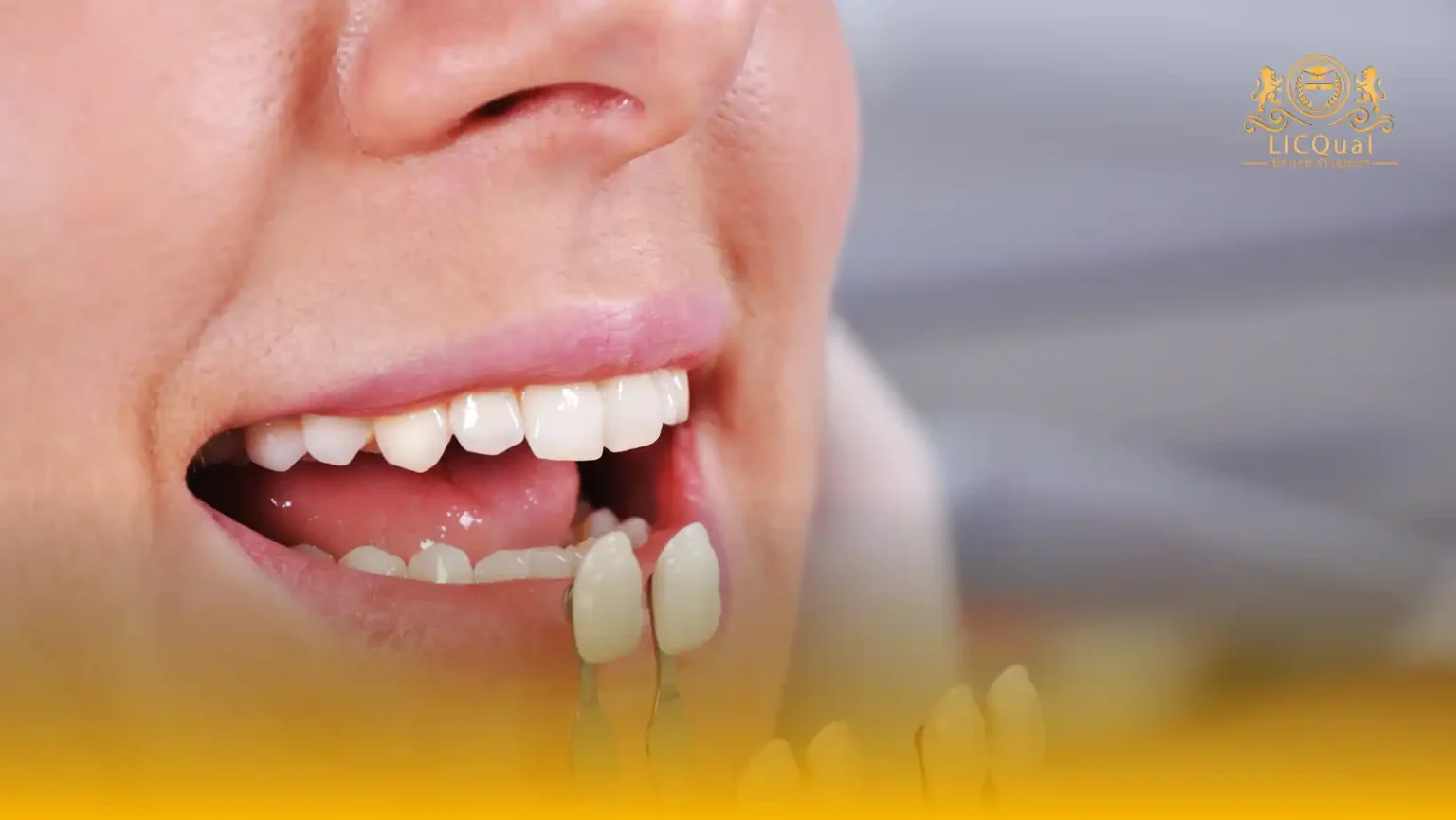
Aesthetic Dentistry
A confident smile can have a significant impact on personal appearance and self-esteem, making aesthetic dentistry one of the fastest-growing areas of modern dental practice. The LICQual Level 3 Certificate in Aesthetic Dentistry provides learners with in-depth knowledge of the techniques and treatment concepts used to improve dental aesthetics while preserving oral function and health.
This qualification explores the foundations of smile enhancement, focusing on topics such as cosmetic dental treatments, digital smile design, tooth whitening procedures, aesthetic restorations, dental veneers, and colour matching principles. Learners gain an understanding of how modern materials, advanced technologies, and treatment planning strategies are used to achieve balanced, natural-looking results.
The course also examines the relationship between facial harmony, dental proportions, and aesthetic outcomes. Through the study of contemporary cosmetic dentistry practices, learners develop a comprehensive understanding of smile makeover procedures, aesthetic treatment options, and the key principles that contribute to attractive, healthy, and functional smiles.
Course Overview
Qualification Title
LICQual Level 3 Certificate in Aesthetic Dentistry
Total Units
6
Total Credits
24
GLH
120
Qualification #
LICQ2200644
Qualification Specification
To enroll in the LICQual Level 3 Certificate in Aesthetic Dentistry, applicants must meet the following criteria:
|
Qualification# |
Unit Title |
Credits |
GLH |
|---|---|---|---|
|
LICQ2200644-1 |
Fundamentals of Aesthetic Dentistry |
4 |
20 |
|
LICQ2200644-2 |
Dental Anatomy and Smile Design |
4 |
20 |
|
LICQ2200644-3 |
Aesthetic Dental Materials and Techniques |
4 |
20 |
|
LICQ2200644-4 |
Tooth Whitening and Bleaching Procedures |
4 |
20 |
|
LICQ2200644-5 |
Composite Bonding and Veneers |
4 |
20 |
|
LICQ2200644-6 |
Patient Communication and Care in Aesthetic Dentistry |
4 |
20 |
By the end of this course, learners will be able to:
Unit 1: Fundamentals of Aesthetic Dentistry
- Understand the principles and scope of aesthetic dentistry.
- Recognise the importance of aesthetic treatments in modern dental care.
- Explain the role of dental professionals in delivering aesthetic dental services.
Unit 2: Dental Anatomy and Smile Design
- Identify key dental anatomical structures related to aesthetics.
- Understand the principles of smile design and facial aesthetics.
- Apply anatomical knowledge to plan and evaluate aesthetic treatments.
Unit 3: Aesthetic Dental Materials and Techniques
- Describe the types of materials used in aesthetic dentistry and their properties.
- Understand clinical techniques for applying aesthetic materials effectively.
- Select appropriate materials and methods based on individual patient needs.
Unit 4: Tooth Whitening and Bleaching Procedures
- Explain the principles and safety considerations of tooth whitening.
- Demonstrate knowledge of different whitening and bleaching techniques.
- Understand patient assessment and management for whitening treatments.
Unit 5: Composite Bonding and Veneers
- Demonstrate knowledge of composite bonding and veneer procedures.
- Apply clinical techniques for effective bonding and veneer placement.
- Recognise indications and contraindications for composite and veneer treatments.
Unit 6: Patient Communication and Care in Aesthetic Dentistry
- Develop effective communication skills tailored to aesthetic dentistry patients.
- Provide comprehensive patient education and obtain informed consent.
- Implement post-treatment care and manage patient expectations effectively.
This qualification is ideal for:
- Dental professionals seeking to develop specialised knowledge in aesthetic dentistry and cosmetic dental procedures.
- Individuals aiming to understand smile design principles, tooth whitening techniques, and cosmetic dental enhancements.
- Dental practitioners working in clinical, private, or cosmetic dental practice environments.
- Professionals involved in restorative and cosmetic dental treatments focused on improving smile aesthetics.
- Individuals interested in learning composite bonding, veneers, and minimally invasive aesthetic procedures.
- Those wishing to strengthen knowledge of facial aesthetics, dental proportions, and colour matching techniques.
- Individuals aiming to enhance understanding of patient assessment, treatment planning, and clinical safety in aesthetic dentistry.
- Learners planning to build a strong foundation for advanced study in cosmetic or aesthetic dental specialisations.
This qualification provides essential understanding of aesthetic dentistry and supports professional development within modern cosmetic dental practice environments.
To effectively deliver the LICQual Level 3 Certificate in Aesthetic Dentistry, centres must meet the following requirements to ensure high-quality training and successful learner outcomes:
- Qualified and Experienced Tutors: Centres must employ dental professionals with recognised qualifications and specialised expertise in aesthetic dentistry to provide expert tuition and supervision.
- Fully Equipped Clinical Facilities: Access to clinical environments with up-to-date aesthetic dental materials, instruments, and equipment is essential for practical training.
- Comprehensive Learning Resources: Centres should provide current textbooks, digital content, and practical aids relevant to aesthetic dentistry.
- Health and Safety Compliance: Centres must adhere to health and safety regulations, infection control protocols, and clinical governance standards to maintain a safe learning environment.
- Robust Assessment and Quality Assurance: Centres are required to implement assessment procedures aligned with LICQual standards and maintain internal quality assurance systems.
- Efficient Administrative Support: Centres should have systems in place for learner registration, progress tracking, and certification management.
- Access to Supervised Practical Experience: Centres must facilitate opportunities for learners to gain hands-on experience in aesthetic dental procedures under qualified supervision.
Meeting these centre requirements ensures learners receive professional, safe, and effective training in aesthetic dentistry.
Assessment and Verification
All units within this qualification are subject to internal assessment by the approved centre and external verification by LICQual. The qualification follows a criterion-referenced assessment approach, ensuring that learners meet all specified learning outcomes.
To achieve a ‘Pass’ in any unit, learners must provide valid, sufficient, and authentic evidence demonstrating their attainment of all learning outcomes and compliance with the prescribed assessment criteria. The Assessor is responsible for evaluating the evidence and determining whether the learner has successfully met the required standards.
Assessors must maintain a clear and comprehensive audit trail, documenting the basis for their assessment decisions to ensure transparency, consistency, and compliance with quality assurance requirements.