
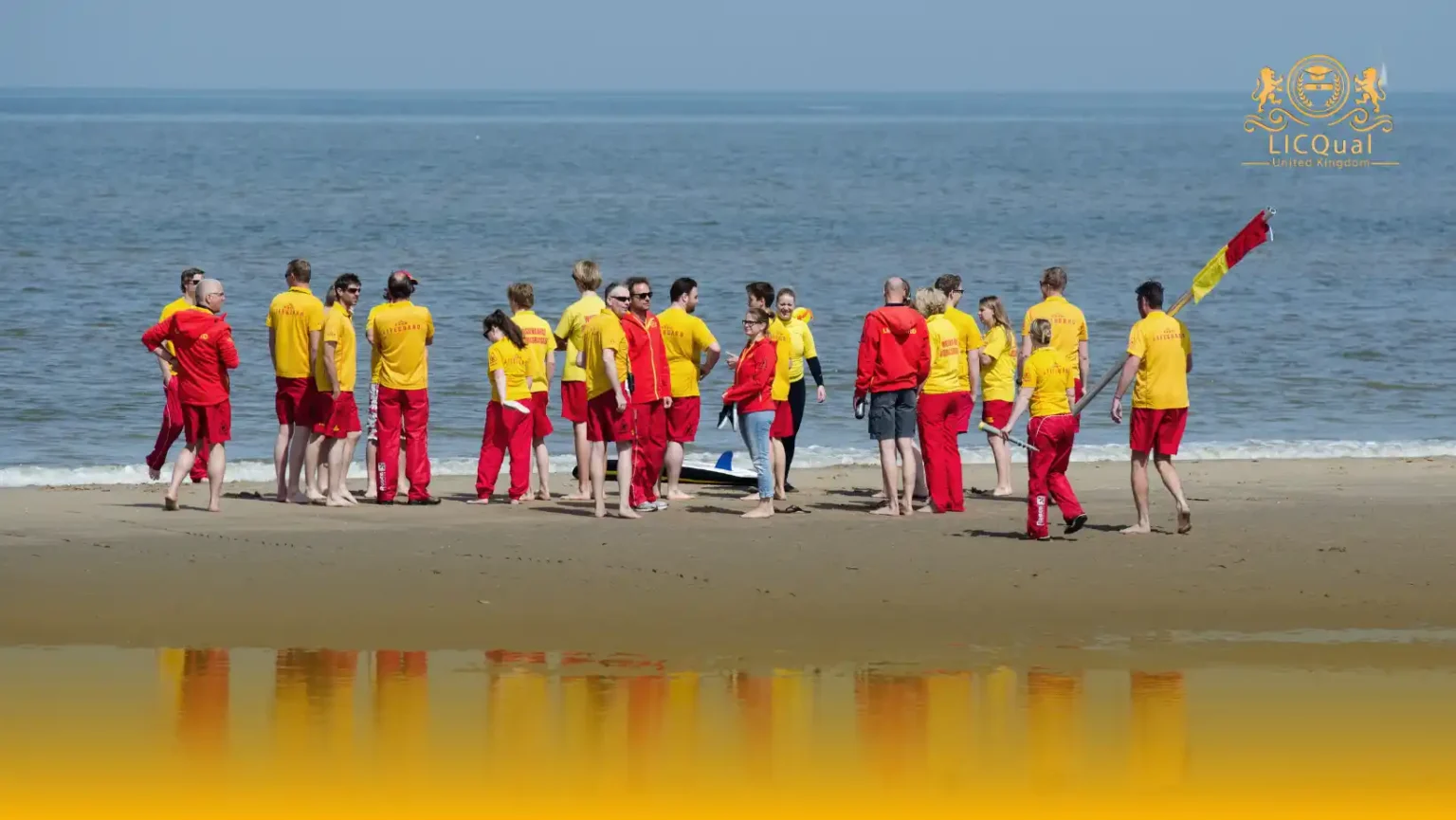
Vocational Beach Lifeguard
The LICQual Level 3 Award in National Vocational Beach Lifeguard Qualification (NVBLQ) is a specialised training programme designed to prepare learners for working safely and effectively in beach and open water environments. It focuses on building the practical knowledge required to manage the unique risks associated with coastal settings, where conditions can change rapidly due to tides, currents, and weather.
This qualification introduces learners to essential beach lifeguarding skills, including water rescue techniques, casualty recovery, emergency response procedures, and continuous beach surveillance. It also develops awareness of hazards such as rip currents and teaches how to assess risks to ensure public safety in outdoor aquatic environments.
The course further strengthens key professional abilities such as communication, teamwork, decision-making, and physical fitness, all of which are critical for effective lifeguarding performance. Learners gain the confidence and competence needed to operate in demanding coastal conditions and support the safety of beach users in real-world environments.
Course Overview
Qualification Title
LICQual Level 3 Award in National Vocational Beach Lifeguard Qualification (NVBLQ)
Total Units
6
Total Credits
6
GLH
12
Qualification #
LICQ2200594
Qualification Specification
To enroll in the LICQual Level 3 Award in National Vocational Beach Lifeguard Qualification (NVBLQ) applicants must meet the following criteria:
|
Qualification# |
Unit Title |
Credits |
GLH |
|---|---|---|---|
|
LICQ2200594-1 |
Principles of Beach Lifeguarding |
1 |
6 |
|
LICQ2200594-2 |
Beach Safety Operations & Risk Management |
1 |
6 |
|
LICQ2200594-3 |
Open Water Rescue Techniques |
1 |
6 |
|
LICQ2200594-4 |
First Aid and CPR for Coastal Environments |
1 |
6 |
|
LICQ2200594-5 |
Emergency Response & Incident Management |
1 |
6 |
|
LICQ2200594-6 |
Communication, Teamwork & Leadership in Lifeguarding |
1 |
6 |
By the end of this course, learners will be able to:
1. Principles of Beach Lifeguarding
By the end of this unit, learners will be able to:
- Explain the roles, responsibilities, and professional conduct expected of a beach lifeguard.
- Describe duty of care and legal responsibilities in coastal safety management.
- Identify various types of beach environments and their specific safety challenges.
- Recognize key coastal hazards, including rip currents, waves, tides, and weather conditions.
- Explain the importance of physical fitness, vigilance, and readiness for beach lifeguarding.
2. Beach Safety Operations & Risk Management
By the end of this unit, learners will be able to:
- Conduct hazard identification and risk assessments in coastal environments.
- Apply preventative safety measures to reduce the risk of incidents.
- Implement effective beach zoning and signage to guide and protect beach users.
- Monitor environmental changes that may affect beach safety.
- Maintain compliance with local and international coastal safety standards.
3. Open Water Rescue Techniques
By the end of this unit, learners will be able to:
- Demonstrate non-contact and contact rescues in surf, tidal, and open-water conditions.
- Operate rescue boards, tubes, and other specialist equipment effectively.
- Apply safe approaches, carries, and tows for different casualty situations.
- Adapt rescue techniques to changing water and weather conditions.
- Ensure personal safety during challenging rescue scenarios.
4. First Aid and CPR for Coastal Environments
By the end of this unit, learners will be able to:
- Provide first aid for common coastal emergencies, including drowning, cuts, stings, and heat-related illnesses.
- Demonstrate CPR techniques for adults, children, and infants.
- Manage unconscious casualties and apply safe recovery positions.
- Administer oxygen therapy and use automated external defibrillators (AEDs) where required.
- Maintain casualty care until advanced medical help arrives.
5. Emergency Response & Incident Management
By the end of this unit, learners will be able to:
- Respond effectively to major coastal incidents, including mass rescues and spinal injuries.
- Activate and follow emergency action plans for beach operations.
- Coordinate with other lifeguards, emergency services, and rescue agencies.
- Conduct safe evacuations and beach closures when necessary.
- Complete accurate incident reports and contribute to post-incident reviews.
6. Communication, Teamwork & Leadership in Lifeguarding
By the end of this unit, learners will be able to:
- Communicate effectively with team members, beach users, and emergency responders.
- Work collaboratively as part of a lifeguard team in high-pressure environments.
- Demonstrate leadership and decision-making skills during rescue operations.
- Resolve conflicts and manage challenging interactions with the public.
- Support team performance through clear instructions, feedback, and role delegation.
This course is ideal for:
- Individuals aiming to become qualified beach lifeguards
- Swimming pool lifeguards looking to progress into open water roles
- Beach and coastal safety staff working in tourism or public beach areas
- Sports and recreation professionals involved in outdoor water activities
- Fitness and leisure centre staff seeking lifeguard qualification upgrades
- Individuals responsible for supervising swimmers in coastal environments
- Beginners interested in emergency rescue and water safety careers
- Students pursuing careers in public safety, emergency response, or lifeguarding
- Hospitality and tourism staff working near beaches or seaside resorts
- Individuals seeking formal certification in beach lifeguarding and rescue techniques
Assessment and Verification
All units within this qualification are subject to internal assessment by the approved centre and external verification by LICQual. The qualification follows a criterion-referenced assessment approach, ensuring that learners meet all specified learning outcomes.
To achieve a ‘Pass’ in any unit, learners must provide valid, sufficient, and authentic evidence demonstrating their attainment of all learning outcomes and compliance with the prescribed assessment criteria. The Assessor is responsible for evaluating the evidence and determining whether the learner has successfully met the required standards.
Assessors must maintain a clear and comprehensive audit trail, documenting the basis for their assessment decisions to ensure transparency, consistency, and compliance with quality assurance requirements.