
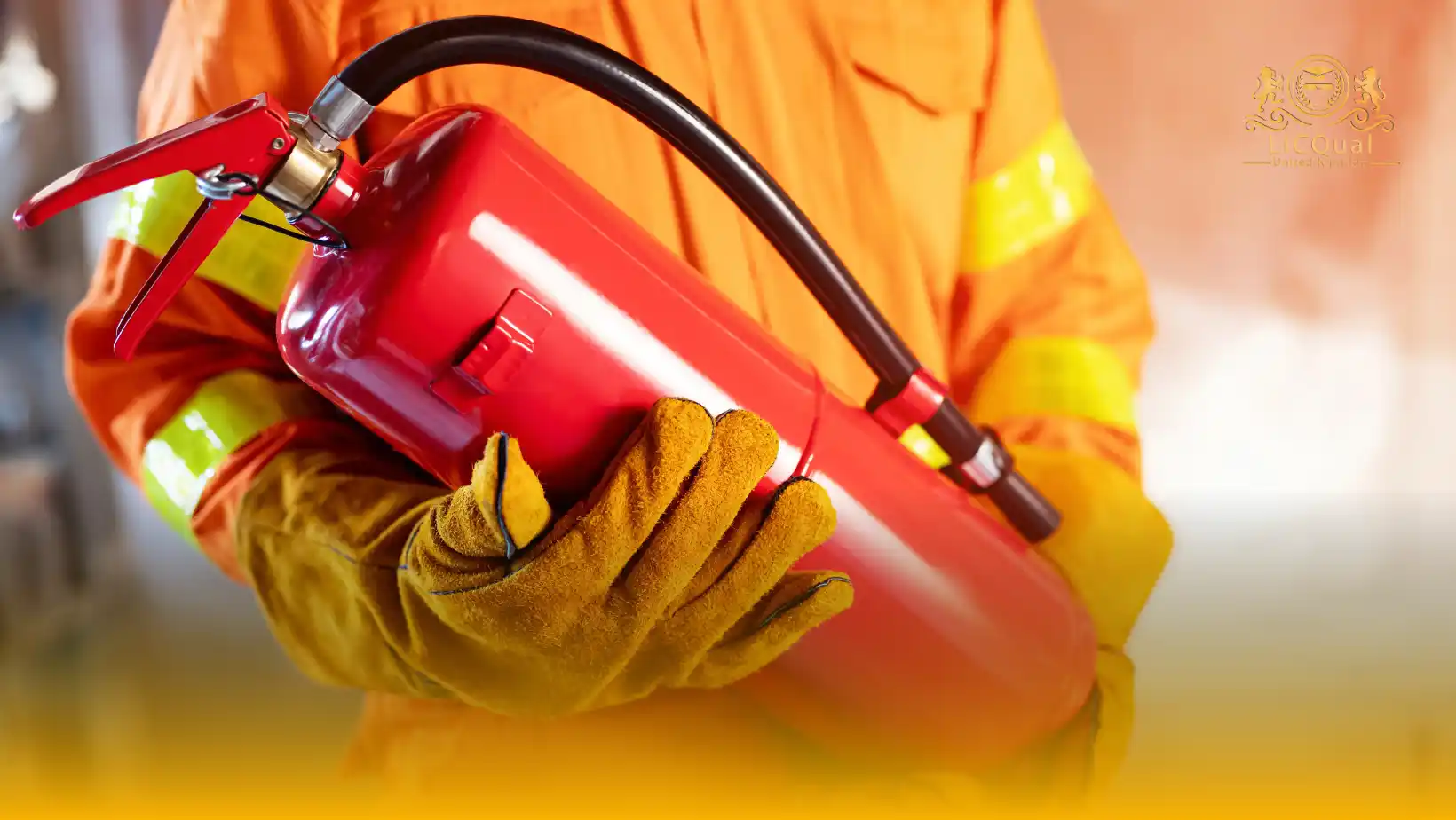
Fire Watcher
The LICQual Level 1 Award in Fire Watcher is designed to provide learners with essential training to maintain fire safety within workplaces or designated premises. As fire risks can occur unexpectedly, the role of a Fire Watcher is crucial for early detection of hazards and prompt action to prevent potential incidents. This course delivers foundational knowledge and practical skills needed for learners to perform fire-watching duties effectively and responsibly.
Learners will explore core fire safety principles, including identifying common fire hazards, understanding fire behavior, and recognizing the importance of early intervention. The course enhances learner competence and confidence in monitoring high-risk activities, overseeing fire safety measures during operations such as hot works, and ensuring compliance with fire regulations.
Through theoretical instruction and practical scenarios, learners develop the vigilance and judgment required to respond swiftly in emergencies. By completing this award, learners gain a recognized certification that demonstrates their commitment to workplace safety and enhances professional credibility.
Course Overview
Qualification Title
LICQual Level 1 Award in Fire Watcher
Total Units
6
Total Credits
6
GLH
12
Qualification #
LICQ2200412
Qualification Specification
To enroll in the LICQual Level 1 Award in Fire Watcher applicants must meet the following criteria:
|
Qualification# |
Unit Title |
Credits |
GLH |
|---|---|---|---|
|
LICQ2200412-1 |
Introduction to Fire Safety Principles |
1 |
2 |
|
LICQ2200412-2 |
Roles and Responsibilities of a Fire Watcher |
1 |
2 |
|
LICQ2200412-3 |
Identifying Fire Hazards and Risk Assessment |
1 |
2 |
|
LICQ2200412-4 |
Prevention Techniques and Control Measures |
1 |
2 |
|
LICQ2200412-5 |
Emergency Procedures and Use of Fire Equipment |
1 |
2 |
|
LICQ2200412-6 |
Legal Requirements and Compliance in Fire Safety |
1 |
2 |
By the end of this course, applicants will be able to:
Introduction to Fire Safety Principles
- Learners will understand the basic principles of fire safety in workplace environments.
- Learners will recognize different types of fire and their causes.
- Learners will explain the importance of early detection and fire prevention.
- Learners will gain awareness of fire behavior and its impact on safety.
Roles and Responsibilities of a Fire Watcher
- Learners will understand the key duties of a Fire Watcher in high-risk environments.
- Learners will recognize the importance of vigilance and proactive monitoring.
- Learners will identify how their role supports overall workplace safety.
- Learners will develop awareness of accountability and professional responsibilities in fire safety.
Identifying Fire Hazards and Risk Assessment
- Learners will identify common fire hazards in different work environments.
- Learners will understand the principles of fire risk assessment.
- Learners will learn to prioritize risks and recommend mitigation measures.
- Learners will develop the ability to recognize potential fire threats before they escalate.
Prevention Techniques and Control Measures
- Learners will apply practical fire prevention strategies in workplace settings.
- Learners will implement control measures to reduce fire risks.
- Learners will understand how to maintain fire safety equipment and preventive systems.
- Learners will gain skills to monitor and manage hazardous activities effectively.
Emergency Procedures and Use of Fire Equipment
- Learners will understand emergency response protocols for fire incidents.
- Learners will demonstrate proper use of fire detection and firefighting equipment.
- Learners will gain skills in safe evacuation and emergency coordination.
- Learners will develop confidence to act promptly during fire emergencies.
Legal Requirements and Compliance in Fire Safety
- Learners will understand relevant fire safety laws and regulations.
- Learners will recognize the responsibilities of employers and employees under fire safety legislation.
- Learners will learn how to ensure compliance with workplace fire safety standards.
- Learners will develop skills to document, report, and maintain fire safety records.
This diploma is ideal for:
- Individuals responsible for maintaining fire safety in their workplace, including fire wardens and safety officers.
- Workers in industries with high fire risks, such as construction, manufacturing, and hospitality.
- Safety managers and supervisors looking to enhance their knowledge of fire prevention and emergency protocols.
- Anyone interested in understanding fire safety principles, hazard identification, and emergency response procedures.
- Employees seeking to meet legal fire safety compliance standards in their respective work environments.
- People involved in risk management and workplace safety who want to improve their understanding of fire-related risks.
Assessment and Verification
All units within this qualification are subject to internal assessment by the approved centre and external verification by LICQual. The qualification follows a criterion-referenced assessment approach, ensuring that applicants meet all specified learning outcomes.
To achieve a ‘Pass’ in any unit, applicants must provide valid, sufficient, and authentic evidence demonstrating their attainment of all learning outcomes and compliance with the prescribed assessment criteria. The Assessor is responsible for evaluating the evidence and determining whether the applicants has successfully met the required standards.
Assessors must maintain a clear and comprehensive audit trail, documenting the basis for their assessment decisions to ensure transparency, consistency, and compliance with quality assurance requirements.