
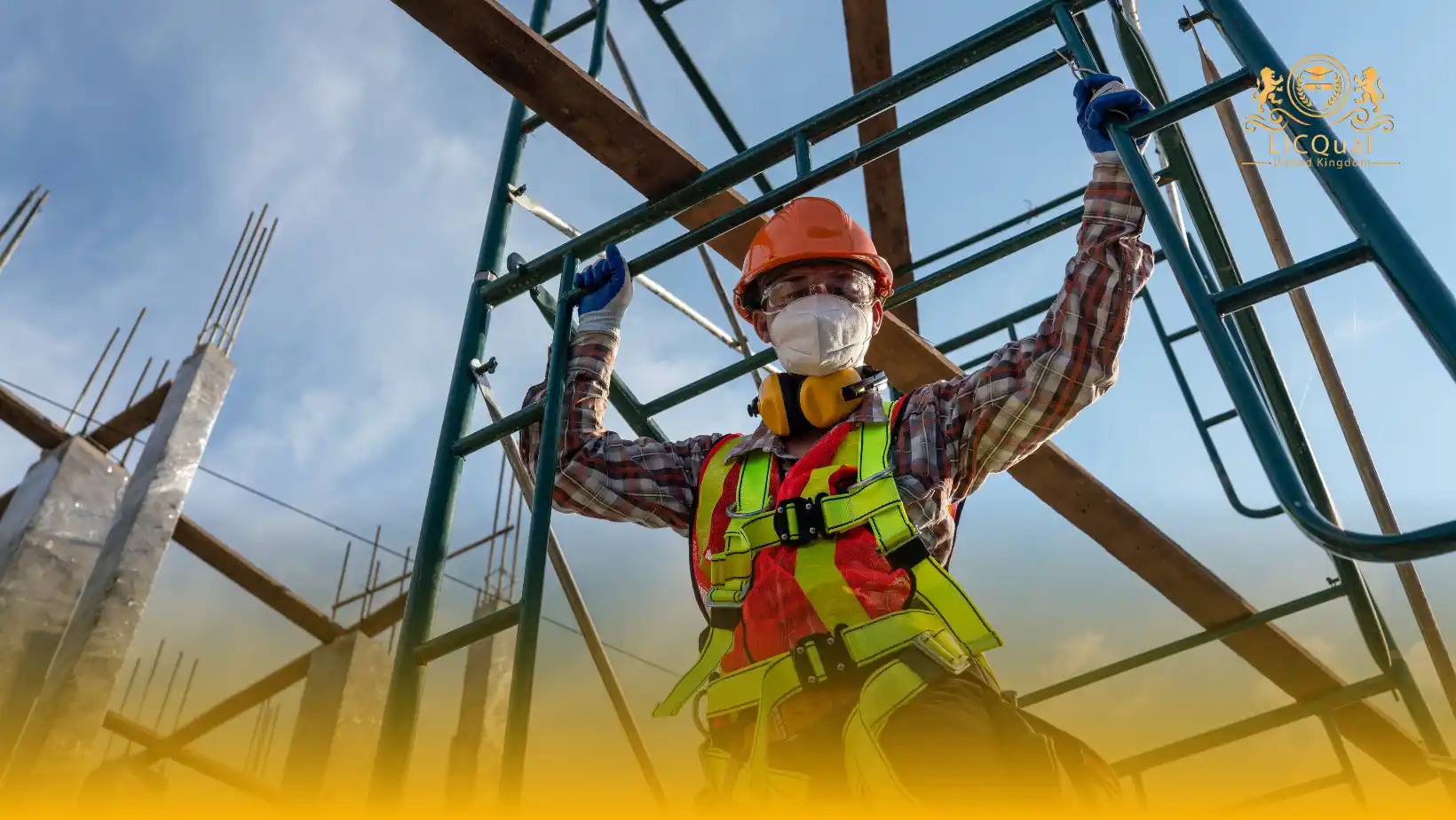
Working at Height
The LICQual Level 2 Award in Working at Height is an internationally recognized qualification that equips learners with essential knowledge and practical skills for performing work at height safely and competently. This course addresses the high-risk nature of working at height, focusing on the prevention of workplace injuries and fatalities through structured training and safety management.
Learners gain a comprehensive understanding of hazard identification, risk assessment, and the use of fall protection equipment. The training covers the safe application of scaffolds, ladders, fall arrest systems, and personal protective equipment (PPE), ensuring learners can operate equipment effectively and minimize risks. Emphasis is also placed on safe work practices, emergency procedures, planning, supervision, and ongoing monitoring to maintain a secure working environment.
Through a combination of theoretical knowledge and practical exercises, learners develop the confidence and competence to perform height-related tasks safely. Successful completion awards learners a globally recognized certification that validates their expertise and commitment to workplace safety.
Course Overview
Qualification Title
LICQual Level 2 Award in Working at Height
Total Units
6
Total Credits
6
GLH
12
Qualification #
LICQ2200394
Qualification Specification
To enroll in the LICQual Level 2 Award in Working at Height, applicants must meet the following entry requirements:
- Age Requirement: Applicants must be at least 16 years old.
- Educational Requirements: Applicants should have a minimum of a high school diploma or equivalent.
- Experience: Applicants are recommended to have basic experience in construction, maintenance, or industrial work environments.
- English Language Proficiency: Applicants must possess functional English reading, writing, and speaking skills.
|
Qualification# |
Unit Title |
Credits |
GLH |
|---|---|---|---|
|
LICQ2200394-1 LICQ2200394-2 |
Introduction to Working at Height Risk Assessment for Working at Height |
1 1 |
2 2 |
|
LICQ2200394-3 |
Fall Protection Systems and Equipment |
1 |
2 |
|
LICQ2200394-4 |
Safe Work Practices for Working at Height |
1 |
2 |
|
LICQ2200394-5 |
Emergency Procedures and Rescue Plans |
1 |
2 |
|
LICQ2200394-6 |
Monitoring, Supervision, and Ongoing Safety Measures |
1 |
2 |
By the end of this course, learners will be able to:
Introduction to Working at Height
By the end of this unit, learners will be able to:
- Understand the legal requirements and regulations associated with working at height.
- Identify common hazards associated with working at height in various industries.
- Recognize the importance of establishing safe working environments for tasks at height.
- Demonstrate an understanding of the risks associated with working at height and the consequences of not adhering to safety standards.
Risk Assessment for Working at Height
By the end of this unit, learners will be able to:
- Conduct a comprehensive risk assessment for tasks involving work at height, identifying potential hazards and evaluating risks.
- Determine and apply control measures to minimize risks associated with working at height.
- Prepare detailed risk assessments before commencing any work at height, ensuring that all factors are considered.
- Understand the importance of pre-task planning to ensure safety and compliance with regulations.
Fall Protection Systems and Equipment
By the end of this unit, learners will be able to:
- Identify various types of fall protection systems and understand their applications in different work at height scenarios.
- Select and use appropriate fall protection equipment, including harnesses, lanyards, safety nets, scaffolding, and guardrails.
- Demonstrate competence in inspecting fall protection equipment for safety and reliability.
- Understand the importance of maintenance and correct usage of fall protection equipment to ensure optimal performance.
Safe Work Practices for Working at Height
By the end of this unit, learners will be able to:
- Apply safe work practices when using ladders, scaffolds, and other equipment for tasks at height.
- Demonstrate proper techniques for securing tools and materials while working at height to prevent accidents.
- Implement effective access and egress methods for safe movement to and from elevated areas.
- Identify and follow proper procedures for setting up fall protection systems to safeguard workers during height-related tasks.
Emergency Procedures and Rescue Plans
By the end of this unit, learners will be able to:
- Develop and implement emergency procedures for responding to incidents during work at height.
- Understand the steps to take during a fall or emergency situation, including evacuation and first aid.
- Identify the necessary rescue equipment and understand the key components of a rescue plan.
- Demonstrate knowledge of appropriate emergency response actions and ensure they are communicated effectively within the workplace.
Monitoring, Supervision, and Ongoing Safety Measures
By the end of this unit, learners will be able to:
- Understand the role of supervisors in maintaining a safe working environment for tasks at height.
- Conduct ongoing safety checks and monitoring to ensure continued compliance with safety standards.
- Recognize the importance of regular training and refresher courses to keep workers informed of updated safety practices and regulations.
- Implement and maintain safety protocols and equipment checks to ensure safe practices are followed throughout tasks at height.
This diploma is ideal for:
- Individuals who are required to work at height as part of their job responsibilities in industries such as construction, maintenance, telecommunications, utilities, and logistics
- Health and safety officers and professionals who are responsible for ensuring compliance with working at height regulations and maintaining a safe working environment
- Supervisors and managers overseeing workers performing tasks at height, ensuring safety measures and procedures are followed
- Employees involved in the operation and maintenance of scaffolding, ladders, or fall protection equipment
- Workers in roles where the risk of falling from height is present, including those in warehousing, roofing, or window cleaning
- Maintenance personnel responsible for carrying out repairs or inspections at height
- Safety trainers who wish to enhance their knowledge in delivering safe work practices related to working at height
- Individuals who are preparing for a career in safety management or those seeking to upskill in workplace safety practices
- Companies seeking to train and certify their employees in safe working at height practices to minimize risk and ensure compliance with health and safety regulations
Assessment and Verification
All units within this qualification are subject to internal assessment by the approved centre and external verification by LICQual. The qualification follows a criterion-referenced assessment approach, ensuring that learners meet all specified learning outcomes.
To achieve a ‘Pass’ in any unit, learners must provide valid, sufficient, and authentic evidence demonstrating their attainment of all learning outcomes and compliance with the prescribed assessment criteria. The Assessor is responsible for evaluating the evidence and determining whether the learner has successfully met the required standards.
Assessors must maintain a clear and comprehensive audit trail, documenting the basis for their assessment decisions to ensure transparency, consistency, and compliance with quality assurance requirements.