
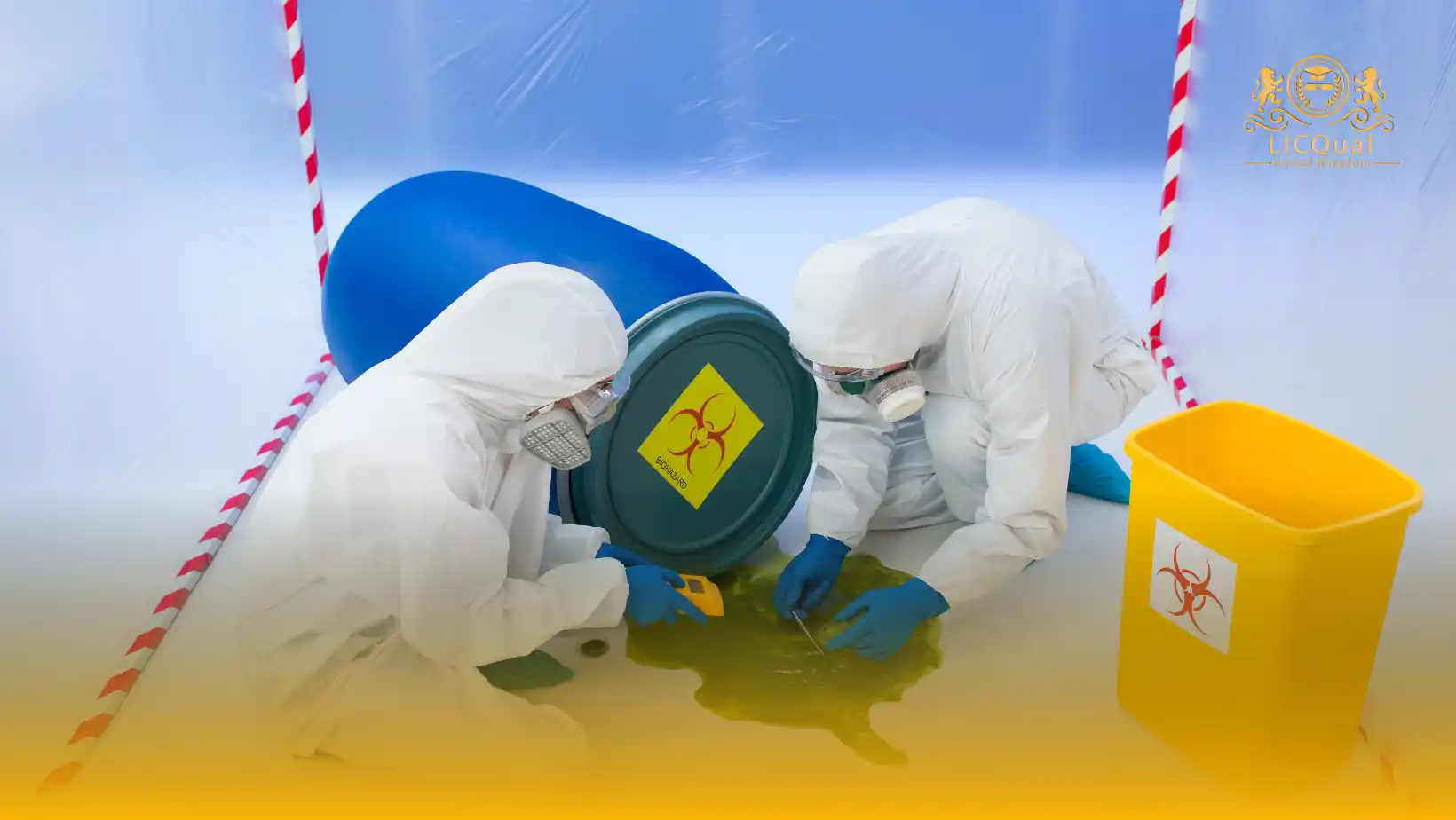
Chemical Spill Control
The LICQual Level 2 Award in Chemical Spill Control is an internationally accredited qualification that equips learners with the essential knowledge and practical skills to respond effectively to chemical spills in workplace environments. This course provides learners with a comprehensive understanding of chemical hazard identification, risk assessment, substance classification, and safe spill containment and clean-up procedures.
Learners are trained in the correct use of spill control equipment, including absorbents, neutralizers, booms, and drain protection tools, as well as the proper selection and application of personal protective equipment (PPE). The course also covers emergency communication protocols, environmental protection practices, and adherence to international safety regulations such as OSHA and COSHH.
Through a blend of theoretical instruction and scenario-based practical exercises, learners develop the competence and confidence to act promptly and safely during chemical spill incidents. Upon successful completion, learners receive a recognized certification that validates their professional expertise and supports organizational safety and environmental compliance.
Course Overview
Qualification Title
LICQual Level 2 Award in Chemical Spill Control
Total Units
6
Total Credits
6
GLH
12
Qualification #
LICQ2200393
Qualification Specification
To enroll in the LICQual Level 2 Award in Chemical Spill Control, applicants must meet the following entry requirements:
- Age Requirement: Applicants must be at least 18 years old.
- Educational Requirements: Applicants should have a minimum of a high school diploma or equivalent.
- Experience: Applicants are recommended to have basic experience in industrial, laboratory, or chemical handling environments.
- English Language Proficiency: Applicants must possess functional English reading, writing, and speaking skills.
|
Qualification# |
Unit Title |
Credits |
GLH |
|---|---|---|---|
|
LICQ2200393-1 LICQ2200393-2 |
Introduction to Chemical Spill Hazards Classification and Identification of Hazardous Substances |
1 1 |
2 2 |
|
LICQ2200393-3 |
Spill Risk Assessment and Prevention |
1 |
2 |
|
LICQ2200393-4 |
Chemical Spill Response Procedures |
1 |
2 |
|
LICQ2200393-5 |
Use of Personal Protective Equipment (PPE) and Spill Control Equipment |
1 |
2 |
|
LICQ2200393-6 |
Environmental Protection, Reporting, and Legal Compliance |
1 |
2 |
By the end of this course, learners will be able to:
Introduction to Chemical Spill Hazards
By the end of this unit, learners will be able to:
- Understand the types of chemical spills and their potential hazards to human health, the environment, and operations.
- Identify common causes of chemical spills in various industries.
- Explain the importance of chemical spill control and prevention in maintaining workplace safety and regulatory compliance.
- Recognize the immediate and long-term consequences of uncontrolled chemical spills.
Classification and Identification of Hazardous Substances
By the end of this unit, learners will be able to:
- Identify hazardous chemicals using Safety Data Sheets (SDS) and labels.
- Understand the chemical classification systems, including GHS (Globally Harmonized System), and apply them to different substances.
- Recognize the physical and chemical properties of hazardous substances that affect spill response, such as reactivity, flammability, and toxicity.
- Classify chemicals based on their spill risk and response requirements.
Spill Risk Assessment and Prevention
By the end of this unit, learners will be able to:
- Conduct a chemical spill risk assessment to identify areas of potential hazard.
- Evaluate the likelihood and severity of spill incidents in the workplace.
- Develop and implement spill prevention measures and controls.
- Identify factors that can minimize the risk of chemical spills, including proper storage and handling techniques.
Chemical Spill Response Procedures
By the end of this unit, learners will be able to:
- Implement step-by-step procedures for responding to chemical spills safely and efficiently.
- Utilize various spill control measures, such as containment, neutralization, and clean-up techniques.
- Understand and apply emergency response protocols, including evacuation and reporting.
- Coordinate with emergency response teams and communicate effectively during a spill incident.
Use of Personal Protective Equipment (PPE) and Spill Control Equipment
By the end of this unit, learners will be able to:
- Select appropriate personal protective equipment (PPE) based on the type of chemical spill and the substances involved.
- Properly use and maintain spill control equipment, such as absorbents, booms, and barriers.
- Understand the limitations and proper handling of spill control materials to prevent exposure and ensure effectiveness.
- Demonstrate the correct procedure for donning and doffing PPE during a spill response scenario.
Environmental Protection, Reporting, and Legal Compliance
By the end of this unit, learners will be able to:
- Understand the legal requirements and environmental regulations related to chemical spills, such as OSHA, EPA, and local environmental laws.
- Implement strategies for protecting the environment during and after a chemical spill, including proper waste disposal and site decontamination.
- Follow correct documentation and reporting procedures for chemical spills in compliance with regulatory standards.
- Assess the long-term environmental impact of spills and the importance of continuous improvement in spill management systems.
This diploma is ideal for:
- Individuals working in industries where hazardous chemicals are used, stored, or transported, such as chemical manufacturing, oil and gas, pharmaceuticals, and agriculture
- Health and safety officers responsible for implementing spill response procedures and ensuring workplace compliance
- Emergency responders, including fire safety teams and environmental health personnel, involved in chemical spill response and recovery
- Laboratory technicians and research staff handling chemicals who need to understand spill control measures
- Maintenance personnel, warehouse staff, and logistics teams who manage the storage and movement of chemicals
- Supervisors and managers overseeing teams working with hazardous materials and ensuring spill response readiness
- Individuals looking to enhance their skills in environmental protection and workplace safety
- Organizations aiming to upskill their workforce in chemical spill management and improve safety practices across their operations
- New entrants or those looking to transition into safety management roles within industries dealing with hazardous substances
Assessment and Verification
All units within this qualification are subject to internal assessment by the approved centre and external verification by LICQual. The qualification follows a criterion-referenced assessment approach, ensuring that learners meet all specified learning outcomes.
To achieve a ‘Pass’ in any unit, learners must provide valid, sufficient, and authentic evidence demonstrating their attainment of all learning outcomes and compliance with the prescribed assessment criteria. The Assessor is responsible for evaluating the evidence and determining whether the learner has successfully met the required standards.
Assessors must maintain a clear and comprehensive audit trail, documenting the basis for their assessment decisions to ensure transparency, consistency, and compliance with quality assurance requirements.