
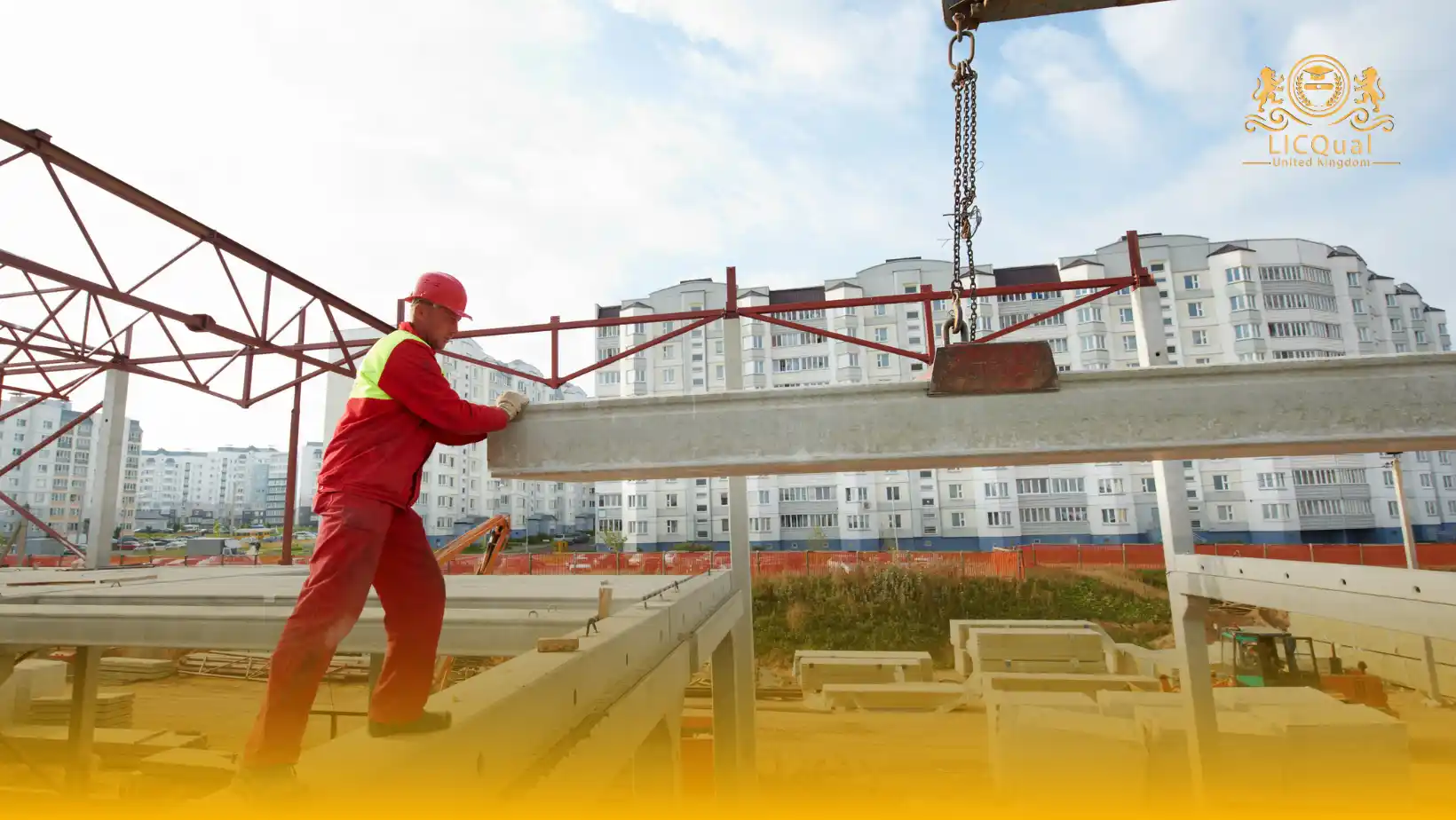
Diploma in Rigger
The LICQual Level 3 Diploma in Rigger is an advanced qualification designed to enhance a learner’s expertise in complex rigging and lifting operations. This course provides comprehensive training in advanced rigging techniques, precise load calculations, project planning, and safety management, preparing learners to operate effectively in construction, offshore, manufacturing, and heavy industry environments.
Learners gain practical experience in managing high-risk lifting operations, supervising teams, and coordinating the use of advanced rigging equipment. The curriculum emphasizes operational safety, regulatory compliance, and risk mitigation, ensuring learners are equipped to handle challenging rigging scenarios efficiently.
Upon completion, learners will possess the technical knowledge, leadership, and project management skills required for senior rigging roles. They will be capable of overseeing large-scale lifting operations, ensuring equipment is used correctly, and maintaining safety standards across all activities. The LICQual Level 3 Diploma in Rigger provides learners with a robust foundation for professional growth and advanced responsibilities in the rigging industry.
Course Overview
Qualification Title
LICQual Level 3 Diploma in Rigger
Total Units
6
Total Credits
60
GLH
240
Qualification #
LICQ2200194
Qualification Specification
To enroll in theLICQual Level 3 Diploma in Rigger, applicants must meet the following criteria:
|
Qualification# |
Unit Title |
Credits |
GLH |
|---|---|---|---|
|
LICQ2200194-1 |
Advanced Rigging Equipment |
10 |
40 |
|
LICQ2200194-2 |
Safe Rigging Practices |
10 |
40 |
|
LICQ2200194-3 |
Rigging Load Calculation |
10 |
40 |
|
LICQ2200194-4 |
Working with Cranes and Hoists |
10 |
40 |
|
LICQ2200194-5 |
Rigging Communication Systems |
10 |
40 |
|
LICQ2200194-6 |
Project Planning and Supervision |
10 |
40 |
By the end of this course, learners will be able to:
Advanced Rigging Equipment
- Understand the different types of advanced rigging equipment and their specific applications in complex lifting operations.
- Demonstrate the ability to select and inspect advanced rigging tools, ensuring they are suitable for the load, environment, and task.
- Apply knowledge of specialized rigging equipment to complete challenging lifting operations safely and efficiently.
- Recognize the importance of regular maintenance, testing, and calibration for advanced rigging equipment to ensure optimal performance and safety.
Safe Rigging Practices
- Identify and assess the potential risks and hazards in rigging operations.
- Implement best practices for safe rigging, ensuring compliance with local and international safety standards and regulations.
- Demonstrate the ability to use safety equipment, such as personal protective equipment (PPE), and apply safety procedures during rigging tasks.
- Develop strategies to minimize risks and prevent accidents during complex rigging operations.
Rigging Load Calculation
- Understand the principles of load calculation and how to assess the weight, balance, and distribution of loads.
- Apply appropriate mathematical and engineering formulas to calculate load limits and ensure safe lifting operations.
- Demonstrate the ability to perform accurate load calculations for various rigging configurations and equipment.
- Identify and manage risks related to load handling and make adjustments to ensure the load is properly secured and balanced.
Working with Cranes and Hoists
- Understand the basic operation and functions of cranes and hoists used in rigging operations.
- Demonstrate knowledge of crane types, lifting capacities, and the relationship between cranes and rigging equipment.
- Develop skills to work collaboratively with crane operators, ensuring safe and efficient lifting operations.
- Apply safe practices for using cranes and hoists in rigging, including proper attachment techniques and load control.
Rigging Communication Systems
- Understand the importance of effective communication during rigging operations.
- Demonstrate proficiency in using various communication systems, including hand signals, radios, and verbal instructions, to coordinate rigging tasks.
- Ensure clear, concise, and consistent communication between riggers, crane operators, and other personnel involved in the lifting operation.
- Recognize the role of communication in minimizing errors, preventing accidents, and enhancing safety during rigging operations.
Project Planning and Supervision
- Develop the ability to create comprehensive rigging plans, including load assessments, equipment requirements, and safety protocols.
- Understand the process of coordinating and supervising rigging teams, ensuring tasks are completed safely, efficiently, and on schedule.
- Demonstrate leadership skills in managing rigging operations, resolving issues, and maintaining high standards of performance.
- Apply knowledge of project management techniques to ensure rigging operations align with organizational goals, regulatory requirements, and industry standards.
This diploma is ideal for:
Assessment and Verification
All units within this qualification are subject to internal assessment by the approved centre and external verification by LICQual. The qualification follows a criterion-referenced assessment approach, ensuring that learners meet all specified learning outcomes.
To achieve a ‘Pass’ in any unit, learners must provide valid, sufficient, and authentic evidence demonstrating their attainment of all learning outcomes and compliance with the prescribed assessment criteria. The Assessor is responsible for evaluating the evidence and determining whether the learner has successfully met the required standards.
Assessors must maintain a clear and comprehensive audit trail, documenting the basis for their assessment decisions to ensure transparency, consistency, and compliance with quality assurance requirements.