
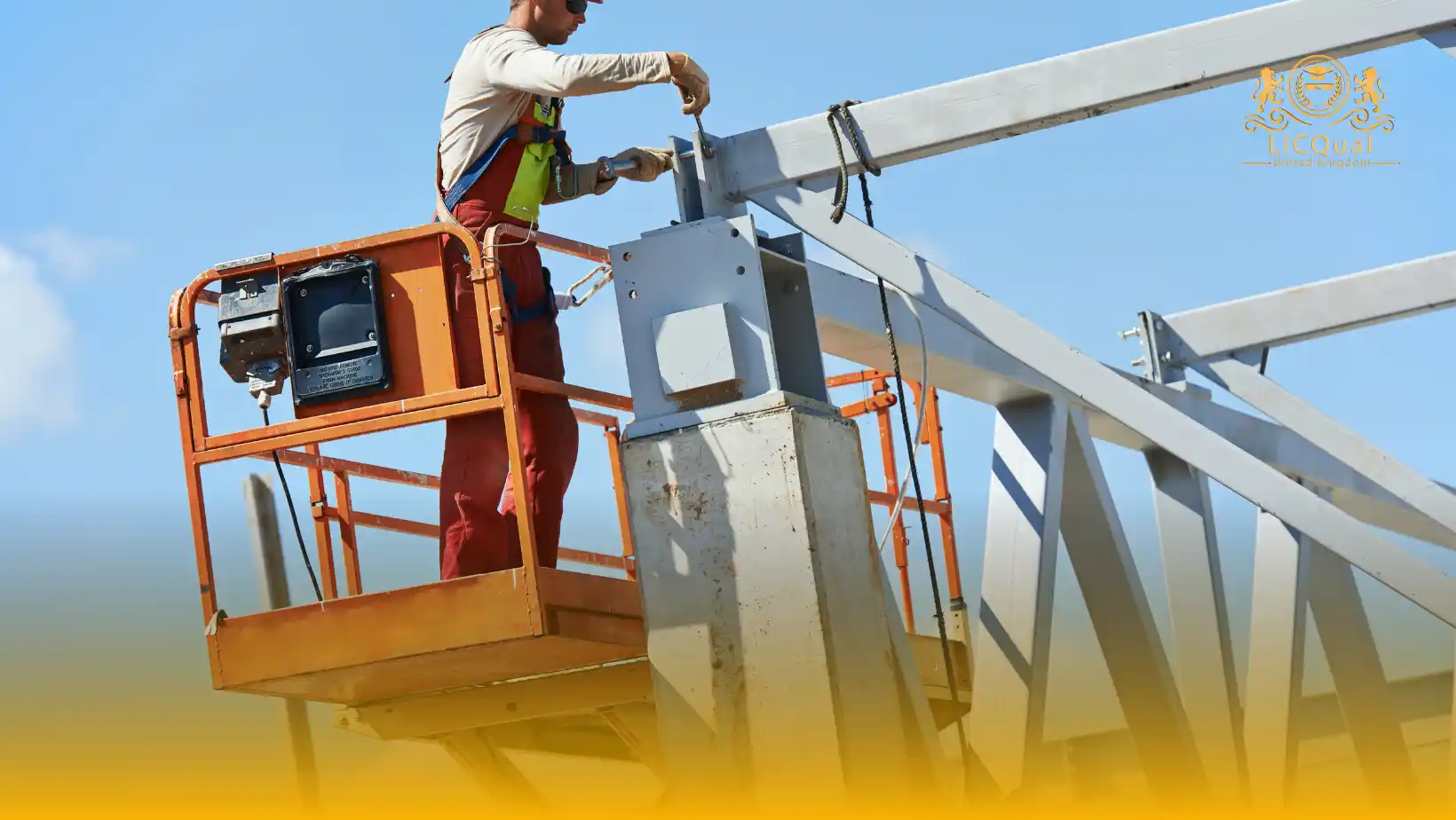
Diploma in Rigger
The LICQual Level 1 Diploma in Rigger is an entry-level qualification designed to provide learners with a solid foundation in essential rigging principles and practices. This course equips learners with the technical knowledge and practical skills required to perform basic rigging tasks safely and effectively. Learners will gain hands-on experience in equipment handling, lifting techniques, load management, and adherence to health and safety protocols.
The curriculum emphasizes operational safety, equipment inspection, and communication skills, ensuring learners are prepared to contribute to rigging operations across industries such as construction, manufacturing, and logistics. Learners will also develop an understanding of regulatory standards and best practices in rigging procedures.
Upon completion, learners will possess the core competencies needed for entry-level rigging roles, including safe load handling, effective use of rigging equipment, and risk awareness. The LICQual Level 1 Diploma in Rigger provides learners with a strong foundation for further progression to higher-level rigging qualifications.
Course Overview
Qualification Title
LICQual Level 1 Diploma in Rigger
Total Units
6
Total Credits
24
GLH
60
Qualification #
LICQ2200192
Qualification Specification
To enroll in theLICQual Level 1 Diploma in Rigger, applicants must meet the following criteria:
|
Qualification# |
Unit Title |
Credits |
GLH |
|---|---|---|---|
|
LICQ2200192-1 |
Introduction to Rigging |
4 |
10 |
|
LICQ2200192-2 |
Basic Rigging Equipment |
4 |
10 |
|
LICQ2200192-3 |
Basic Lifting Techniques |
4 |
10 |
|
LICQ2200192-4 |
Health & Safety in Rigging |
4 |
10 |
|
LICQ2200192-5 |
Communication and Signaling |
4 |
10 |
|
LICQ2200192-6 |
Rigging Operations in the Field |
4 |
10 |
By the end of this course, learners will be able to:
Introduction to Rigging
- Understand the fundamental concepts and principles of rigging.
- Identify the key components involved in rigging operations and their functions.
- Demonstrate knowledge of the role and responsibilities of riggers in various industries.
- Explain the importance of rigging in construction, manufacturing, and other industries.
Basic Rigging Equipment
- Identify and describe various types of rigging equipment (e.g., slings, hooks, shackles, and pulleys).
- Demonstrate the proper use, inspection, and maintenance of rigging equipment.
- Understand how to select the appropriate equipment for specific rigging tasks based on load type and conditions.
- Recognize the importance of ensuring that rigging equipment meets safety standards.
Basic Lifting Techniques
- Understand the basic principles behind safe and effective lifting techniques.
- Demonstrate correct lifting and load securing methods to prevent accidents and damage.
- Recognize the importance of load balancing and stability during lifting operations.
- Apply proper lifting techniques when moving and positioning loads in a controlled manner.
Health & Safety in Rigging
- Understand the key health and safety regulations applicable to rigging operations.
- Identify potential hazards and risks involved in rigging tasks.
- Implement appropriate safety measures, including the use of personal protective equipment (PPE).
- Recognize the significance of conducting risk assessments and adhering to safe rigging practices to prevent accidents.
Communication and Signaling
- Understand the importance of clear communication and signaling during rigging operations.
- Demonstrate proficiency in using standard hand signals and verbal communication techniques.
- Ensure effective communication between riggers, crane operators, and other personnel involved in the operation.
- Apply proper signaling techniques to maintain safety and coordination during lifting operations.
Rigging Operations in the Field
- Apply theoretical knowledge of rigging in real-world field operations.
- Demonstrate practical rigging techniques for handling and securing loads in various environments.
- Work effectively in a team to complete rigging operations while ensuring safety protocols are followed.
- Adapt rigging techniques to site-specific conditions, addressing challenges such as weather or uneven terrain.
This diploma is ideal for:
Assessment and Verification
All units within this qualification are subject to internal assessment by the approved centre and external verification by LICQual. The qualification follows a criterion-referenced assessment approach, ensuring that learners meet all specified learning outcomes.
To achieve a ‘Pass’ in any unit, learners must provide valid, sufficient, and authentic evidence demonstrating their attainment of all learning outcomes and compliance with the prescribed assessment criteria. The Assessor is responsible for evaluating the evidence and determining whether the learner has successfully met the required standards.
Assessors must maintain a clear and comprehensive audit trail, documenting the basis for their assessment decisions to ensure transparency, consistency, and compliance with quality assurance requirements.