
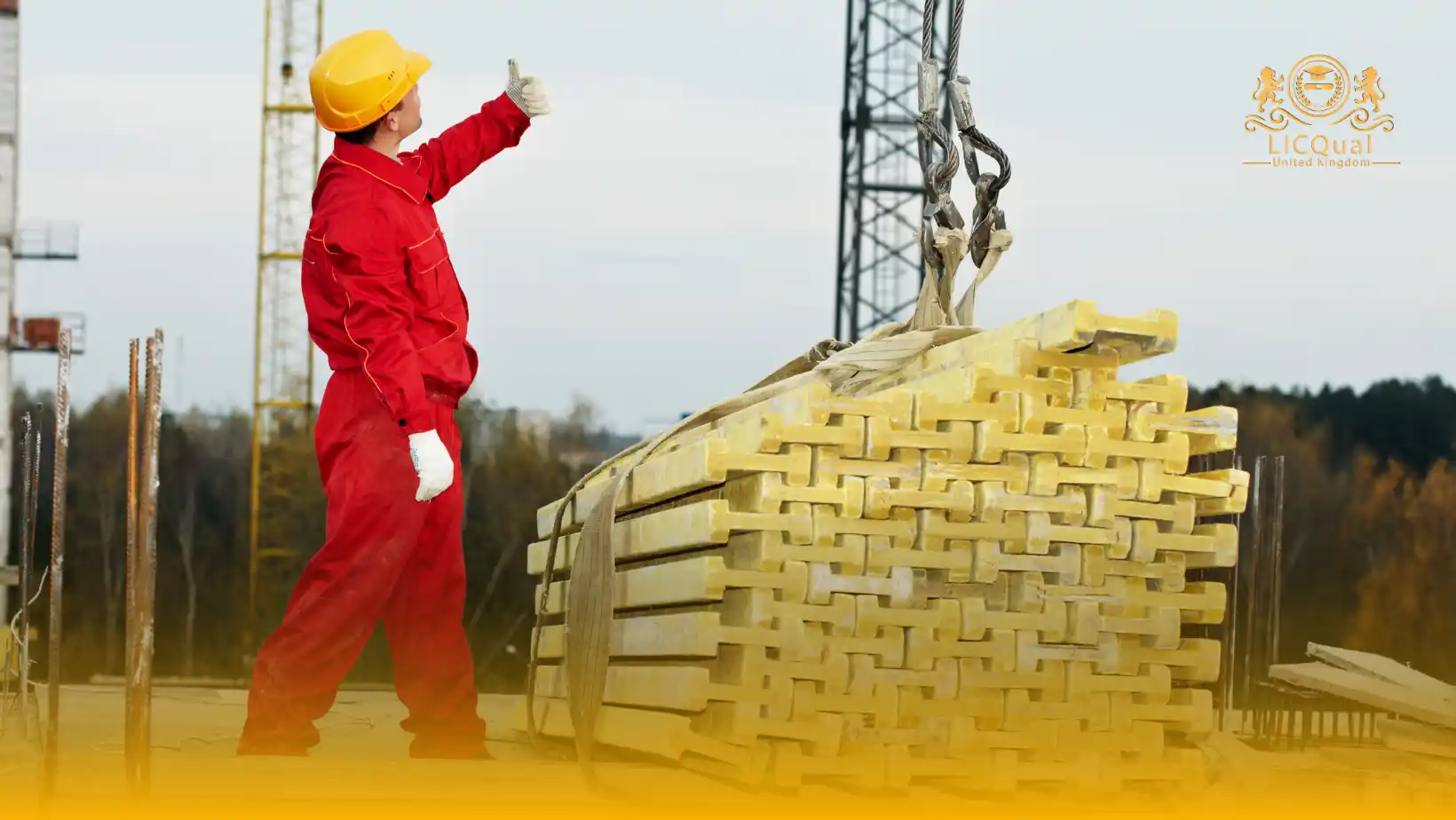
Diploma in Slinger
The LICQual Level 2 Diploma in Slinger provides learners with advanced skills and knowledge required to safely and efficiently perform slinging and signalling operations. Learners gain a comprehensive understanding of lifting equipment handling, risk assessment, and effective communication to ensure operational safety and compliance with industry standards.
This course combines practical, hands-on training with theoretical instruction, allowing learners to apply correct slinging techniques, guide crane operations, and manage complex lifting tasks with confidence. Learners explore responsibilities including selecting and inspecting appropriate lifting equipment, assessing load stability, and implementing safety protocols to prevent accidents.
Key training areas include advanced slinging and signalling techniques, load dynamics, risk management, and effective coordination with crane operators and site teams. By completing the LICQual Level 2 Diploma in Slinger, learners will be fully equipped to perform lifting operations safely, efficiently, and in line with best industry practices, enhancing operational competence and workplace safety across construction, logistics, and manufacturing environments.
Course Overview
Qualification Title
LICQual Level 2 Diploma in Slinger
Total Units
6
Total Credits
36
GLH
120
Qualification #
LICQ2200187
Qualification Specification
To enroll in theLICQual Level 2 Diploma in Slinger, applicants must meet the following criteria:
|
Qualification# |
Unit Title |
Credits |
GLH |
|---|---|---|---|
|
LLICQ2200187-1 |
Advanced Slinging and Signalling Techniques |
6 |
20 |
|
LICQ2200187-2 |
Risk Assessment for Lifting Operations |
6 |
20 |
|
LICQ2200187-3 |
Equipment Selection and Handling |
6 |
20 |
|
LICQ2200187-4 |
Load Stability and Weight Calculation |
6 |
20 |
|
LICQ2200187-5 |
Communication and Coordination with Operators |
6 |
20 |
|
LICQ2200187-6 |
Legal and Regulatory Requirements |
6 |
20 |
By the end of this course, learners will be able to:
Advanced Slinging and Signalling Techniques
- Gain proficiency in advanced slinging techniques for different types of loads and lifting operations.
- Understand how to apply safe and efficient signaling methods to guide crane operators.
- Develop skills in handling complex lifting scenarios, ensuring smooth and safe operations.
Risk Assessment for Lifting Operations
- Learn to perform thorough risk assessments for lifting operations to identify potential hazards.
- Understand how to evaluate and mitigate risks associated with lifting tasks.
- Acquire the ability to implement safety measures to ensure a safe working environment during lifting operations.
Equipment Selection and Handling
- Develop knowledge on selecting the appropriate lifting equipment based on load type, weight, and environment.
- Understand how to inspect and handle lifting gear, ensuring its safety and effectiveness.
- Learn how to maintain lifting equipment to meet operational safety standards.
Load Stability and Weight Calculation
- Master techniques for calculating load weight and determining load stability during lifting.
- Learn to assess the balance and stability of loads to prevent accidents.
- Understand the impact of load distribution on lifting safety and operational efficiency.
Communication and Coordination with Operators
- Learning Outcomes:
- Develop effective communication strategies with crane operators and other personnel during lifting operations.
- Learn how to coordinate signals and actions to ensure efficient and safe lifting tasks.
- Gain the ability to communicate clearly and consistently under various working conditions.
Legal and Regulatory Requirements
- Understand the legal and regulatory frameworks governing lifting operations in construction and industrial environments.
- Learn the key safety regulations, compliance requirements, and responsibilities of slingers and signallers.
- Gain the ability to ensure lifting operations adhere to legal safety standards and industry best practices.
This diploma is ideal for:
Assessment and Verification
All units within this qualification are subject to internal assessment by the approved centre and external verification by LICQual. The qualification follows a criterion-referenced assessment approach, ensuring that learners meet all specified learning outcomes.
To achieve a ‘Pass’ in any unit, learners must provide valid, sufficient, and authentic evidence demonstrating their attainment of all learning outcomes and compliance with the prescribed assessment criteria. The Assessor is responsible for evaluating the evidence and determining whether the learner has successfully met the required standards.
Assessors must maintain a clear and comprehensive audit trail, documenting the basis for their assessment decisions to ensure transparency, consistency, and compliance with quality assurance requirements.